
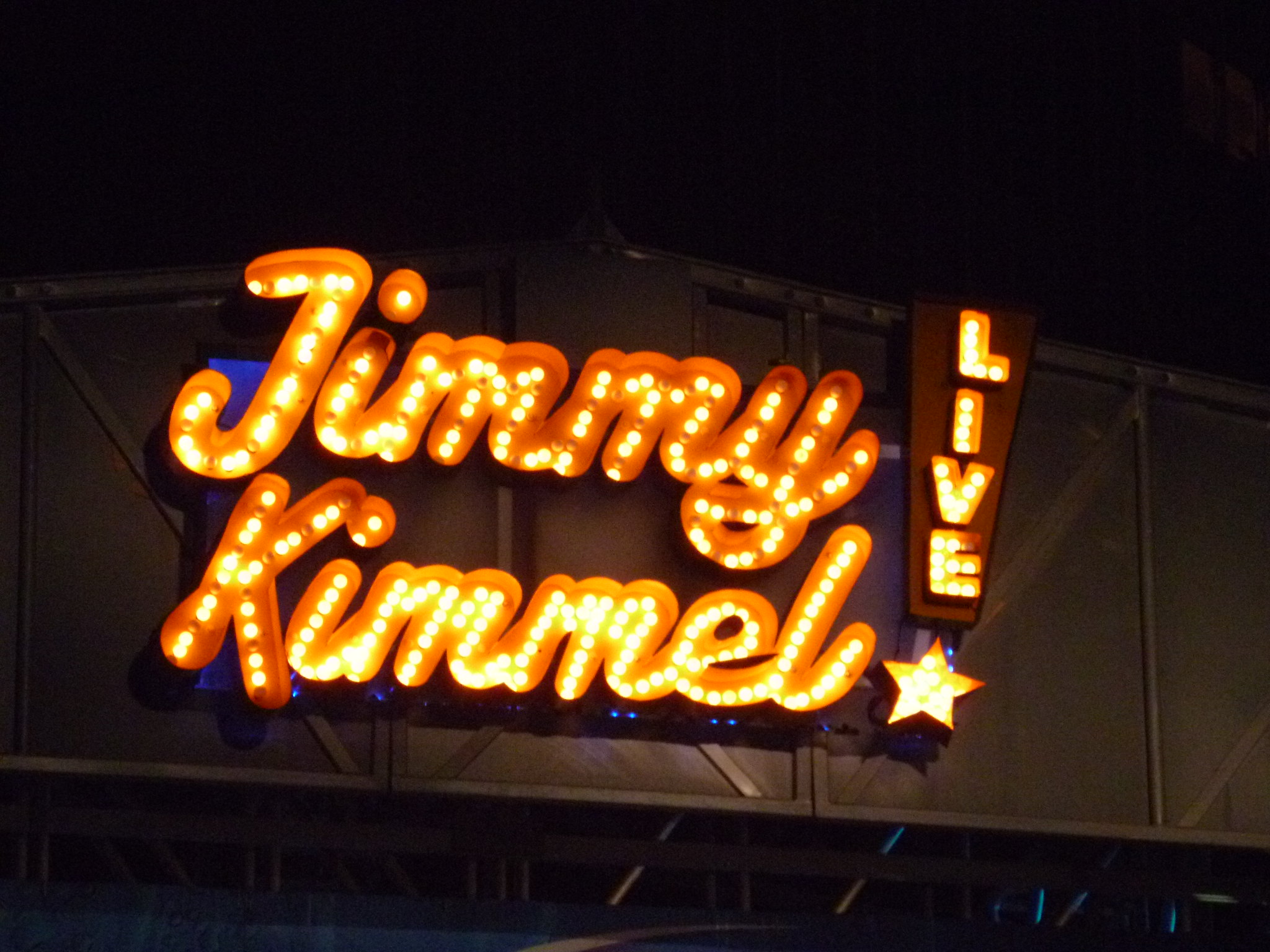
Kimmel’s jab lands because it points to a real shift: fewer traditional late-night shows may mean bigger slices of a smaller audience for the hosts who remain.
Jimmy Kimmel thanks CBS for June ratings because CBS canceled Stephen Colbert’s Late Show, and Kimmel’s show saw a ratings boost in June. Jimmy Kimmel Live drew a record-setting 3.15 million viewers for the month, turning a network rival’s retreat into an awkward win for ABC’s remaining late-night star.
The joke is simple, but the TV math behind it is not. Colbert’s exit from The Late Show With Stephen Colbert did not just remove one host from the 11:35 p.m. fight. It exposed how much the late-night business has changed, and how quickly viewers can shift when a familiar option disappears.
Kimmel’s jab had numbers behind it
Kimmel’s public thank-you to CBS worked because it sounded like a punchline and a ratings note at the same time. The message was aimed at the network that ended Colbert’s run, but it also underlined an immediate benefit for Jimmy Kimmel Live: more viewers in June.
The reported 3.15 million figure matters because late-night ratings rarely produce splashy growth anymore. Broadcast hosts are fighting not only one another but also YouTube clips, TikTok edits, podcasts, streaming comedy specials and viewers who no longer watch at a fixed hour.
In that environment, a monthly audience above 3 million is not just a bragging point. It suggests that Colbert’s absence may have pushed some traditional late-night viewers toward Kimmel, at least in the short term.
That does not mean every former Colbert viewer became a Kimmel viewer. Ratings are shaped by guests, news cycles, lead-ins, repeats, sports competition and measurement quirks. Still, the timing made the connection hard for Kimmel to resist.
CBS said money drove the decision
CBS’s official explanation for canceling The Late Show With Stephen Colbert was financial. When the decision was announced, the network and Paramount executives said the move was not tied to Colbert’s performance, content or other matters at Paramount, according to the Associated Press.
That distinction was important because Colbert had not been a ratings failure in the traditional late-night field. AP reported that Nielsen figures showed Colbert gaining viewers that year and winning his broadcast time slot, with about 2.417 million viewers across 41 new episodes.
Colbert also remained an awards player. His show had received another Emmy nomination for outstanding talk show, and it had won a Peabody Award in 2021.
So CBS was not describing a show that had stopped mattering culturally. It was describing a show that, in the network’s view, no longer made enough financial sense against the cost structure of late-night television.
Why Colbert’s cancellation still stung
Colbert’s departure landed as more than a programming cut because The Late Show had been a CBS institution since David Letterman launched it in 1993. Colbert took over in 2015 and turned the desk into one of television’s most consistent platforms for political comedy.
That made the cancellation especially sensitive. AP noted that the timing came shortly after Colbert criticized Paramount Global’s settlement with President Donald Trump over a 60 Minutes interview. CBS and Paramount denied that the cancellation was connected to the show’s content or to any other Paramount matter.
Some Democratic lawmakers questioned the motives publicly, and figures in the entertainment world saw the move as a sign that broadcast networks were backing away from politically charged late-night programming. Others saw a colder explanation: expensive studio shows are harder to justify when younger viewers consume monologues in clips rather than full episodes on TV.
Both readings can be true in part. The economics of late night are undeniably weaker than they were in Letterman’s prime. But Colbert’s status as a high-profile critic made the cancellation impossible to read as a routine budget trim for many viewers.
Late-night’s smaller map helps survivors
Kimmel’s June bump points to the uncomfortable upside of contraction. When one major broadcast option disappears, the remaining shows can benefit from less competition, even if the overall late-night audience is smaller than it used to be.
That is the part CBS may not enjoy watching. A cost-cutting move that removed Colbert from the schedule may have strengthened a direct rival, at least for viewers who still want a topical monologue and celebrity interviews in the old late-night rhythm.
The same pressure has shown up elsewhere. AP reported that NBC had acknowledged late-night economic strain by cutting costs around its own shows, including eliminating the band on Seth Meyers’ program and reducing one night of Jimmy Fallon’s Tonight Show. CBS had also canceled After Midnight, the show that followed Colbert.
For networks, those decisions reflect a business model under stress. For audiences, they look like a shrinking menu. For hosts such as Kimmel, the shrinkage can create a bigger spotlight.
The ratings win has limits
A record-setting June for Jimmy Kimmel Live does not prove that traditional late-night is suddenly healthy again. It may prove something narrower: when viewers lose a preferred show, some will sample the closest remaining alternative.
That kind of audience transfer can be powerful, but it can also fade. Viewers may settle into new habits, follow Colbert online or drift away from nightly broadcast television altogether. The real test is whether Kimmel can hold the June gains after the novelty of the shakeup wears off.
There is also a difference between total viewers and business strength. A larger audience helps, but networks care about ad rates, production costs, digital revenue and demographics. Late-night shows can still be culturally loud while becoming financially difficult to sustain.
That is why Kimmel’s joke cuts both ways. He can thank CBS for the boost, but the same forces that pushed CBS out of Colbert’s slot are still pressing on every network host.
What remains after Colbert
The immediate takeaway is clear: CBS’s decision to end Colbert’s Late Show helped create an opening, and Kimmel appears to have benefited with a 3.15 million-viewer June. The longer-term question is whether that opening represents a new pecking order or just a temporary migration.
For CBS, the risk is reputational as much as competitive. The network said the cancellation was about finances, not politics or performance. But if a rival gains viewers from the move, critics will see not only a retreat from late night but a self-inflicted handoff.
For Kimmel, the moment is a reminder that late-night television is still a personality business. Audiences may be fragmented, but when a major host exits, the remaining names matter more.
Colbert’s cancellation was framed as the end of one CBS chapter. Kimmel’s June ratings suggest it also became the start of a new ratings fight among the hosts left standing.







Leave a Reply