
The clash pits Trump’s account of vandalism against prosecutors’ conclusion that new evidence pointed to a flawed installation. It also raises questions about how the case was charged before key Interior Department material was reviewed.
Donald Trump criticized Jeanine Pirro over the Lincoln Memorial Reflecting Pool vandalism case after Pirro’s Washington, D.C., office moved to drop charges against a former Olympian accused of damaging it. Trump said Pirro should “go back to law school,” arguing the major damage was caused by vandals, not just faulty construction.
The dispute matters because prosecutors said new information undermined the indictment of David “Davey” Hearn, while Trump and Interior Secretary Doug Burgum continued to insist that vandalism occurred. The fight has turned a case involving a high-profile national monument into a test of evidence, accountability and political loyalty.
Trump breaks with a longtime ally
Trump’s criticism targeted Pirro, the U.S. attorney for the District of Columbia and a longtime ally who previously worked as a television host and prosecutor. In a Truth Social post, Trump said he disagreed with her “100%” over the Reflecting Pool matter.
He called the incident “a pure case of VANDALISM” and said that, while there may have been contractor problems, vandals caused the major damage. In a second post, Trump said video showed material being cut with a knife or box cutter.
His “go back to law school” jab made the disagreement unusually direct. Presidents often criticize prosecutors, but publicly rebuking an official from their own administration over a live charging decision is a more consequential move than simply disputing a news report or agency finding.
Why Pirro’s office moved to dismiss
Pirro’s office said it obtained information that undermined “the evidentiary basis for the indictment” against Hearn. The office moved to dismiss the case after the indictment had already been secured.
According to the Justice Department, it learned through a later document review that the damage appeared to stem from a botched installation rather than vandalism. The Interior Department provided documents after the indictment that prosecutors said they did not have when they sought the grand jury’s approval.
The department said it would not have pursued an indictment against Hearn had it initially received that information. That is the central fact behind the dismissal effort: the question is not merely whether the pool had visible damage, but what evidence could reliably establish who or what caused it.
Pirro’s office also moved to dismiss at least one other misdemeanor case connected to the alleged damage, according to NBC News. The available information does not resolve every allegation involving other people arrested near the pool.
The case against David Hearn
Hearn, a former Olympic canoeist, was indicted July 2 after authorities alleged that he forcefully pulled up and removed part of the pool’s bottom liner on June 19. He pleaded not guilty.
Hearn has maintained that the Reflecting Pool looked the same after he left the water as it did before he entered it. His attorney, Steven Levin, said the case should never have been brought and argued that the federal government owes his client an apology.
That argument rests on more than Hearn’s denial. Prosecutors’ stated conclusion about a flawed installation gives his defense a new weight, although the dismissal process itself is separate from a judicial finding that he did nothing wrong.
The distinction matters. A government motion to dismiss means prosecutors no longer believe they can support the charge on the evidence available; it does not by itself answer every factual question about what happened at the pool.
A renovation becomes a political flashpoint
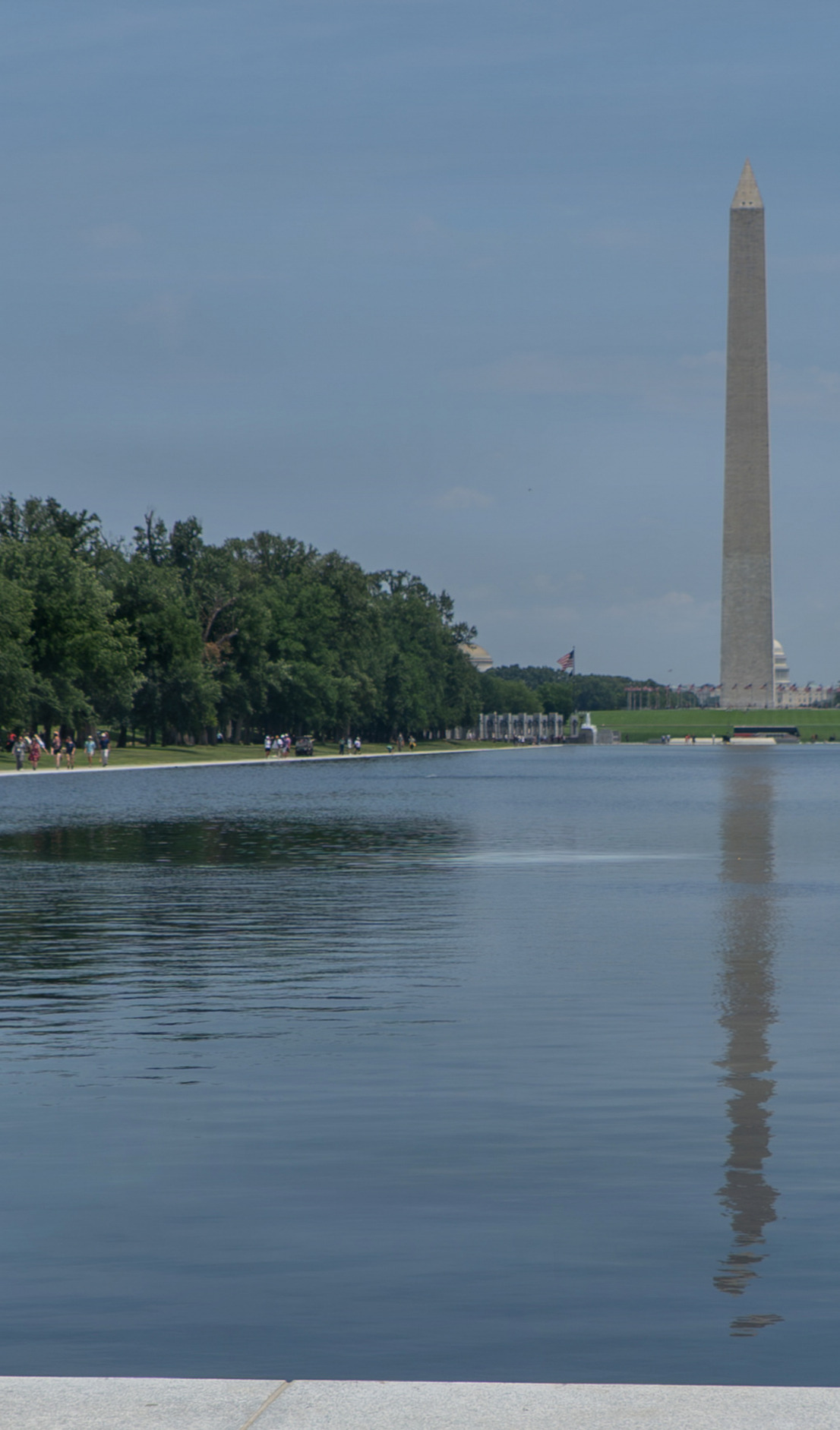
The Reflecting Pool had recently undergone a renovation directed by Trump that cost more than $14 million and included a new coating described as “American flag blue.” Soon afterward, green algae and pieces of blue sealant were seen on the water’s surface.
Trump has repeatedly attributed the pool’s troubles to vandals. His position is that video and other evidence show deliberate damage, even if contractor work may also have contributed to the pool’s condition.
That view is supported by Burgum, who said vandals had repeatedly damaged the pool and that some incidents were captured on camera. Burgum said the Interior Department supplied prosecutors with expert and eyewitness testimony, as well as requested evidence about areas of damage.
But the Justice Department’s account points in a different direction on the Hearn case: officials said documents reviewed after the indictment indicated flawed installation by Atlantic Industrial Coatings. Both claims could describe different incidents or damage at different locations, but the public record described so far does not fully explain how officials separated those possibilities before charges were filed.
The larger issue is evidence review
The clash is likely to intensify scrutiny of how the government handled the case. If critical records from one federal department did not reach prosecutors until after an indictment, the episode raises practical questions about evidence-sharing in fast-moving, politically sensitive cases.
It also creates an awkward split inside the administration. Trump and Burgum are publicly emphasizing vandalism, while Pirro’s office and the Justice Department have said new information weakened the case against Hearn.
There are competing perspectives with real consequences. Trump’s side argues that visible damage and surveillance footage should not be dismissed because of contractor concerns. Hearn’s side argues that the government acted first and established the facts later.
What remains unclear is whether prosecutors will provide a fuller public accounting of the evidence that changed their view, whether other pending cases will be reevaluated, and how officials will distinguish alleged acts of vandalism from defects linked to the renovation. For now, the most concrete outcome is that the case against Hearn is being unwound—and that Trump has openly challenged the prosecutor whose office made that call.




Leave a Reply