
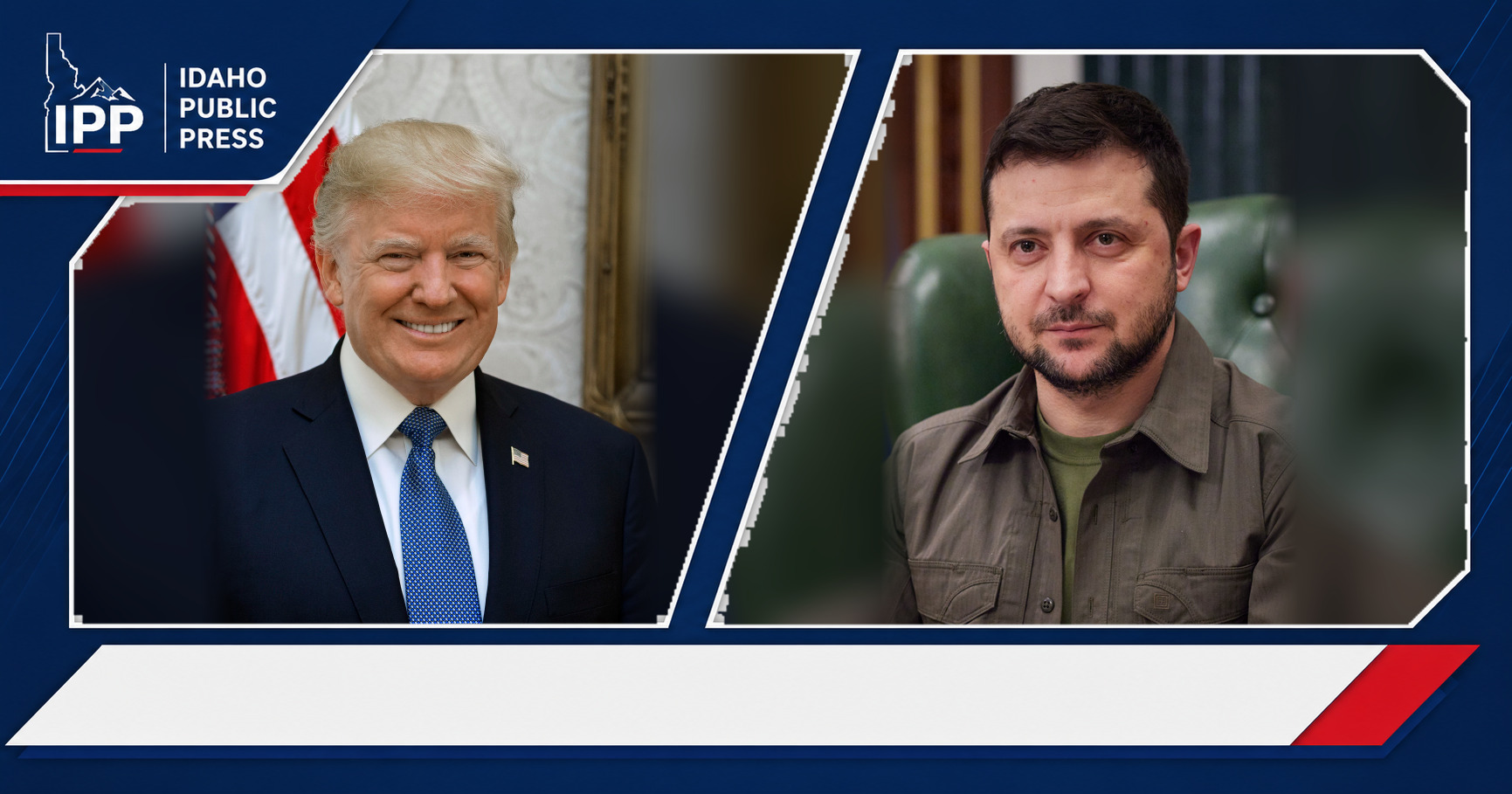
The warm tone came as Kyiv tries to turn improved access in Washington into concrete air-defense help. The unanswered question is whether public praise leads to faster weapons, licensing and sanctions pressure on Russia.
Donald Trump praised his meeting with Volodymyr Zelenskyy after a closed-door White House sit-down, and Trump called the meeting a great honor, saying it went very well. The meeting between Trump and Zelenskyy centered on Ukraine’s push to produce Patriot interceptor missiles, other weapons-related ideas and renewed diplomacy, according to Zelenskyy’s public account and reporting by The Associated Press.
That warm public note matters because Kyiv is trying to convert better access in Washington into concrete air-defense help as Russia’s war grinds on. Praise is not policy, but in this case it may be a sign of where the Trump-Zelenskyy relationship is moving.
A warmer Oval Office signal
Trump’s message on Truth Social was brief but pointed. He called it a “Great Honor” to meet with Zelenskyy and wrote that “many things were discussed” and that the meeting “went very well,” according to AP.
Zelenskyy also described the exchange positively, calling it a “good meeting” and thanking Trump and his administration for efforts to support Ukraine. His own readout emphasized defense production and diplomacy rather than personal chemistry.
The meeting was closed to the media, which means the public version depends largely on statements from the two leaders and accounts from people familiar with the talks. Still, both sides chose to describe the session in upbeat terms, a notable shift given earlier strains between Trump and the Ukrainian president.
The sit-down took place while Zelenskyy was in Washington around events honoring Sen. Lindsey Graham, a prominent Republican supporter of Ukraine. Zelenskyy said he offered condolences to Trump over Graham’s death, AP reported.
Patriot production is the pressure point
The practical core of the meeting was Ukraine’s long-running need for air defense. Zelenskyy said he and Trump discussed licenses for Patriot interceptor production, along with “several other ideas that could help.”
Patriot systems and interceptors are central to Ukraine’s ability to defend cities, power infrastructure and military targets from Russian missile and drone attacks. Kyiv has spent years asking Western partners for more systems, more missiles and faster delivery.
AP reported that the latest meeting followed a NATO summit earlier this month in Ankara, Turkey, where Trump said the U.S. would give Ukraine a license to make Patriot defense systems. For Ukraine, that would represent a major step toward building more of its own defense capacity rather than relying entirely on limited foreign stockpiles.
But licensing is not the same as instant supply. Manufacturing advanced interceptors requires industrial capacity, secure supply chains, technical transfer and time. That is why Kyiv is still pressing for near-term missile deliveries even while seeking longer-term production rights.
Kyiv wants help now and later
Zelenskyy’s Washington schedule showed the two-track strategy clearly: build future production while asking for immediate weapons support. Later in the day, he said he met with Lockheed Martin officials to discuss defense production and technology exchange.
He also met senators at the Capitol, where he again made the case for Patriot interceptors and a sanctions package designed to increase pressure on Russia, according to AP, which cited people with knowledge of the private discussions.
One person familiar with the meeting told AP that Zelenskyy emphasized Ukraine’s gratitude for the licensing move but described it as a longer-term solution. For this year, Zelenskyy said Ukraine still needs the U.S. to provide missiles that Kyiv would pay for with European funds, the person said.
That distinction is important. Ukraine is not only asking whether it can eventually make more air-defense weapons. It is also asking whether Washington will help bridge the gap before those production lines can deliver meaningful quantities.
Diplomacy is back in the frame
Zelenskyy said he and Trump also spoke about diplomacy, saying the diplomatic process needs to be “reinvigorated.” That wording leaves room for several interpretations: pressure on Moscow, coordination with allies, possible talks, or a mix of all three.
The White House meeting came as the war has stretched more than four years since Russia’s full-scale invasion in 2022. Ukraine has held its ground with extensive Western support, but Russian attacks continue and Kyiv’s air-defense needs remain urgent.
AP also reported that officials agreed Steve Witkoff and Jared Kushner, described as Trump’s main envoys, would travel to Kyiv at some point in the future. That detail came from a person familiar with the talks who spoke anonymously because the meeting was private.
If that trip happens, it could provide a clearer signal of whether Trump’s warm words are becoming a structured channel for negotiations, weapons cooperation or both. For now, the public record shows intent, not a finished deal.
Why Trump’s tone matters
Trump has often been skeptical of open-ended U.S. commitments abroad, and his relationship with Zelenskyy has not always been smooth. AP described his second-term relationship with the Ukrainian leader as having been marked earlier by a raucous White House visit in which Zelenskyy was criticized as ungracious.
That makes the latest praise politically meaningful. A U.S. president’s language can shape how congressional Republicans, defense officials and allied governments read the direction of policy. It can also affect Moscow’s sense of whether Washington is drifting away from Kyiv or leaning back in.
Supporters of deeper cooperation argue that helping Ukraine produce or obtain more air-defense interceptors strengthens both Ukraine and the wider Western industrial base. Luke Coffey, a senior fellow at the Hudson Institute, told AP that expanding Patriot interceptor production capacity is vital not only for Ukraine, but also for the U.S. and Gulf allies as supplies run low.
Skeptics are likely to focus on the risk of deeper entanglement, the cost of replenishing U.S. stocks and the uncertainty around any diplomatic endgame. Trump’s praise does not erase those debates. It simply changes the tone in which they are being fought.
What remains unclear
The biggest unanswered question is timing. A license to produce Patriot interceptors could be valuable, but Ukraine’s immediate problem is surviving current and near-term Russian attacks. Production agreements can take months or years to produce battlefield effects.
Several details remain unresolved publicly:
- When Ukraine could begin licensed Patriot-related production.
- How much technology the U.S. and defense contractors are prepared to transfer.
- Whether near-term interceptor supplies will come from U.S. stocks, European-funded purchases or other channels.
- What role sanctions legislation would play in Trump’s broader Russia strategy.
- Whether envoy travel to Kyiv will produce a diplomatic initiative or mainly support defense coordination.
For Zelenskyy, the meeting offered public validation from a president whose support is critical to Ukraine’s war effort. For Trump, it gave him room to present Ukraine policy as a mix of burden-sharing, weapons production and diplomacy rather than a blank check.
The takeaway is simple but not small: Trump praises his latest encounter with Zelenskyy at a moment when Kyiv is asking for something more durable than praise. The test will be whether a “great honor” meeting becomes faster air defense, clearer production rights and a more defined U.S. strategy for ending or containing the war.



Leave a Reply