
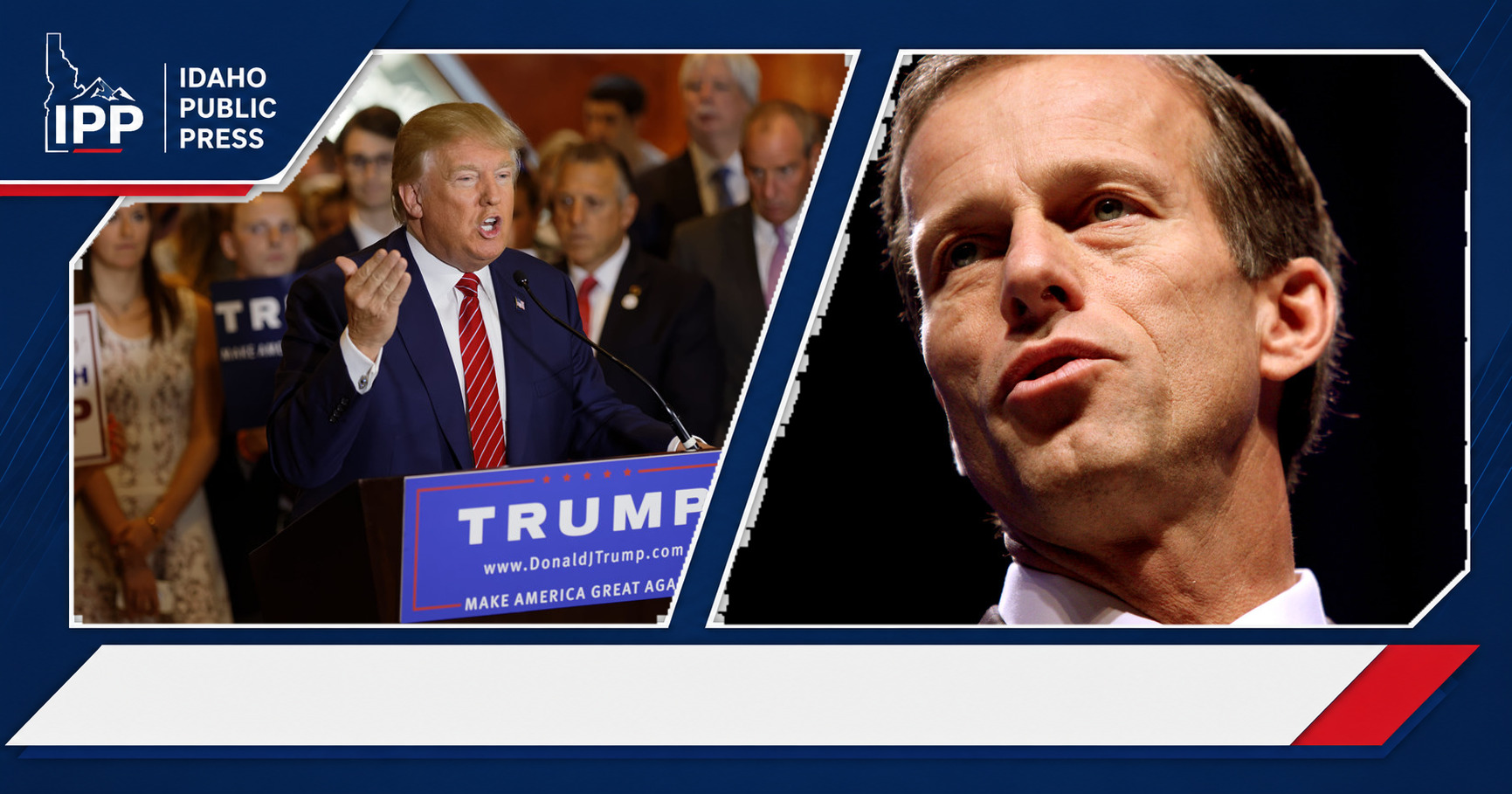
The fight is less about vacation than leverage: Trump wants action on a voting bill, while Thune is pointing to Senate rules and a narrow GOP majority.
Donald Trump and John Thune disagree over whether the Senate should skip its recess to keep working on the stalled SAVE America Act, turning a procedural calendar fight into a test of Republican power. Trump pressed the Senate to stay in session until the voting bill passes; Thune, the Senate majority leader, has resisted or questioned that plan because he says the votes are not there.
The Senate recess dispute matters because it exposes a practical limit on Trump’s pressure campaign: a 53-47 Republican majority still runs into the 60-vote filibuster threshold for most legislation.
A demand meets Senate math
Trump’s message to Thune was blunt. According to the Associated Press, the president wrote on social media that Thune should not allow the Senate to “leave town” until it passes the SAVE America Act, or “far better still,” terminates the filibuster.
That demand frames the issue as a matter of will. If senators stay, Trump’s argument goes, they can be made to act. If leadership wants the bill badly enough, it should force the chamber to keep voting, keep negotiating or change the rules.
Thune’s answer is more mechanical. He told reporters he would support canceling the break if there were a path to passing the bill. But he said the Senate has already voted on it multiple times and asked, “Show me how this ends. What’s the picture of victory at the end?”
That is the core split: Trump is treating the recess as leverage, while Thune is treating it as irrelevant unless someone can produce votes.
Why Thune is holding back
The filibuster is the main obstacle. In the 100-member Senate, most legislation needs 60 votes to advance. Republicans have 53 seats, meaning they cannot pass the measure alone under ordinary Senate rules.
Trump has urged Thune to scrap the legislative filibuster or find another workaround. Thune has consistently said Republicans do not have the votes either to pass the SAVE America Act under current rules or to change the rules around it.
That puts the majority leader in a difficult position. If he refuses Trump’s demand, he risks angering the president and the party’s base. If he keeps senators in Washington without a realistic route to passage, he risks exposing GOP division and consuming floor time needed for other priorities.
Thune has also received public backing from Republicans who see the vote count the same way. Sen. Thom Tillis of North Carolina said Thune’s position reflects most of the GOP conference. Sen. John Cornyn of Texas warned that staying “until the cows come home” would not change the math.
What the bill would require
The SAVE America Act, known as the Safeguard American Voter Eligibility Act, would create new national voting rules. As described by AP, it would require Americans to prove citizenship when registering to vote, most commonly through documents such as a valid U.S. passport or birth certificate.
It would also require valid photo identification before voters cast ballots. Some states already have photo ID requirements, but a federal mandate would create a nationwide standard and could force changes in states with different systems.
Supporters argue the measure is needed to strengthen election integrity and reassure voters. Trump has made it a top legislative priority, tying it directly to the coming midterms and repeating claims of widespread election cheating.
Election experts and voting-rights advocates have warned that the bill could disenfranchise eligible voters who do not have ready access to documents such as birth certificates or passports. AP cited voting experts who said as many as 20 million Americans could be affected by documentation barriers.
Republicans are not fully aligned
The dispute is not simply Trump versus Thune. A faction of Republican senators wants leadership to push harder, even if the path is uncertain.
Sen. Mike Lee of Utah has been one of the loudest voices pressing for action. He warned that how Republicans handle the SAVE America Act could affect not only the midterm elections but also future Senate GOP leadership elections.
Sen. John Kennedy of Louisiana said Thune may be “a bit too cautious” and argued that at some point the Senate has to vote. That view reflects a political calculation: even a failed vote can force senators to take a position and give activists something tangible.
Thune’s allies see a different risk. Repeated votes that fail can make the party look ineffective. For vulnerable senators, another high-profile stalemate could become a liability rather than a rallying point.
The calendar raises the stakes
The timing makes the fight sharper. The Senate’s August break is not just time off; it is a period when senators return home, hold events, campaign and prepare for the fall legislative crush.
Thune had hoped to use the final stretch before recess on a broader list of priorities, including government funding, cryptocurrency legislation and Russia sanctions, according to AP. A prolonged fight over the SAVE America Act could crowd out those items without guaranteeing success on the voting bill.
House Republicans have tried to create another route by using the budget reconciliation process, which can allow certain measures to pass the Senate by a simple majority. The House approved a budget framework that included $10 billion for voting-related changes aligned with the SAVE America Act.
Thune has said Republicans do not currently have the votes for that approach either. That is a key detail: even the workaround may not solve the problem if the GOP conference is not united on the strategy.
What happens next
The immediate question is whether Trump’s pressure changes any Republican votes or changes Thune’s tactics. Trump said he has a good relationship with Thune but added that the majority leader has “got to get his job done.” The White House has also signaled impatience, with press secretary Karoline Leavitt saying Trump’s patience is running out.
Still, Trump has not publicly moved to replace Thune. He told reporters he had not thought about possible alternatives, which suggests the pressure campaign is aimed at forcing movement, not yet a leadership revolt.
The more durable question is what Republicans want from the SAVE America Act fight if they cannot pass the bill. One camp wants to maximize pressure and make the issue central to the midterms. Another wants to avoid a spectacle that drains time and highlights the limits of a narrow majority.
For now, the recess debate is a proxy for that larger choice. Trump can demand that the Senate stay in town. Thune can keep asking for a path to 60 votes. Unless one of those facts changes, the stalled SAVE America Act remains stuck between political urgency and Senate arithmetic.









Leave a Reply