
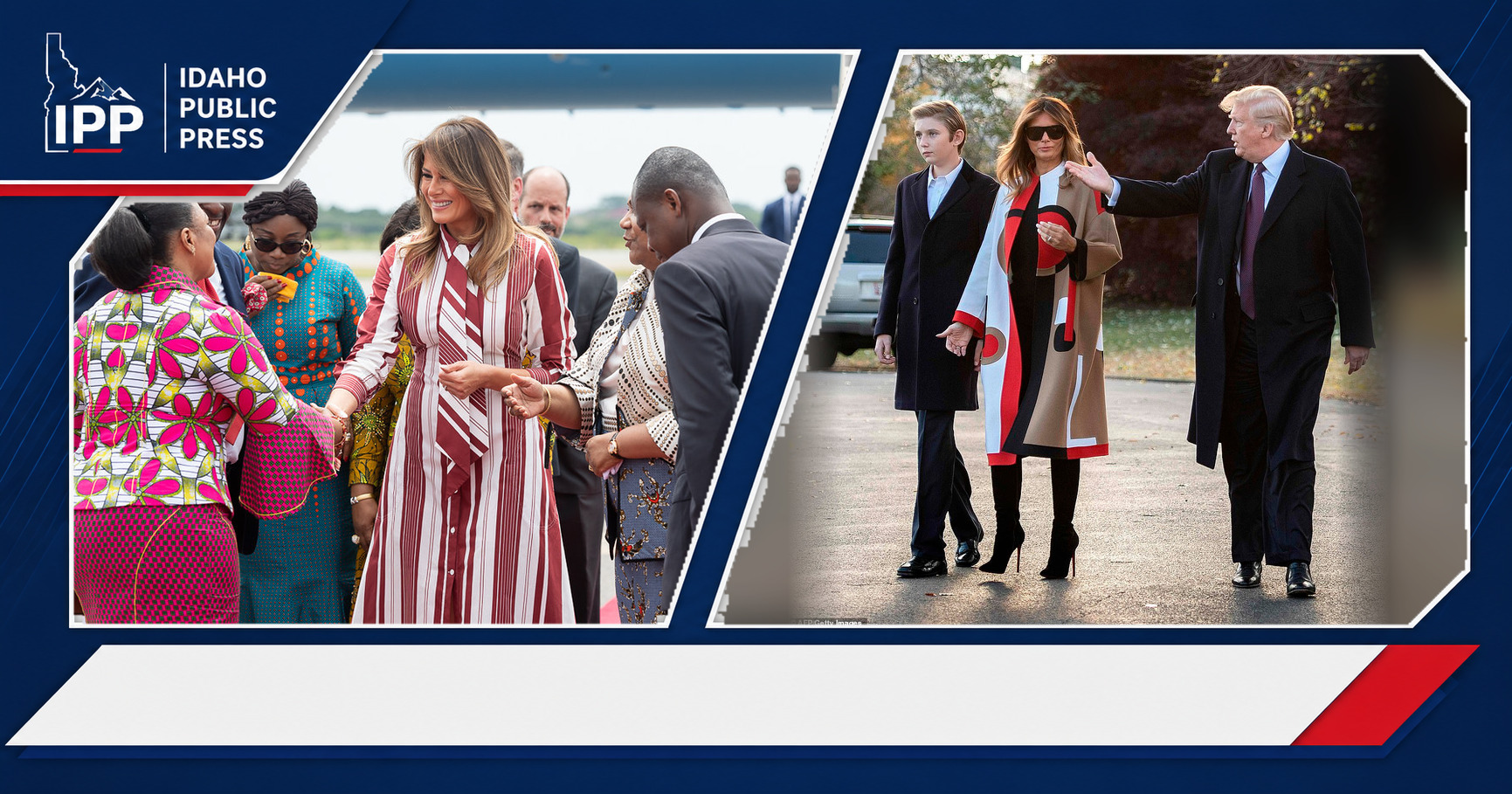
The reported clip matters less as a literal playbook than as a signal: hostile media can turn family members into pressure points in a broader political fight.
A reported Iran-linked video targeted Melania Trump with assassination-themed messaging, according to a Washington Examiner account of the clip. The outlet described the video, titled “Where to Kill Melania?”, as Guard-affiliated media and argued it should be read less as a genuine assassination guide than as propaganda meant to intimidate Americans and boost the Iranian regime’s confidence. The account also said the video ended with a threat involving Barron Trump.
The reported video is ugly by design. Its power is not in its practical details, but in the way it tries to make a public family feel reachable.
A threat aimed at fear
The Washington Examiner described the video as suggesting ways first lady Melania Trump might be murdered before ending with a threat involving Barron Trump. That framing is meant to shock, and it does.
But the more useful question is not whether the clip is grotesque. It is whether it should be read as an actual assassination guide or as an information operation built to intimidate Americans and flatter hard-line audiences inside Iran.
In the Washington Examiner opinion piece, the author leaned toward the second reading. The piece argued that the clip borrows the language of surveillance, secret information and tactical expertise, but relies heavily on claims and imagery that appear designed to sound more sophisticated than they are.
That distinction matters. Propaganda can still be dangerous without being operationally credible. A threat does not need to be realistic to frighten its target, encourage extremists or blur the line between noise and danger.
Why Melania was targeted
Melania Trump is not a military commander or a policymaker. That is part of the point. Targeting a spouse shifts the pressure from politics to family vulnerability, a familiar tactic in intimidation campaigns.
The reported references to New York City, luxury shopping and personal movements appear intended to make ordinary public routines feel exposed. The Washington Examiner noted that the video claims to draw from sources such as “anonymous security networks” and satellite imagery, while also pointing to publicly knowable details.
That is a classic propaganda move: mix real-world names and locations with ominous claims so the final product feels more informed than it may be. The audience is not only the intended victim. It is also supporters, adversaries and anyone likely to amplify the clip online.
Barron Trump’s reported appearance in the threat broadens the intimidation. It turns a political grievance into a family message, which is why even a crude video can become part of the concern.
The Iran context behind it
The source account places the video in the wider context of Iran’s anger over the January 2020 U.S. strike that killed Islamic Revolutionary Guard Corps Gen. Qassem Soleimani. Donald Trump ordered that strike during his first term, and Iranian officials and aligned media have repeatedly invoked revenge since then.
The Washington Examiner also compared the targeting logic to threats involving former Secretary of State Mike Pompeo and former national security adviser John Bolton, both Trump-era figures publicly associated with Iranian retaliation concerns.
That history is why the Melania Trump video cannot simply be laughed away. Iran-linked propaganda exists in a broader environment of threats, grievance and political messaging aimed at Trump and people close to him.
At the same time, not every threatening video is evidence of a near-term operation. Authoritarian and militant media ecosystems often produce theatrical threats that serve domestic morale as much as strategic planning.
Absurd does not mean harmless
The reported video apparently tries to sound detailed by invoking movements, protective patterns and a dramatic method of attack. The Examiner argues that those elements are a sign of weakness, not strength: the claims appear more cinematic than practical.
That is why the word “absurd” has entered the coverage. The alleged scenario is meant to create dread, but the Examiner’s reading is that the presentation looks more like propaganda theater than a usable plan.
Still, calling a threat absurd can cut two ways. It can reduce panic, which is useful. It can also invite people to dismiss the broader danger of violent rhetoric and online amplification.
The safer read is narrower: the clip may not be a credible step-by-step guide, but it is still a statement of hostile intent and psychological pressure.
What remains unverified
Several important points remain unclear from the public reporting. The Washington Examiner described the video as Guard-affiliated media, but the reporting summarized here does not establish the level of official Iranian authorization, if any, behind the video.
Newsweek separately reported that the U.S. Secret Service said it was aware of the video and reviews anything that can be perceived as a threat toward protectees. Newsweek also noted that the statement did not indicate the agency had identified a specific threat.
The uncertainty cuts both ways. A lack of public detail does not mean officials are unconcerned. It also does not mean every piece of threatening media reflects a mature plot.
- Known: A reported Iran-linked video targeted Melania Trump with assassination-themed messaging.
- Reported: The Washington Examiner said the clip ended with a threat involving Barron Trump.
- Reported separately: Newsweek said the Secret Service was aware of the video, while not identifying a specific threat.
- Unclear: The level of official Iranian authorization, if any, behind the video.
- Unclear: Whether U.S. protective agencies made any procedural changes in response.
The signal beneath the spectacle
The most important part of this story is not whether the video’s scenario makes sense. It is that hostile propaganda is increasingly personal, visual and built for circulation.
Melania Trump becomes a symbol in that format: not because she makes national security decisions, but because threatening her can be used to threaten Donald Trump, unsettle his family and stir attention in the United States.
That is why responsible coverage should avoid turning the video into a how-to spectacle while still naming the threat plainly. The public can understand that a piece of propaganda is ridiculous in its details and serious in its intent.
The clean takeaway is this: the reported Iran-linked video targeting Melania Trump appears designed to terrorize more than instruct. But propaganda aimed at a president’s family is not harmless theater. It is part of the intimidation message described in the reporting, whether or not the script is believable.





Leave a Reply