
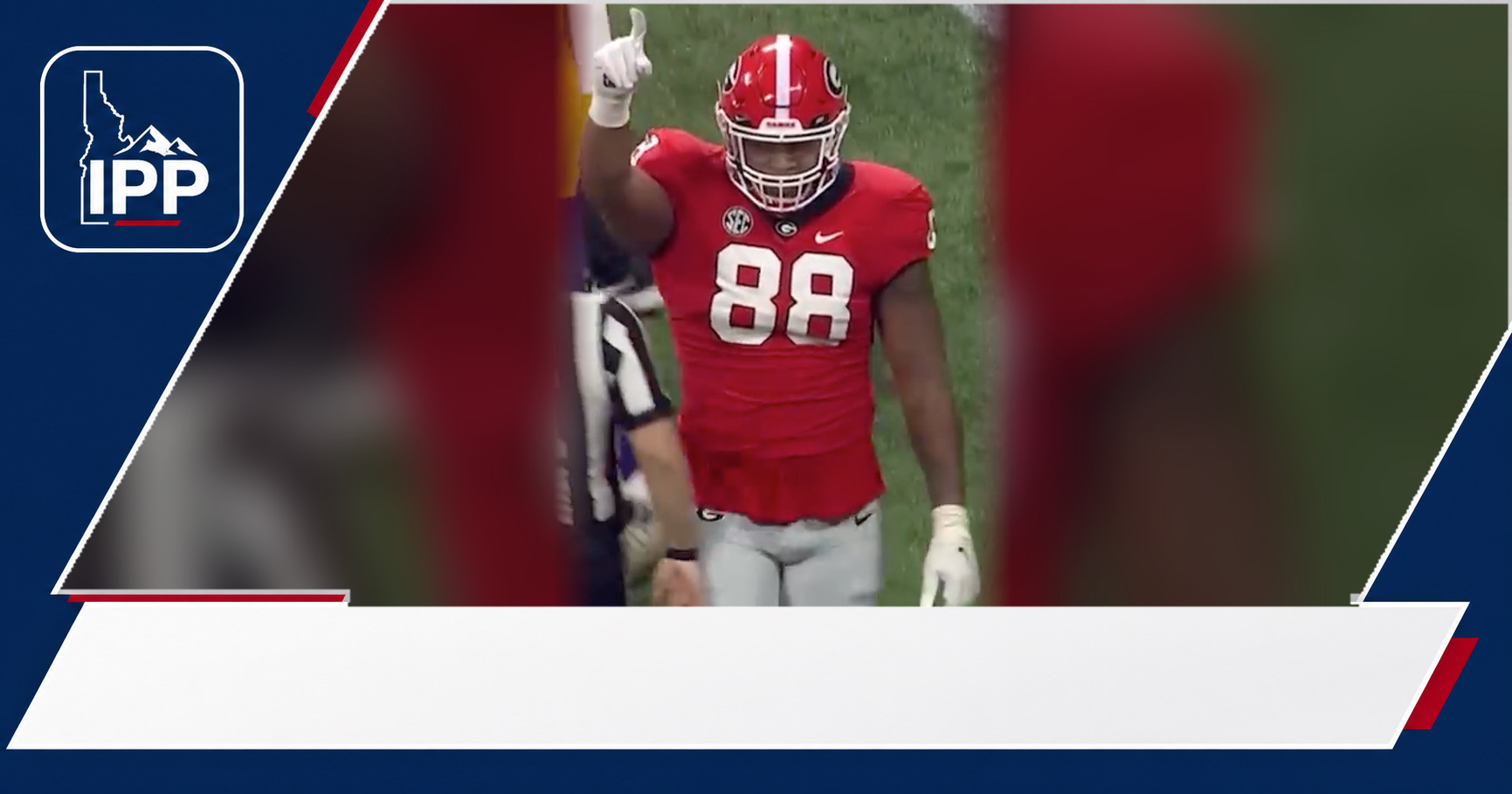
The agreement rewards one of the NFL’s most disruptive interior defenders before he reached the end of his rookie deal. It also tells the league how aggressively Philadelphia plans to keep its defensive front together.
The Eagles agreed to a four-year, $152 million extension with Jalen Carter on Tuesday, July 28, 2026, a Philadelphia commitment that resets the NFL defensive tackle market. The deal makes Carter the highest-paid defensive tackle in NFL history, with agents Drew Rosenhaus and Jason Rosenhaus announcing the agreement and confirming terms worth up to $160 million and $106 million guaranteed.
For Philadelphia, this is not just a reward for a 25-year-old two-time Pro Bowler. It is a declaration that Carter is the rare defensive player worth paying before the market moves again.
A record price for disruption
Carter’s new agreement runs through 2031, according to The Athletic, moving him from rising star to long-term pillar in one of the NFL’s most expensive positions. The headline number is massive, but the guarantee is the real signal: Philadelphia is not treating Carter as a projection anymore.
His traditional sack total does not fully explain the deal. Carter has 13.5 sacks over three NFL seasons, a strong number but not the kind of stat line that alone screams record contract.
The Eagles are paying for the less tidy parts of defensive football: pressure, gravity and chaos. The Athletic reported that Carter led Philadelphia in pressures, quarterback hits and tackles for loss in 2024, the kind of production that changes blocking schemes even when it does not end with a sack.
Interior defenders who can collapse the pocket are expensive because there are so few of them. When one is 25, already decorated and still ascending, the cost of waiting can be higher than the cost of acting early.
Why Philadelphia moved early
Carter was entering the fourth year of his rookie contract, and the Eagles had already exercised his fifth-year option in April, keeping him under contract through 2027. On paper, Philadelphia had time.
In practice, general manager Howie Roseman has often preferred to move before the deadline becomes obvious. The Eagles have recently signed core players early in their eligibility windows, a strategy that can look aggressive in the moment and team-friendly if the player’s value keeps rising.
That is the bet here. If Carter continues to develop into the centerpiece of Philadelphia’s front, a record deal in 2026 could become the going rate rather than an outlier.
The risk is just as clear. The Eagles are committing major guaranteed money years before they absolutely had to, and they are doing it for a player whose impact is enormous but not always captured in easy statistics.
A Georgia-built defensive core
Carter arrived in Philadelphia as the No. 9 pick in the 2023 NFL Draft after a dominant college career at Georgia. He quickly became one of the most important players on an Eagles defense that has long placed a premium on the line of scrimmage.
The extension also fits with another major offseason move: Philadelphia signed Jordan Davis, Carter’s former Georgia teammate, to a three-year, $78 million deal. Together, Carter and Davis give the Eagles a powerful interior foundation rather than a rotating cast of short-term answers.
That matters in today’s NFL because offenses are built to get the ball out quickly, neutralize edge rushers and punish predictable pressure. A defensive tackle who can win immediately inside can break the design before the quarterback ever gets comfortable.
Philadelphia’s message is direct. The team wants its defense to start with force in the middle, and it is willing to pay premium money to keep that identity intact.
The questions attached to talent
The debate around Carter has rarely been about whether he can play. The more complicated question has been how much risk a team should accept when the talent is this rare.
The Athletic noted that Carter fell in the 2023 draft after he pleaded no contest to two misdemeanor charges of racing and reckless driving following a fatal car crash in January 2023 while he was at Georgia. He was also ejected from Philadelphia’s 2025 season opener after spitting at Dallas Cowboys quarterback Dak Prescott before the opening snap.
Those incidents are part of the context around the contract, even if they do not define his entire NFL career. A record-setting extension shows the Eagles are comfortable enough with Carter’s growth, accountability and importance to make him one of the franchise’s central investments.
It also raises the standard around him. When a player becomes the highest-paid at his position, maturity and availability stop being side issues. They become part of the job description.
What Carter must prove now
The new deal turns potential into expectation. Carter is no longer just a young disruptor with elite traits; he is being paid as the best defensive tackle in football.
That means the next step is consistency. The Athletic reported that Carter was limited to 11 games last season because of shoulder injuries and a Week 1 ejection. For a player on this kind of contract, staying on the field is nearly as important as dominating when he gets there.
There is already evidence of how high the ceiling can be. Carter’s disruption was evident in major moments, including the final drive of Philadelphia’s NFC divisional round win over the Los Angeles Rams in January 2025. After that game, linebacker Zack Baun called him “the best in the league,” according to The Athletic.
That is the version the Eagles are paying for: the defender who forces double-teams, wrecks protections and changes late-game decisions. The contract says Philadelphia believes that version is not a flash, but the baseline.
The bigger message from the deal
For the Eagles, this extension is a roster-building statement as much as a player transaction. Philadelphia is choosing certainty with a premium young player rather than waiting for a cleaner or cheaper negotiating window that may never arrive.
For Carter, the deal brings a different kind of pressure. Record money removes the underdog framing and replaces it with a weekly referendum: Did he control the middle of the field? Did he tilt protection? Did he help make everyone around him better?
For the rest of the NFL, the lesson is simple. If a defensive tackle can change the math of an offense before the snap and ruin it after the snap, the market will treat him like a franchise quarterback’s problem, not just another lineman.
Philadelphia’s wager is bold but easy to understand. The Eagles believe Jalen Carter is the center of their defensive future, and they just priced that belief at a historic level.







Leave a Reply