
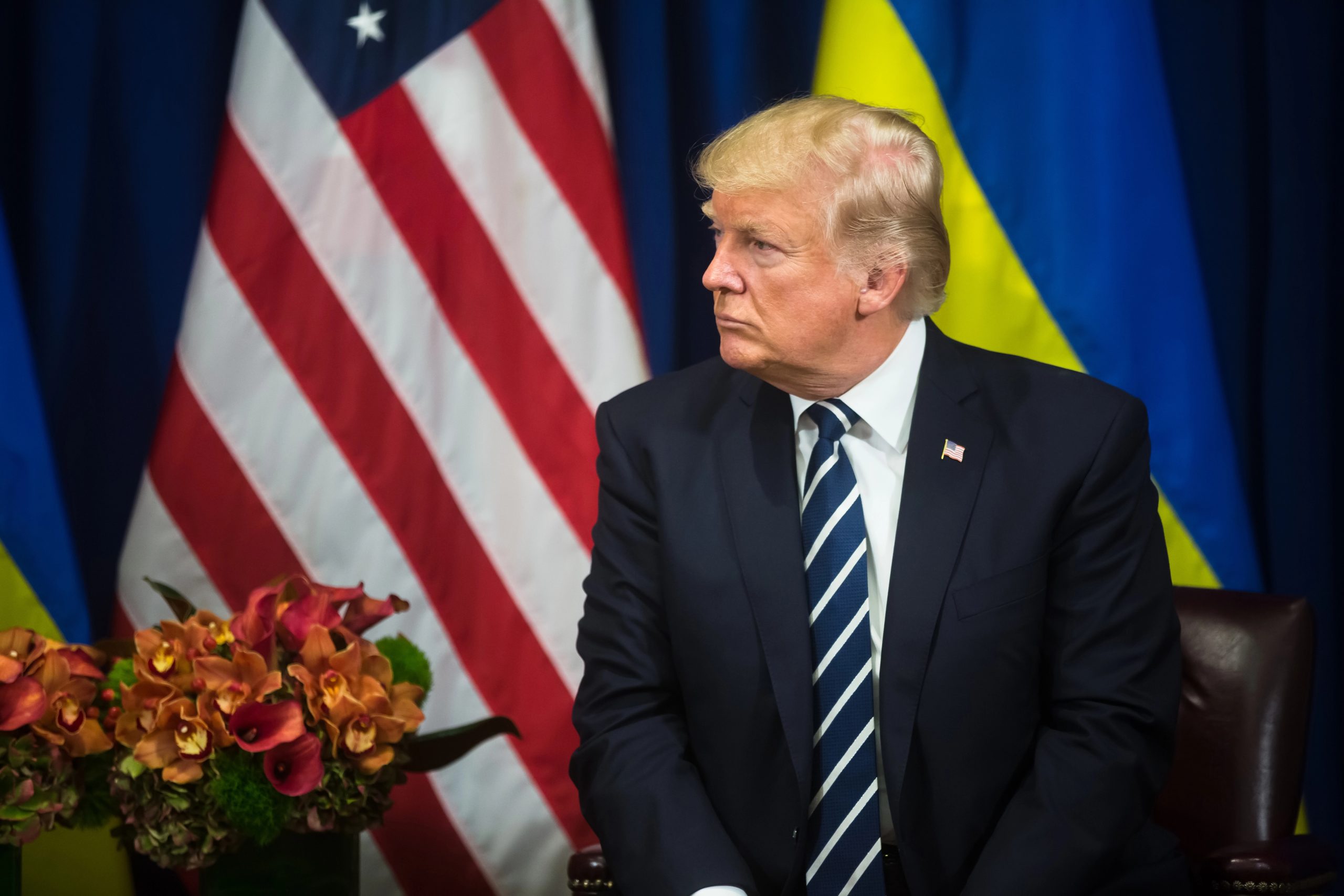
The alleged incident sounds like political gossip. The more important story is what it suggests about access, flattery and stress inside America’s alliances.
A report that Donald Trump threw a tablet after failing to get onto a call with Justin Trudeau is the kind of detail that travels fast because it is vivid, strange and easy to picture.
But the real significance is not the device. It is the larger question the anecdote raises: how much of America’s diplomacy now depends on managing one man’s mood, timing and preferred language?
The alleged Oval Office flashpoint
The episode was reported by The Independent and The Mirror US, citing The Wall Street Journal’s account of how foreign leaders have tried to navigate Trump’s second presidency. According to those reports, the incident happened during a visit by French President Emmanuel Macron, after a technical problem kept Trump from joining a call with other leaders.
The device, according to the reports, had been used by two world leaders to reach Trudeau, who is now Canada’s former prime minister. An official who was present told The Wall Street Journal that Trump, irritated by the failed connection, lobbed the tablet over the Resolute Desk and onto the floor.
TrendWire has not independently verified the account. The available source material does not include a detailed public response from Trump, Trudeau or Macron to that specific allegation.
Still, the story has landed because it fits into a broader portrait now being drawn by multiple outlets: allies trying to keep Washington close while also bracing for sudden shifts, sharp demands and personal diplomacy that can turn on small moments.
Why the Trudeau call mattered
A missed call with a Canadian leader is not a minor scheduling hiccup in the abstract. The United States and Canada share one of the world’s most important trade relationships, a long border, deep defense ties and recurring disputes over tariffs, migration, energy and security.
Reuters reported in March 2025 that Trump and Trudeau spoke for about 50 minutes and discussed fentanyl and trade, two issues that had become central to Trump’s posture toward Canada. That context matters because it shows the relationship was not operating in a ceremonial lane. It was tied to policy pressure.
Trump has frequently framed trade as a test of strength and leverage. Canada, meanwhile, has had to balance confrontation with caution, especially when U.S. tariff threats or border-security demands risked economic fallout on both sides.
That is why the alleged tablet incident is more than an image of frustration. It points to the premium placed on immediate access to leaders and the irritation that can follow when that access breaks down, even briefly.
Allies adapted to Trump’s style
The reports describe a wider effort by European officials to shape their approach around Trump’s preferences. The Wall Street Journal account, as summarized by The Mirror US, said some leaders and aides choreographed outreach, compared notes on messaging and tried to use words or frames Trump favored.
NATO Secretary General Mark Rutte was described in the reporting as someone who worked hard to keep Trump engaged, including by adopting elements of Trump’s texting style. Other leaders reportedly joked that he seemed like an actor who never broke character.
The same account said European Commission President Ursula von der Leyen began referring to sanctions against Russia as tariffs, a word Trump has long praised and used as a central political tool. Allies also reportedly rebranded efforts to end the war in Ukraine as a push to stop the “bloodshed,” echoing Trump’s own language.
None of that means flattery is new in diplomacy. Leaders have always studied one another’s habits. What makes this moment sharper is the extent to which policy conversations appear to be packaged around personal triggers, favorite terms and emotional management.
Europe’s anxiety runs deeper
The tablet story is also being read against a darker backdrop for U.S. allies. The Journal’s broader reporting, as described by The Mirror US, said European officials became worried enough about the direction of the relationship that an emergency meeting in Brussels was called to discuss a future less dependent on U.S. security and economic support.
That anxiety has been building for years. Trump has repeatedly pressed NATO members over defense spending, questioned traditional alliance assumptions and treated trade deficits as evidence that partners are taking advantage of the United States.
The reported discussion of a possible U.S. takeover of Greenland, an autonomous territory of NATO member Denmark, added another layer of unease. For European governments, the concern is not only whether Washington will help defend them. It is whether Washington might become unpredictable in ways that force allies to plan around it.
That is the tension underneath the anecdote. A thrown tablet, if the account is accurate, is not a policy. But the reaction of allies to that style can shape policy outcomes, because foreign governments begin preparing for volatility as much as negotiation.
The risk of personality diplomacy
Personal chemistry has always mattered in foreign affairs. Presidents call leaders directly, use backchannels and rely on instinct in moments when formal processes move too slowly.
The risk comes when personality becomes the operating system. If allies believe the best path to U.S. support is mimicry, flattery or carefully chosen praise, uncomfortable realities can get softened before they reach the Oval Office.
That can create bad incentives. Leaders may avoid blunt warnings. Advisers may package intelligence or diplomatic tradeoffs in language designed to please rather than clarify. Smaller countries may conclude that access matters more than alliances, treaties or institutional channels.
For Americans, the stakes are practical. Diplomacy affects prices, defense commitments, supply chains and whether allies stand with Washington in a crisis. A government that is easy to flatter but hard to predict can impose costs that do not show up until the next emergency.
What remains unanswered
There are still important gaps in the reported tablet episode. The available accounts do not establish every detail of the call, identify all the leaders involved or say whether the device was damaged. They also do not show how Trump’s team internally viewed the moment.
Those gaps matter. A colorful anecdote should not be treated as a full diagnosis of a presidency or a foreign policy doctrine. It is one reported scene inside a much larger set of relationships.
But the reason it is getting attention is clear. It captures, in a single image, the discomfort allies have described more broadly: the need to reach Trump quickly, phrase things carefully and keep the relationship from veering off course.
The tablet may be the headline detail. The bigger story is the diplomatic scramble around it.









Leave a Reply