
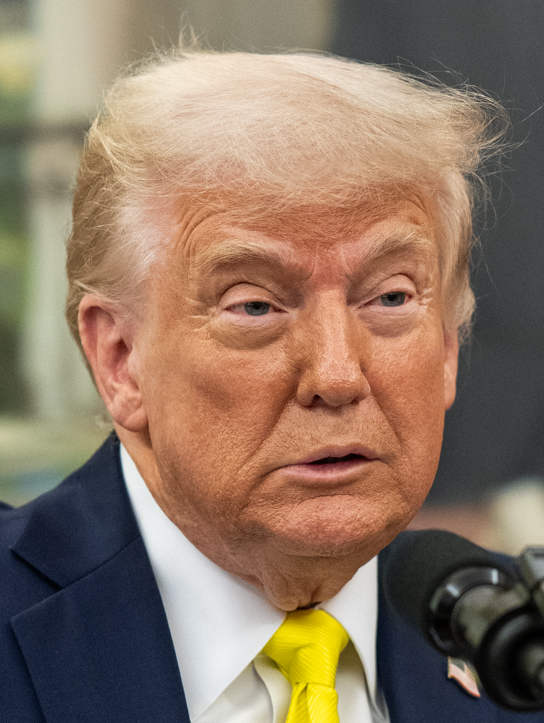
The administration says it is protecting the integrity of U.S. citizenship. Immigration lawyers and former Justice Department officials say the scale of the push is the real controversy.
The Trump administration is ramping up efforts to strip U.S. citizenship from some naturalized Americans, a July 26, 2026 USA TODAY report says, with Justice Department denaturalization cases climbing since 2025. The piece explains the denaturalization plan and why it is controversial: officials say hundreds of people deserve to lose citizenship, DOJ has moved against nearly 90 people, and the government is aiming for at least 250 cases in federal court by October.
Citizenship revoked under Trump is not automatic, and it does not happen by memo. The government must persuade a federal judge that a naturalized citizen obtained that status through fraud, concealment or misrepresentation. The fight is over how aggressively that power should be used.
The plan moves through court
Denaturalization is the legal process for undoing citizenship granted through naturalization. Under federal law, the government can ask a judge to revoke citizenship if officials prove that a person should not have been naturalized in the first place.

That usually means allegations such as using a false identity, hiding a disqualifying criminal record, concealing past conduct or making material misstatements during the naturalization process. These are not administrative cancellations; they are federal court cases that can take years.
According to USA TODAY, the Justice Department has filed at least 89 denaturalization cases as of July 22, 2026. The department has won at least 19 so far, the report said, while many others remain pending.
- Target so far: nearly 90 cases since the start of 2025.
- October goal: at least 250 federal court filings.
- Prior comparison: 24 cases during the Biden administration and 102 during Trump’s first term, according to DOJ figures cited by USA TODAY.
Why officials say it is justified
The administration’s argument is straightforward: citizenship obtained by fraud should not stand. Officials frame the push as a way to protect the naturalization system and ensure that people who lied to become citizens do not keep a benefit they were never legally entitled to receive.
USA TODAY reported that Homeland Security Secretary Markwayne Mullin described the targets as fraudsters and said those who commit fraud during naturalization forfeit the right to keep U.S. citizenship. The administration has also tied the effort to its broader immigration enforcement agenda.
The cases described in the report include serious allegations. Some involve criminal convictions on charges such as sexual abuse, wire fraud and drug distribution. Others involve accusations of false identities, war crimes or support for foreign terrorist organizations including Al-Qaeda and al-Shabaab.
That matters because even critics of the expansion are not necessarily saying every case is improper. Several experts quoted by USA TODAY said the allegations in many cases resemble the types of denaturalization claims past administrations have brought. The difference is the scale and the priority placed on bringing them.
Why critics see a warning
For immigration lawyers and former Justice Department officials, the controversy begins with volume. Denaturalization was historically rare, expensive and labor-intensive. It was often reserved for national security cases, suspected war criminals, terror-linked defendants or people accused of especially serious fraud.
Cassandra Robertson, a Case Western Reserve University law professor who studies denaturalization, told USA TODAY the current push represents a major increase not seen in decades. Stacey Young, a former DOJ lawyer, warned that the effort sends a message that naturalized citizenship is precarious.
That message could reach far beyond the defendants named in court filings. The United States has more than 26 million naturalized citizens, according to the report. Most are not accused of fraud or crime, but an expanded denaturalization campaign can still create fear that citizenship is less secure for immigrants than for those born in the country.
Supporters of the plan would likely reject that framing, arguing that lawful naturalized citizens have nothing to fear. Critics counter that government priorities can shape public perception even when the legal standard remains narrow.
A rare tool becomes a metric
The most important change may be bureaucratic. Within a week of taking office in 2025, Trump ordered that adequate resources be devoted to denaturalizing some U.S. citizens, USA TODAY reported. Months later, a DOJ memo directed the civil division to prioritize and maximally pursue denaturalization proceedings.
The administration has also drawn U.S. attorney’s offices into the effort, not just the DOJ civil division that typically handles these cases. Former DOJ attorneys told USA TODAY that this shift is unusual and suggests the government is trying to generate more filings than the traditional process would normally produce.
That could create trade-offs. Lawyers and investigators assigned to denaturalization are not working on other civil enforcement priorities, including fraud, corruption or other government litigation. The administration may see the shift as a necessary investment; critics see a resource-heavy way to make an immigration point.
The White House has publicly promoted the campaign, calling it the largest denaturalization effort ever in a July 20 post on X, according to USA TODAY. That slogan captures the political tension: the administration is treating scale as a selling point, while opponents treat scale as the warning sign.
The legal stakes are high
Denaturalization is severe because citizenship is the gateway to political membership, voting rights, a U.S. passport and protection from deportation. If citizenship is stripped, a person may become vulnerable to removal proceedings, depending on immigration status and the facts of the case.
Still, the government faces a demanding process. It must go to court, present evidence and win before a judge. A target can contest the allegations, and the outcome is not guaranteed.
That is one reason some former officials doubt the campaign will meaningfully advance Trump’s deportation goals. Young told USA TODAY the process is slow-moving and difficult to scale. Even 250 filings would be a small number compared with the size of the immigrant population and the administration’s broader enforcement ambitions.
But symbolic policies can have real effects. A few hundred cases can influence how naturalized citizens think about permanence, paperwork and the risk of old omissions being reexamined years later.
What remains unclear
The biggest unanswered question is how far the administration intends to push after October. A goal of 250 cases is already a sharp increase compared with recent administrations. Whether that becomes a ceiling, a first benchmark or a sustained annual pace is not yet clear.
It is also unclear how courts will respond if the caseload keeps rising. Judges may accept the government’s arguments in cases involving clear fraud or serious concealment, but heavily contested cases could drag on and consume the very resources the administration is trying to mobilize.
The administration’s strongest claim is that citizenship should not protect fraud. Its weakest point is the fear that a rare remedy is being converted into a political signal aimed at immigrants broadly.
The practical takeaway is narrow but serious: denaturalization remains a court-based process aimed at naturalized citizens accused of fraud or disqualifying misconduct, not a blanket revocation of citizenship. The political takeaway is broader: the Trump administration is making the power to strip citizenship a centerpiece of immigration enforcement in a way the country has not seen in decades.










Leave a Reply