
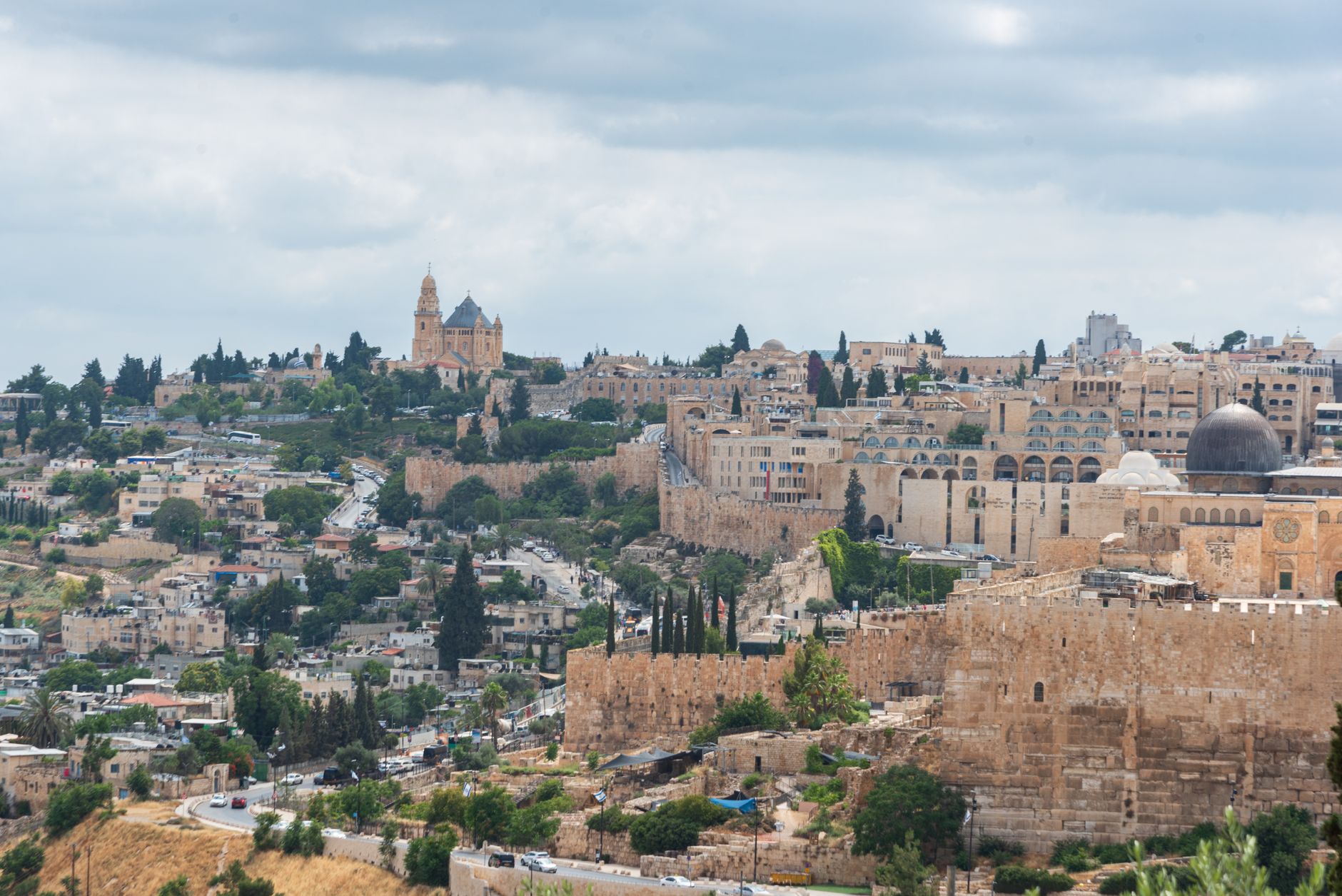
The dispute cuts into Israel’s image as a guardian of holy sites and lands at a politically sensitive moment with American Christians watching closely.
For many Christians in Israel, the fear is not only that they can be targeted on the street. It is that the targeting is starting to feel ordinary.
A new Washington Post report has put fresh attention on complaints from Christian clergy and residents who say spitting, vandalism, intimidation and occasional violence by Jewish extremists are being met with too little urgency by Israeli authorities.
A holy city pressure point
The tension is especially sharp in Jerusalem, where sacred geography leaves little room between communities. The Post opened its report on Mount Zion, where Jewish and Christian sites sit close together: King David’s tomb, the traditional room of the Last Supper and the Dormition Abbey.
That proximity is part of Jerusalem’s power. It is also why harassment in those narrow streets can carry weight far beyond a single insult or shove.
The Post described an assault on a nun that was captured by surveillance cameras in broad daylight. Nikodemus Schnabel, the abbot of Dormition Abbey, told the newspaper that Christians are regularly “hit, spit at, beaten,” and warned that documented incidents are only a fraction of what happens.
His blunt assessment was not that the attack was an aberration. “This is not the case of one lost soul,” he told the Post.
Why the complaints are escalating
Christian leaders in Israel have warned for years that harassment by fringe Jewish nationalist and ultra-Orthodox elements has become more visible. The complaints often follow a familiar pattern: clergy being spat at, pilgrims taunted, church property vandalized, processions disrupted or residents threatened in areas where religious symbolism and political control overlap.
Church officials have also said many incidents never enter official statistics because victims doubt anything meaningful will happen. That is one reason a video-recorded attack can become a flashpoint: it makes a usually deniable pattern harder to dismiss.
The targets are not one single group. Israel’s Christian community includes Arab Christian citizens, Palestinian Christians in East Jerusalem and the West Bank, clergy from global churches, foreign pilgrims and local institutions that run schools, hospitals and charities.
That mix makes the issue both local and international. An insult to a monk in Jerusalem can become a diplomatic complaint in Europe, a warning from church leaders in the Middle East or a political problem with Christians in the United States.
The government response is under scrutiny
Israel has long presented itself as a state that protects freedom of worship for Jews, Muslims and Christians. Israeli officials have also condemned high-profile incidents in the past, including spitting at Christian worshippers in Jerusalem.
But the criticism now is not only about whether condemnations are issued. It is about whether the behavior changes afterward.
Christian leaders quoted by the Post argue that attackers feel emboldened under Prime Minister Benjamin Netanyahu’s government, whose coalition depends on far-right and religious nationalist parties. That claim is politically charged, and Israeli officials and supporters of the government would dispute any suggestion that state policy encourages attacks on Christians.
The harder question is practical: whether police, prosecutors and political leaders are sending a clear enough signal that harassment of Christians is not a tolerated street custom, a nuisance or a price of religious tension.
A tiny minority with global reach
Christians make up a small share of Israel’s population, roughly under 2 percent according to Israeli demographic data in recent years. Most Christian citizens of Israel are Arab Christians, while Jerusalem also hosts clergy and pilgrims tied to churches around the world.
That small footprint can make the community feel vulnerable. It can also magnify the symbolism of every attack.
The Holy Land is not just another religious landscape. For Christians, sites in Jerusalem, Bethlehem, Nazareth and the Galilee are central to scripture, pilgrimage and identity. For Israel, stewardship of holy places is bound up with its international legitimacy and its relationships with Western governments.
That is why this story reaches beyond Israel’s internal politics. Evangelical Christians in the United States have historically been among Israel’s strongest supporters. If harassment of Christians becomes a more prominent public issue, it could complicate a relationship that Israeli leaders have often treated as politically reliable.
The regional comparison cuts both ways
Supporters of Israel often note that Christians in Israel have legal protections and public institutions that Christians in some parts of the Middle East lack. That point matters. Christian communities in Iraq, Syria and Gaza have been devastated by war, extremism, displacement or economic collapse. In Saudi Arabia, public Christian worship is not permitted.
But that comparison does not erase the complaints coming from Jerusalem’s churches. A community can be safer than Christians elsewhere in the region and still face a serious problem with harassment, vandalism or intimidation.
The more relevant standard for Israel is the one it sets for itself: equal protection under the law and freedom of worship at some of the world’s most contested sacred sites.
For church leaders, the issue is not whether Israel is the worst place in the region to be Christian. It is whether the state is willing to confront extremists whose actions undermine the promise that holy places are open and protected.
What would change the equation
The next test will be visible enforcement. Public condemnations matter less if victims believe attackers face little consequence.
Meaningful action would likely include faster arrests in documented cases, clearer prosecution of vandalism and assault, more police presence around flashpoint routes and stronger public messaging from religious and political leaders across Israel’s spectrum.
There is also a social test. Many Israelis reject attacks on Christians, and Jewish-Christian relations in the country cannot be reduced to the behavior of extremists. But silence from mainstream institutions can leave the loudest actors defining the atmosphere in shared sacred spaces.
For now, Christian leaders are pressing a simple claim: the problem is no longer invisible, and treating it as a string of isolated incidents is no longer convincing. In a land where stones, doorways and processions carry centuries of meaning, even small acts of harassment can become a warning sign about who feels protected — and who does not.








Leave a Reply