
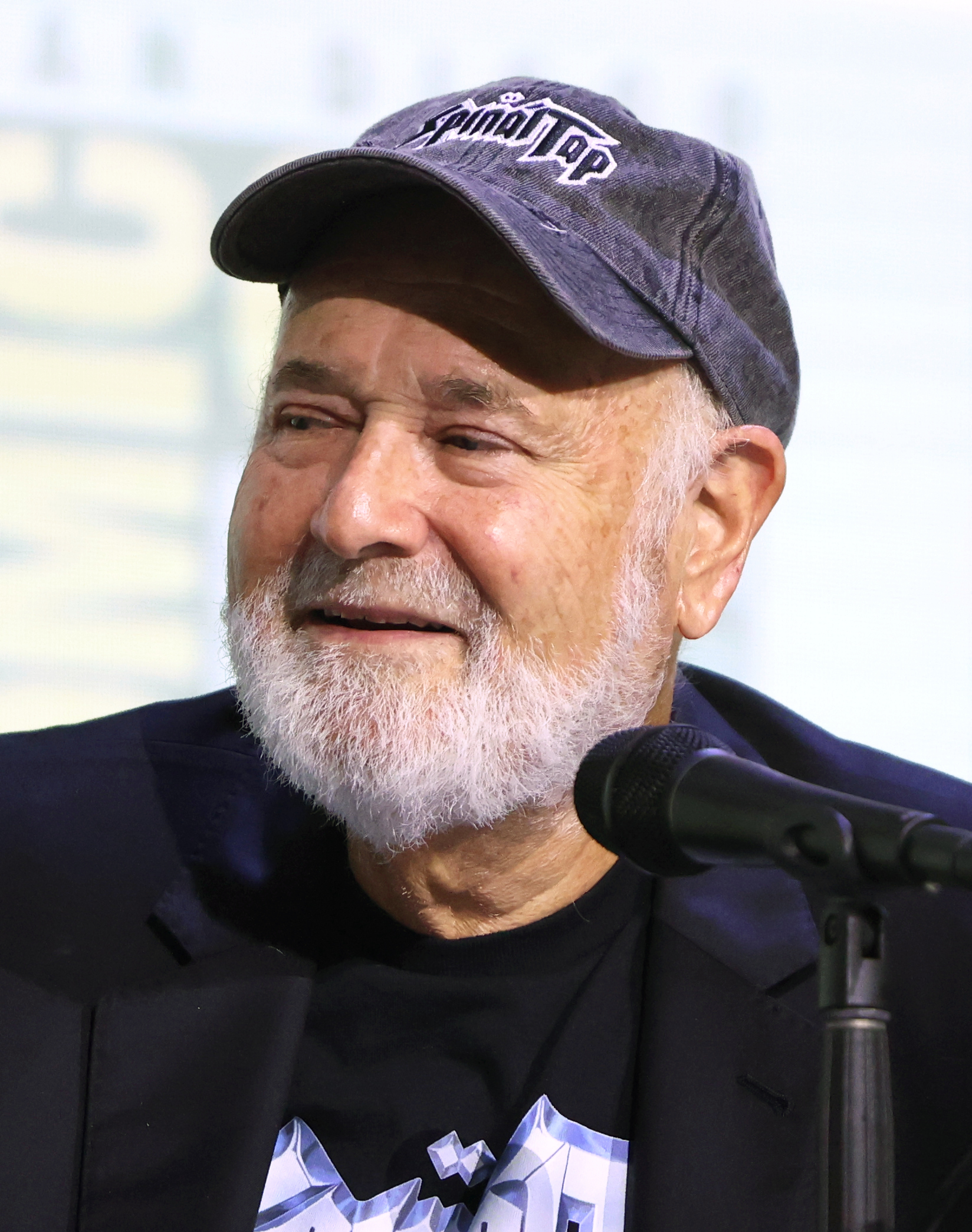
The late filmmaker’s reported final acting role uses a Founding Fathers joke to argue about term limits, power and political cowardice. Jimmy Kimmel’s cameo gives the sketch an extra late-night charge.
Rob Reiner’s reported final acting appearance does not play like a farewell. It plays like a warning.
In a surprise cameo on Larry David’s HBO sketch series Life, Larry and the Pursuit of Unhappiness: An Almost History of America, Reiner appears as George Washington in a scene that starts with the first president giving up power and ends as a pointed attack on Donald Trump-era politics.
Washington becomes the setup
Entertainment Weekly reported that Reiner appears in the second episode’s final sketch, portraying Washington as he announces he will leave office after two terms rather than seek more power.
That historical premise is simple, almost classroom-clean: Washington steps aside, setting an example for presidents who follow him. But the sketch quickly turns the moment into a test of whether American institutions can survive a leader who refuses the norms Washington helped establish.
Larry David, playing an anxious onlooker, keeps pressing Washington with darker hypotheticals. What if a future president ignores the two-term tradition? What if Congress or the Supreme Court refuses to stop him? What if the peaceful transfer of power is no longer treated as sacred?
The comedy comes from the mismatch. Reiner’s Washington speaks with calm faith in the republic. David’s character keeps describing a country that looks a lot more like the one viewers recognize from recent headlines.
The Trump target is barely hidden
The sketch does not need to say Trump’s name to make its target obvious. Entertainment Weekly described the scene as a thinly veiled swipe at the president, noting that Trump has repeatedly floated the idea that he would like to serve a third term.
Under the 22nd Amendment, U.S. presidents are limited to being elected twice. Changing that would require an extraordinarily difficult constitutional process, not just a campaign slogan or personal wish.
That is part of what gives the scene its bite. The joke is not only about one politician’s appetite for power. It is about the system around him, and whether the people inside that system would actually enforce the rules if doing so became politically costly.
According to EW’s account, David’s character escalates the hypothetical into a portrait of a leader who rejects election results, attacks critics and bends public life around personal grievance. Reiner’s Washington, still clinging to faith in civic virtue, cannot quite imagine such a person rising to the presidency.
Kimmel adds another layer
Jimmy Kimmel’s appearance makes the sketch more than a history gag with modern targets. It also pulls late-night television’s own fight with Trump into the frame.
Kimmel has long used his ABC show to mock Trump, and the comedian has said publicly that he believes political pressure played a role in turmoil surrounding his program. In the sketch, he appears as another colonial-era onlooker, dismissing the idea that a president would spend time attacking someone who made fun of him.
That line works because viewers know exactly why Kimmel is there. Trump has repeatedly attacked late-night hosts and media figures who criticize him, and Kimmel has been one of the most visible entertainers in that conflict.
The cameo is brief, but it changes the temperature of the scene. Reiner brings the moral authority of Washington as imagined by the sketch. David brings the neurotic dread. Kimmel brings the contemporary media fight, where jokes about power can become part of the political battlefield.
Reiner’s politics were never subtle
Reiner was not a celebrity who kept his politics in the background. The filmmaker behind When Harry Met Sally, Stand by Me, The Princess Bride and Misery was also a vocal Democrat and frequent critic of Trump.
Entertainment Weekly noted that Reiner criticized Trump sharply before his death, including in an MSNBC interview in which he called Trump mentally unfit for office and accused him of treason. Those were not throwaway celebrity comments. They were part of Reiner’s public identity in the Trump years.
That history matters because this cameo now lands differently. Had Reiner been alive, the sketch would read as another political shot from a Hollywood liberal who never hid his views. Seen after his death, it becomes a kind of final on-camera punctuation mark.
It is also a reminder of how Reiner’s career moved between comfort-food classics and combative civic commentary. The man who helped shape some of the most rewatchable American films of the late 20th century also spent his later years treating politics as an emergency.
A posthumous appearance changes the mood
The word “posthumous” can make any performance feel loaded, even when the work itself was made as comedy. Here, that tension is especially strong because the sketch ends in bleakness rather than sentiment.
Entertainment Weekly reported that the scene’s crowd eventually breaks into a physical mess, with Reiner’s Washington left defeated by what he is seeing. The punchline is not optimism about the republic. It is exhaustion.
That is a risky tonal choice for a final screen appearance, but it fits the show’s premise. Life, Larry and the Pursuit of Unhappiness uses American history as a comedy machine, not a museum exhibit. The past is less a setting than a way to argue with the present.
Reiner’s presence gives that argument weight. He is not simply playing Washington in a wig. He is playing a founding ideal being confronted with modern cynicism, institutional weakness and the fear that norms only work when people in power choose to honor them.
Why the clip is traveling now
The segment is spreading because it sits at the intersection of celebrity, politics and timing. A beloved filmmaker appears after his death. A late-night host known for battling Trump joins the joke. A Larry David project turns constitutional anxiety into profanity-laced satire.
It also arrives in a media environment where entertainment clips often do political work faster than speeches do. A short sketch can condense several years of argument about term limits, courts, Congress, election denial and press freedom into one uncomfortable laugh.
That does not mean the sketch will persuade people who disagree with its politics. It is too blunt for that, and it is clearly written for an audience already alarmed by Trump. But persuasion may not be the point.
The point is recognition. For viewers who share Reiner’s fears, the scene offers a cathartic version of the question that has hovered over American politics for years: What happens when the guardrails depend on people who may not want to guard them?
The final sting
Reiner’s cameo works because it uses the oldest American presidential norm to frame one of the country’s most current arguments. Washington giving up power becomes the measuring stick. Everyone after him is judged against it.
That is why the sketch feels sharper than a standard Trump joke. It is not just calling a politician vain or reckless. It is asking whether the country still has enough institutional spine to withstand a leader who tests every boundary.
For Reiner, who spent his final years speaking about Trump in urgent and often furious terms, the role is almost too fitting. His last reported acting project puts him in the costume of America’s first president, warning from inside a comedy sketch that the experiment can still fail.



Leave a Reply