
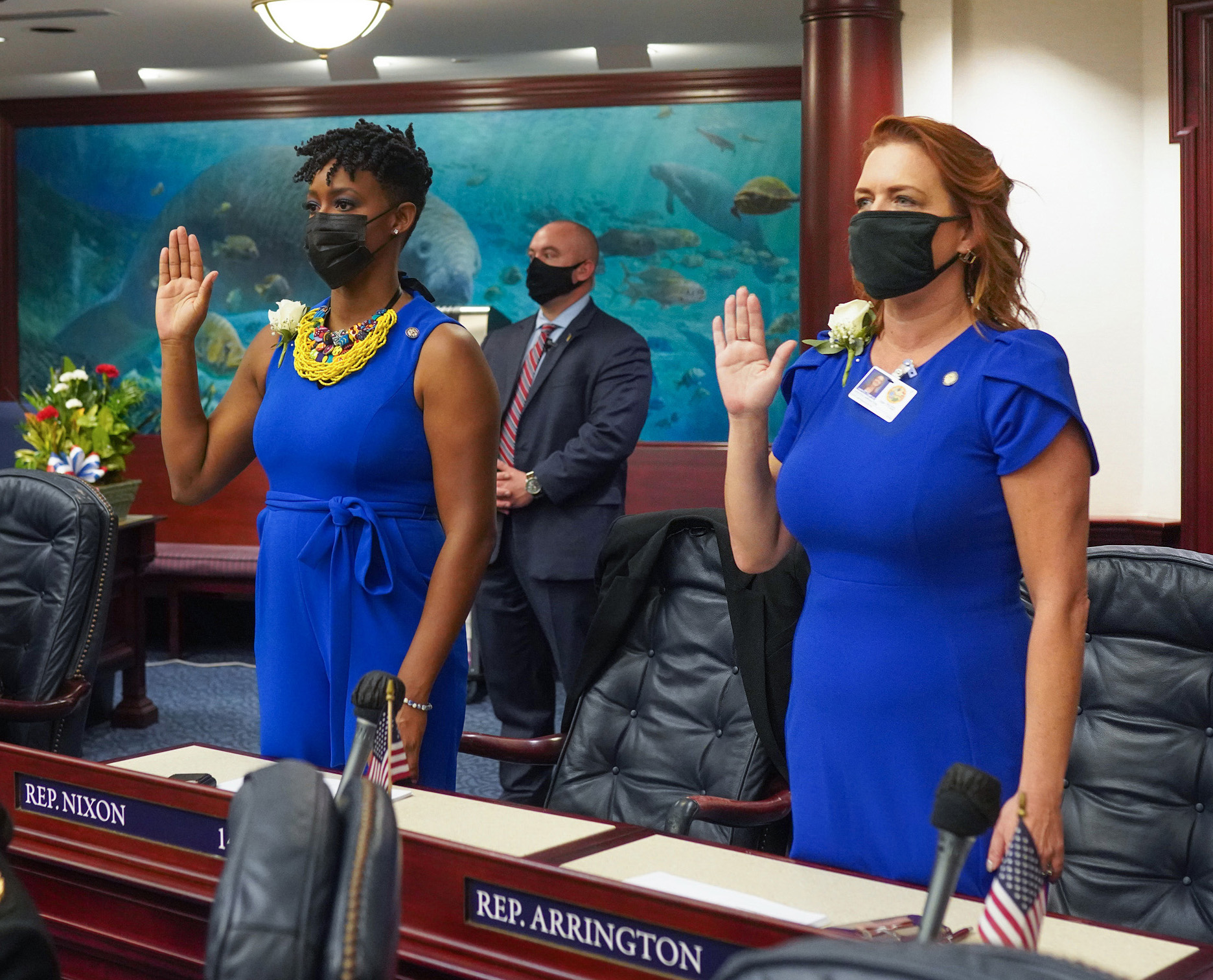
The piece is a political argument, not a neutral news report. Its force comes from connecting rhetoric, immigration enforcement, voting power and congressional inaction.
“The Trump administration is pushing a culture of hate,” Florida State Rep. Angie Nixon argues in Newsweek; the article is an opinion piece criticizing Donald Trump and saying the administration is harming marginalized communities, including Black people, immigrants, the LGBTQ+ community and other vulnerable groups. Nixon’s central claim is that Trump-aligned policies and rhetoric are taking away rights and representation, dividing communities, and fostering distrust, discrimination and violence.
Her essay is not a detached policy memo. It is a challenge to elected officials, especially members of Congress, whom she accuses of answering alleged government overreach with speeches, letters or silence when vulnerable people need protection.
Nixon’s charge is institutional
Nixon, a Florida state representative and Democratic candidate for U.S. Senate, frames her argument around more than Donald Trump’s tone. She writes that powerful officials are using government authority in ways that endanger due process, liberty and political representation for communities already under pressure.

That distinction matters. Calling something a “culture of hate” can sound like a broad moral accusation. Nixon’s essay tries to make it concrete by pointing to immigration enforcement, voting rights, gerrymandering and what she sees as a failure of checks and balances.
She argues that the American system was built to prevent any one person from wielding unchecked power. In her telling, that system is being tested not only by the Trump administration’s actions, but by lawmakers who excuse them, minimize them or avoid confrontation.
Newsweek identifies the piece as opinion and notes that the views are the writer’s own. That label is important: readers are being presented with Nixon’s political judgment and call to action, not a neutral news account with responses from every side.
Immigration drives the argument
The emotional center of Nixon’s essay is immigration. She writes that Black, Brown, immigrant and working-class communities are on the front lines of what she describes as hateful policies and actions by the administration.
One of her clearest examples is Temporary Protected Status. Nixon says that in Florida alone, more than 400,000 people hold TPS and have been left in uncertainty because of Trump and his allies. Her point is not only legal status, but daily life: parents, neighbors and co-workers who had documentation now wondering how to care for themselves and their families.
She also cites recent encounters involving immigration agents. According to Nixon’s essay, two men were fatally shot by U.S. Immigration and Customs Enforcement officers in the span of a week, and a third person died while fleeing an encounter with immigration agents. She names Lorenzo Salgado Araujo, Joan Sebastian Durán Guerrero and Juan Jairo Coronilla Duran as examples of the danger she says immigrant communities face.
Those references are doing heavy work in the opinion piece. They turn a national argument over immigration into stories of workers, fathers and families, and they make Nixon’s larger claim harder to dismiss as only ideological language.
Representation is another battleground
Nixon also argues that the administration and its allies are trying to silence marginalized communities politically. She points to what she describes as the gutting of the Voting Rights Act of 1965 this spring and says it has opened the door for those in power to protect themselves through redistricting.
Her concern is gerrymandering that limits fair representation for Black communities. In Nixon’s framing, the fight over maps is not a technical dispute for lawyers and political consultants. It is about whether voters can choose their leaders or whether leaders can choose their voters.
That is a familiar fault line in American politics. Supporters of stricter election rules and aggressive redistricting often argue they are acting within the law or protecting political interests like any other party. Critics argue that legal procedure can still produce anti-democratic outcomes when it dilutes the power of specific communities.
Nixon lands firmly on the second side. She treats representation as part of the same pattern as immigration enforcement: state power being used against people with less power to resist.
Congress is the intended audience
Although Trump is the central figure in the essay, Nixon’s sharper disappointment is aimed at elected officials who, in her view, know better and still do too little. She criticizes members of Congress who praise the president, excuse overreach or oppose injustice only rhetorically.
Her argument is that public service requires more than statements. She says strongly worded letters and speeches are not enough when people are being denied due process, liberty or safety. The standard she sets is direct action: officials should put themselves between constituents and harmful government power.
That is a demanding vision of officeholding. It also reflects the political lane Nixon is occupying as both a state lawmaker and a U.S. Senate candidate. She is not simply describing a crisis; she is trying to define what courage should look like inside it.
For readers, that is where the opinion piece becomes more than an anti-Trump essay. It is also an argument about complicity — the idea that silence, caution and procedural gestures can help normalize actions that should be resisted.
The missing response matters
Because Nixon’s piece is an opinion essay, it does not read like a full debate brief. It does not include a detailed response from Trump administration officials or from supporters who would frame immigration enforcement as law and order, voting changes as election integrity, or criticism of Trump as partisan exaggeration.
That absence does not invalidate the essay, but it should shape how readers process it. Nixon is making a case from the perspective of communities she says are being harmed. The strength of the piece is moral clarity; the limitation is that it largely assumes readers already see the same pattern she sees.
The unresolved question is how much of the harm she describes can be traced to specific policies, how much comes from political rhetoric, and how much is amplified by local decisions made far from Washington. Those distinctions matter for accountability.
Still, Nixon’s core warning is plain: when government language hardens against marginalized people, policy can follow, and when policy follows, real people absorb the consequences.
What readers can watch next
The practical takeaway is not that every reader will accept Nixon’s framing. It is that her essay identifies several pressure points likely to keep shaping the political fight around Trump: immigration enforcement, TPS, voting rights, congressional oversight and representation for Black and immigrant communities.
The claims worth tracking are specific:
- whether TPS holders in Florida and elsewhere receive clearer protections or face deeper uncertainty;
- how immigration enforcement incidents are investigated and publicly explained;
- whether redistricting fights reduce representation for Black communities;
- what members of Congress do beyond statements when they allege rights are being threatened.
Nixon ends with a call for marginalized communities to demand more from lawmakers and for elected officials to do more than perform concern. Whether readers agree with her politics or not, the essay’s challenge is direct: if leaders believe people are being harmed, what are they prepared to risk to stop it?





Leave a Reply