
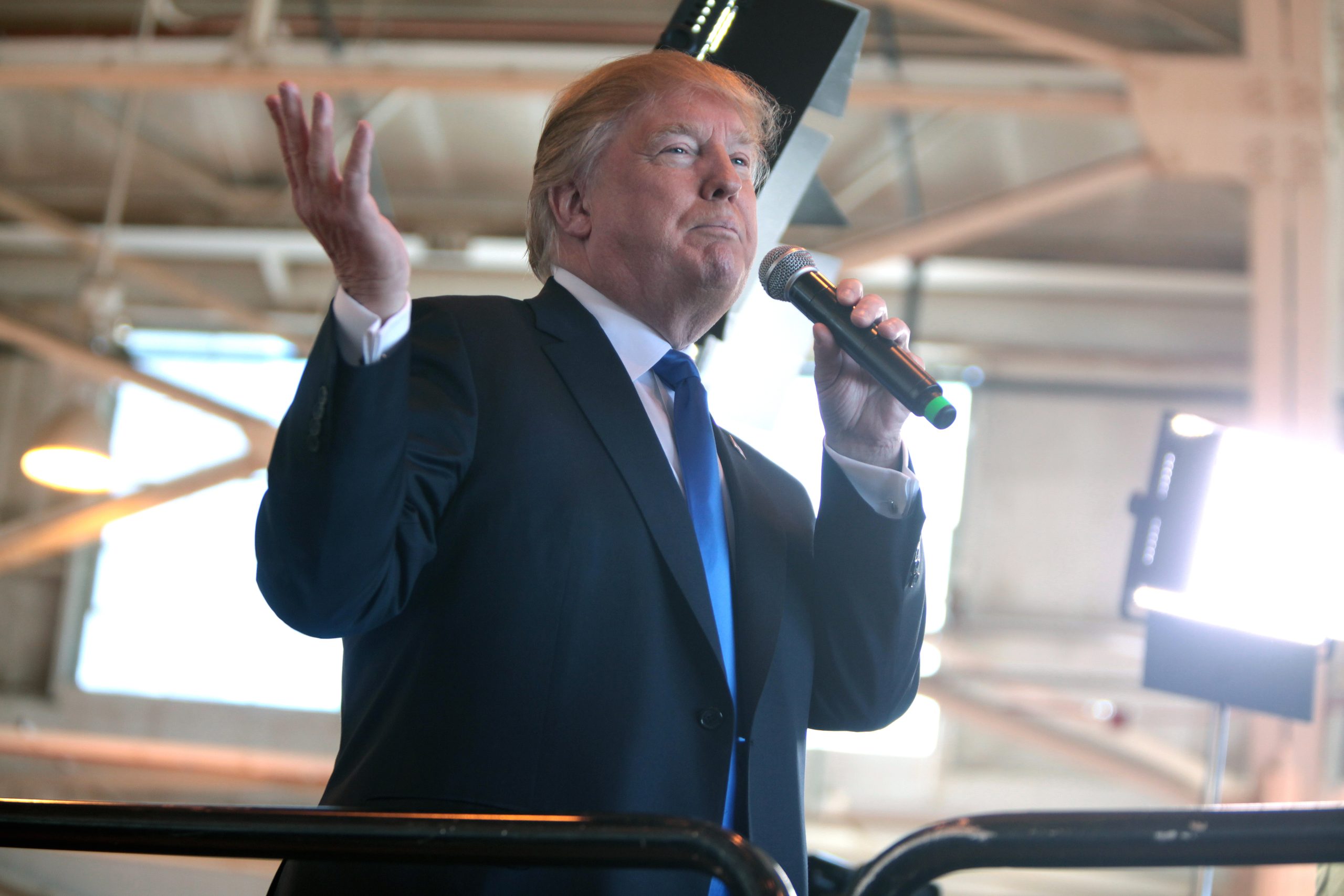
Publishers wondered whether readers were done with Trump tell-alls. The fast rise of Maggie Haberman and Jonathan Swan’s book suggests the appetite is not gone.
Donald Trump called the book “garbage,” but Regime Change: Inside the Imperial Presidency of Donald Trump has sold half a million copies after a sharp sales surge. The damning book Trump attacked, written by Maggie Haberman and Jonathan Swan and published by Simon & Schuster, has become one of the clearest signs this year that readers are still buying deep dives into Trump’s presidency.
The milestone matters because political publishers had been wondering whether the market was exhausted. Instead, Trump’s dismissal appears to have become part of the book’s publicity engine.
A Trump attack, then a jump
Regime Change arrived with two built-in advantages: famous authors and a subject who still dominates American politics. Haberman and Swan, both New York Times journalists, have spent years reporting on Trump, his advisers and the internal mechanics of his political operation.
Trump’s public reaction gave the book another boost. He dismissed it as “garbage,” according to the report that put the book’s sales at half a million copies. The Associated Press previously reported that Trump had trashed the book as “mostly made up.”
For Trump’s supporters, that kind of rejection may reinforce the view that mainstream political books are hostile or unfair. For critics and political obsessives, the same rejection can signal that the book has landed close enough to bother him. Either way, the fight itself becomes marketing.
That is the odd dynamic around Trump-era publishing: a denunciation can be damaging to credibility with one audience while making the book more irresistible to another.
Why the number stands out
The half-million figure builds on an unusually strong opening. AP reported on June 30 that Simon & Schuster said Regime Change had sold more than 300,000 copies in its first week.
That first-week total included preorders, print books, ebooks, e-audiobooks and orders that had not yet been fulfilled because demand outpaced available stock, according to AP. The publisher also said at the time that the book had gone into a third hard-copy printing, with 200,000 more copies on order.
AP described that opening as the best first-week pace for any hardcover nonfiction book in 2026. That matters because the Trump-book boom of his first term had appeared to cool during his second. Publishers had speculated that readers might believe there was little left to learn.
This sales run complicates that assumption. It suggests the fatigue is real for some readers but not strong enough to stop a high-profile book with fresh reporting, recognizable authors and a noisy Trump response.
What the book claims to show
Regime Change covers the first 14 months of Trump’s second presidency, according to AP, taking readers inside the West Wing, the White House residence, Mar-a-Lago, Air Force One and overseas trips with the president.
The book’s reporting is described as focusing on the exercise of presidential power: military decisions, Trump’s approach to the Justice Department, conversations with power players and his attention to remaking the look and structure of the White House.
One central thesis, as AP summarized it, is that Trump himself believes losing the 2020 election ultimately made him more powerful in his return to office. The book presents that belief as a factor emboldening him to test norms, weaken established institutions and push presidential authority further.
Those claims are why the book has drawn such sharp attention. This is not just a campaign memoir or a personality study. It is being sold as an account of how power is being used now.
The backlash cuts both ways
Trump’s criticism of books about him follows a familiar pattern. He often rejects unflattering reporting as false, biased or invented, especially when it relies on behind-the-scenes sourcing. His “garbage” label fits that broader strategy.
There is a political logic to that response. Calling the book trash can preempt uncomfortable revelations for loyal supporters and frame the authors as adversaries rather than reporters.
But there is also a commercial downside for Trump: attacking a book can tell the rest of the country that it contains material worth checking. In a crowded media environment, outrage can function like a recommendation, even when the speaker means the opposite.
That does not mean criticism caused all of the sales. Haberman and Swan were already heavily booked on television and news programs promoting the work. Simon & Schuster also had a major release on its hands before Trump weighed in. His attack likely amplified attention more than created it from scratch.
What sales do not prove
A blockbuster political book is not the same as a shift in public opinion. People buy books for different reasons: curiosity, confirmation, opposition research, fandom, professional interest or simple fascination with Washington conflict.
The sales also do not settle disputes about the book’s accuracy. Trump has disputed the reporting, while the publisher is promoting the work as historically significant. Readers are left to evaluate the authors’ sourcing, the specificity of the scenes and whether later reporting confirms or challenges the account.
There are also technical questions around publishing numbers. AP’s earlier 300,000-copy figure included multiple formats and some orders not yet fulfilled because of demand. The available reports around the updated half-million milestone do not fully answer how much of that total is hardcover sales versus digital formats, audio or supply-chain catch-up.
Still, the broader conclusion is hard to miss: the Trump-book market is not dead. It is more selective. A generic retelling may struggle, but a well-timed book with access, conflict and a presidential target can still break through.
The takeaway for politics and publishing
The success of Regime Change says as much about the information economy as it does about one book. Trump remains a political figure whose opponents, supporters and chroniclers all watch his every move. Even people exhausted by him are often drawn back by the promise of new details.
For publishers, the lesson is not simply “print more Trump books.” The stronger takeaway is that readers still respond when a book offers a clear claim to inside reporting and arrives during a live political fight.
For Trump, the episode shows the limits of public dismissal. Calling a book “garbage” may rally his base, but it can also push the title into the national conversation and help turn a critical account into a bestseller.
What remains unclear is how long the surge lasts. Half a million copies is already a major milestone for political nonfiction. The next test is whether Regime Change becomes a short-lived controversy or the defining book of this phase of Trump’s presidency.


Leave a Reply