
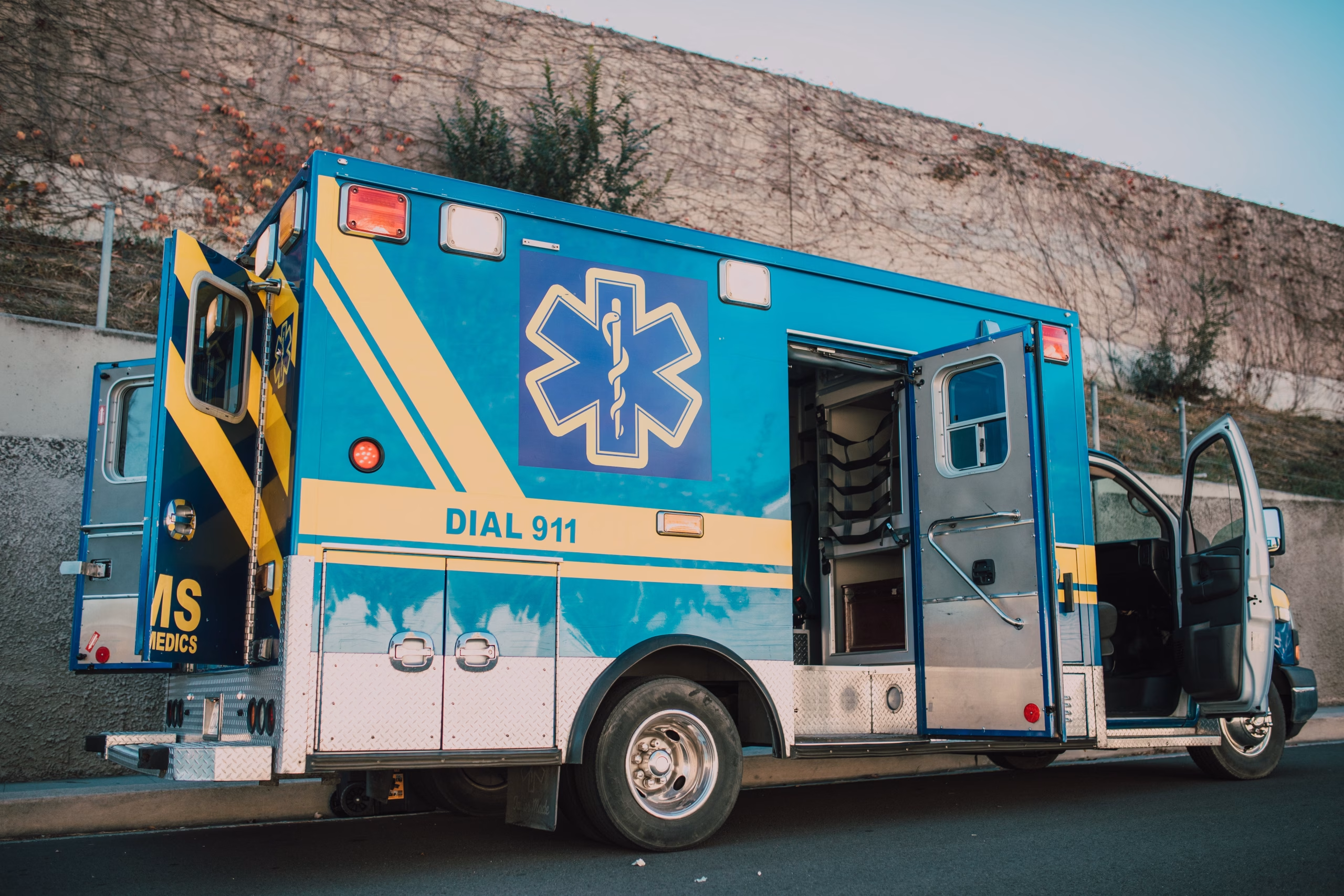
The fatal shooting is now both a death investigation and a flashpoint for the Trump administration’s use of troops in city crime patrols. Johnson’s family says it wants answers, while officials are urging patience for the state review.
A man is dead after a pre-dawn pursuit in downtown Memphis involving local police and Tennessee National Guard members assigned to a federal crime patrol.
Authorities say the Guard members opened fire after the man turned toward them with a gun. His family is now asking how a 20-year-old who, they say, had not hurt anyone ended up shot dead in the street.
The shooting under investigation
The Tennessee Bureau of Investigation identified the man as 20-year-old Tyrin Johnson, according to reporting by The Associated Press published by PBS NewsHour. The agency said it is investigating the circumstances of the shooting.
Memphis police said the encounter began around 4 a.m. Sunday, when Guard members and local officers responded to reports of gunshots. During that response, authorities said, they began pursuing an armed man who was running away on foot.
Police said the Guard members fired after Johnson turned toward them with his weapon. No law enforcement officers were injured, according to the TBI.
Lt. Col. Darrin Haas, a Guard spokesperson, said Johnson died at the scene after two National Guard medical specialists attempted first aid.
A family asks for answers
Johnson’s older cousin, Terracle Nelson, told The Associated Press that Johnson was “as good a boy as can be.” She said he had been living in Nashville, working construction and taking university classes.
Nelson also said Johnson had recently become a father. His first child was born earlier this year, she told the AP.
Family members were present when authorities told them Johnson had been shot twice in the chest, Nelson said. She questioned why that level of force was used, saying she wanted to know how a 20-year-old “hadn’t harmed anyone” but was shot twice.
Law enforcement authorities did not immediately respond to AP questions about how many shots were fired. The TBI declined to comment on Nelson’s account while the investigation is ongoing.
Why Guard troops were there
The Guard members were not in Memphis as part of a typical disaster response or ceremonial duty. They were assigned to the Memphis Safe Task Force, a crime-fighting operation convened by the Trump administration and made up of federal and local agencies.
Federal troops have been patrolling the city since October. Their presence has been backed by Tennessee Gov. Bill Lee, a Republican, but opposed by Memphis Mayor Paul Young, a Democrat.
Young called Sunday’s shooting an “unfortunate incident” and said he would wait for the TBI investigation before commenting further, according to a statement provided through a spokesperson.
The deployment is part of a broader push by the administration to send National Guard troops into several Democratic-led cities, including New Orleans and Washington, D.C., as part of what the White House has framed as a response to violent crime.
The crime debate is complicated
Memphis has long struggled with serious violent crime, including homicides, assaults and carjackings. That reality has made public safety a central political issue in the city and across Tennessee.
But the larger argument over federal troop deployments is not as simple as “crime is up” or “crime is down.” The AP noted that violent crime in many Democratic-led cities has fallen significantly from pandemic-era highs. In Memphis, officials from both parties have pointed to decreases in some crime categories last year.
That timing matters. Some of those declines preceded the troop deployment and also mirrored broader trends in U.S. cities.
Supporters of the task force argue that a visible, coordinated law enforcement presence can deter crime and reassure residents. Critics argue that using military personnel in local policing changes the relationship between the public and the state, especially in communities already wary of aggressive enforcement.
Legal fights were already brewing
The Memphis deployment had drawn legal challenges before Sunday’s fatal shooting. In April, the Tennessee Court of Appeals ruled that state and local Democratic officials lacked standing to block the federal troop deployment in Memphis.
A separate federal lawsuit, filed in May by four Memphis residents, remains pending. Those residents are seeking to block the task force from enforcing a law that bars people from coming within 25 feet of law enforcement officers to record their activity.
The residents, represented by the American Civil Liberties Union, also alleged that task force members retaliated against them for filming operations. They claimed they were followed by law enforcement and that unmarked vehicles and people in tactical vests appeared outside their homes after they observed the task force.
Those allegations are separate from the Johnson shooting. But together, they show how tense the environment around the task force had become even before a fatal use-of-force case put the deployment under sharper public scrutiny.
What comes next in Memphis
The most immediate question is what the TBI investigation determines. Investigators will likely examine body-camera footage if available, witness statements, radio traffic, physical evidence, the reported weapon, the sequence of the foot pursuit and the decisions made in the seconds before shots were fired.
Key facts remain unresolved publicly: how many shots were fired, which Guard members fired, where Johnson’s weapon was recovered, whether he pointed it directly at anyone, and what warnings, if any, were given.
The broader stakes go beyond one case. The Congressional Budget Office has estimated that the deployments cost nearly half a billion dollars through the end of December and are expected to cost taxpayers more than $1 billion this year, according to the AP report.
For Johnson’s family, the issue is more personal than political. For Memphis officials, it is now both: a death investigation unfolding inside a larger fight over whether military-backed crime patrols make cities safer, or simply raise the risks when policing turns deadly.




Leave a Reply