
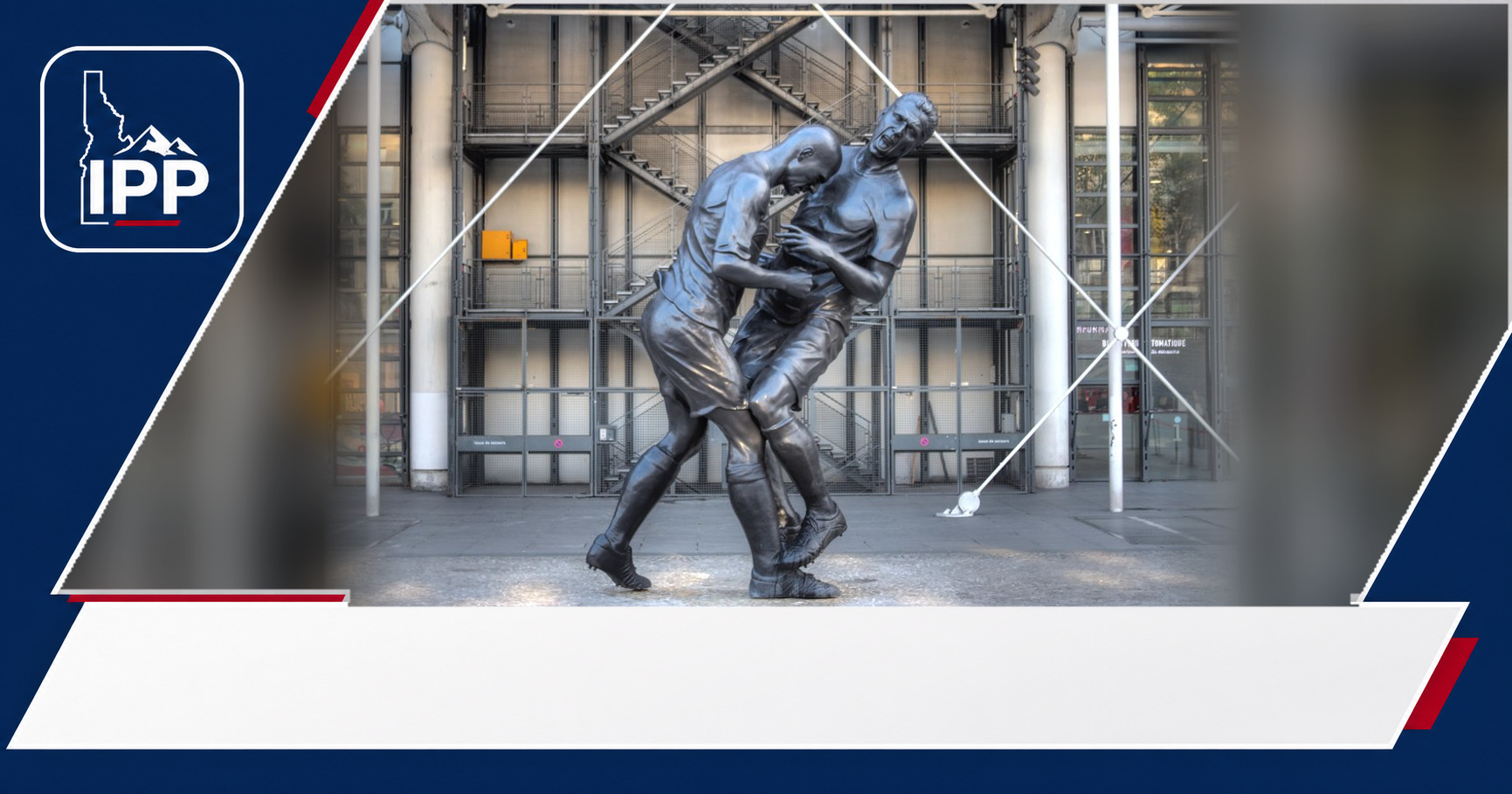
France’s new era will not be judged only by star power. Zidane’s challenge is to preserve the Deschamps winning edge while giving Les Bleus a clearer way to impose games.
Zinedine Zidane is France’s new head coach, and the immediate question is not whether Les Bleus have enough stars. This article analyzes Zidane’s tactics and style of play — the Zidane tactics style debate now facing the France national team — and explains how Zidane can address Les Bleus’ biggest weakness: turning elite talent into controlled, repeatable dominance when matches tighten.
That matters now because France will have a new face on the touchline in September for the first time in 14 years, following Didier Deschamps’ long run. Zidane’s unveiling in Paris produced emotion, but not a detailed tactical manifesto.
A homecoming with few clues
Zidane’s appointment has the feel of an inevitable French football story finally becoming official. The former France great had been linked to the national team job for years, and the BBC reported that he said at his unveiling that he had turned down other offers because “the national team is the only thing I wanted.”
That line explains the romance. It does not explain the football.
Asked about his preferred style, Zidane kept the answer deliberately broad. He said he could not describe in “a couple of words” how France would win, adding that he needed to meet the players and explain his plans to them. He also signaled he would “do things differently” without making a “complete break” from Deschamps.
That balance is the story. Zidane is not inheriting a broken team. He is inheriting one with world-class forwards, recent tournament pedigree and a manager’s need to evolve without overcorrecting.
The weakness is control
France’s most obvious strength is still its attack. Kylian Mbappe, Ousmane Dembele, Desire Doue and Michael Olise give Zidane a frightening range of pace, dribbling, movement and one-on-one threat. The BBC noted that France scored 20 times in North America, evidence that Deschamps left an attacking base rather than a scorched field.
So Les Bleus’ biggest weakness is not a lack of danger. It is the gap between danger and control.
Under Deschamps, France often thrived by accepting imperfect stretches, defending compactly, then letting elite players decide the game. That approach won a World Cup and carried France deep into major tournaments. The counterargument is just as real: when top opponents slow the transition game, France can look less like a machine and more like a collection of brilliant solutions.
Zidane’s job is to make those solutions easier to repeat. He does not need to turn France into a possession laboratory. He does need clearer answers for how the team progresses the ball, protects against counters and creates chances when Mbappe or Dembele do not have open grass to attack.
Madrid offers the blueprint
Zidane’s Real Madrid teams were sometimes miscast as vibes, trophies and individual genius. The star power was obvious, but the structure mattered too. His best Madrid sides were flexible rather than doctrinaire, shifting between shapes, using midfield control to manage tempo and trusting elite forwards to improvise in the final third.
That matters for France because international football rarely gives coaches enough training time to install complicated systems. Zidane’s strength may be less about a fixed formation and more about giving elite players simple, durable rules.
At Madrid, balance often came from midfield security, fullback timing and a willingness to adapt to the opponent. That is the kind of pragmatism that connects him to Deschamps, even if Zidane’s public image is more associated with elegance than caution.
The tactical question is whether he can transfer that club-level feel to a national team rhythm. France players will not spend months rehearsing patterns with him. The best international managers simplify without becoming predictable.
How France could change
The first visible change may be in the attacking midfield zone. Zidane described himself as a former No. 10 and said what motivates him is “the game” and “scoring goals.” That hints at an interest in keeping a creative connector in the team, a role Olise has already grown into.
A France attack with Mbappe stretching the back line, Dembele attacking wide channels and Olise connecting midfield to forward areas would give Zidane a natural triangle of speed, invention and final-third passing. The risk is spacing. If too many attackers want freedom at once, France could become easier to counter through the middle.
That is where Zidane’s selection and midfield structure will matter. He can address the control problem by setting firmer rest-defense rules: who stays behind the ball, who covers the fullbacks, and how quickly France counter-presses after losing possession.
In practical terms, Zidane’s France could be judged by a few early signs:
- whether the No. 10 role becomes central or situational;
- whether Mbappe plays with the same captaincy status and attacking freedom;
- whether France press higher or keep the Deschamps-style mid-block;
- whether Zidane favors continuity in defense or uses the goodwill around him to test new combinations;
- whether Les Bleus can sustain pressure against teams that sit deep.
The aura helps and complicates
Zidane brings something almost no coach can manufacture: instant authority. He is a Ballon d’Or winner, a 1998 World Cup icon and a manager who handled a dressing room full of Real Madrid superstars. Former France defender Bixente Lizarazu told France Info, according to the BBC, that Zidane is “more than fit” to manage Les Bleus because of what he did with “great players and big egos.”
That authority could be crucial with a squad full of major-club forwards. France do not need a coach who competes with their stars for attention. They need one who can command attention and then disappear into the work.
There is a catch. Zidane’s aura may buy patience, but it will not answer every tactical question. He has been away from management for five years, and Real Madrid remains his only senior coaching job. A national team is a different job entirely: fewer sessions, more politics, less control over player form.
Zidane acknowledged that shift, saying the role was new to him but that he was not scared. That confidence is expected. The uncertainty is still real.
What comes next
Zidane’s four-year deal is due to begin next month, with his full coaching staff still to be announced. The BBC reported that his first international window will include Nations League fixtures, beginning with a trip to Turkey before matches against Belgium and Italy, including one in Paris.
Those games will not define his tenure, but they will reveal his instincts. Does he protect the Deschamps foundation first? Does he immediately build around a more expressive attacking structure? Does he use France’s goodwill toward him to experiment?
The fairest expectation is evolution, not revolution. France are too good, and Deschamps’ legacy too successful, for Zidane to tear everything down. But a team with this much attacking talent should not have to rely only on moments.
Zidane’s biggest tactical task is to make France feel less vulnerable to the rhythm of a match. If Les Bleus can keep their knockout edge while adding more control, the homecoming will be more than symbolic. It will be a genuine upgrade.


Leave a Reply