
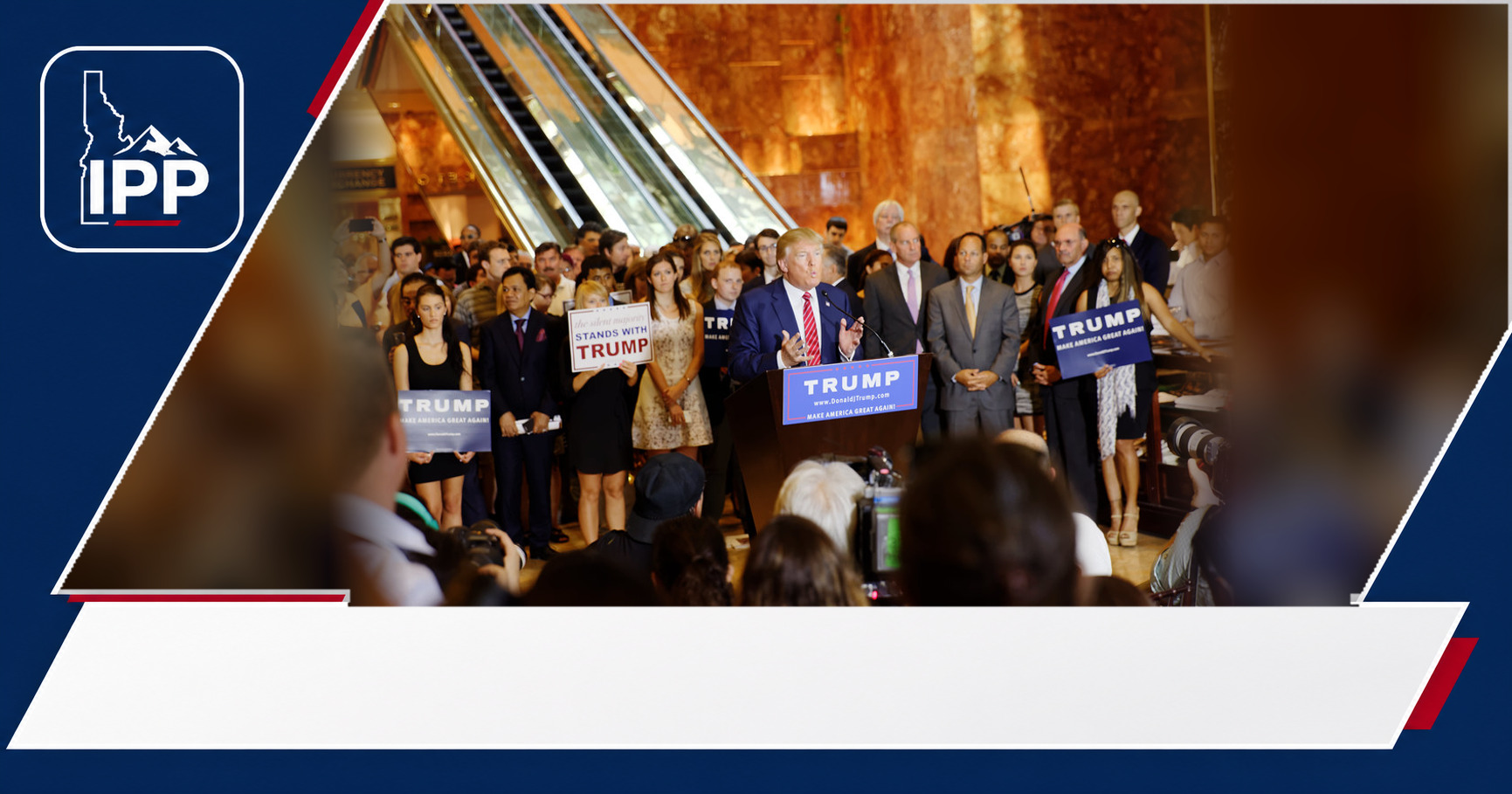
The controversy landed because the dinner was already loaded with tension between Trump, the press corps and the White House Correspondents’ Association. The bigger issue is what the episode says about political comedy, media access and a president’s use of the room.
Donald Trump was criticized after observers suspected he plagiarized a joke during his White House Correspondents’ Dinner speech in Washington, D.C., adding a fresh layer to the backlash to his remarks. The White House Correspondents’ Association dinner, held Friday night after an April postponement, put Trump before journalists he has often attacked from the White House and on the campaign trail.
The joke-plagiarism suspicion has not been established as fact in the available reporting. But it spread because the speech itself was already being judged harshly: The Associated Press described Trump’s return to the dinner as a rambling, insult-filled, hourlong performance that grew more uncomfortable as the night went on.
The joke claim hit a nerve
The immediate criticism centered on whether one of Trump’s jokes was lifted or too closely borrowed. That is a narrow claim, and the public record reviewed here does not verify the original source of the joke or prove plagiarism.

Still, the allegation mattered because political speeches are rarely treated as purely spontaneous. Presidents use speechwriters, borrow familiar formats and lean on well-worn comic rhythms. A joke that sounds recycled can quickly become a character argument, especially for a politician whose every public performance is parsed by supporters and critics.
For Trump’s critics, the suspected copied joke fit a broader complaint: that the speech leaned more on grievance and personal shots than on sharp self-deprecation. For defenders, the charge may look overblown, since roast-style political humor often recycles setups and relies on stock insults.
That tension is why the backlash traveled. The issue was not only whether a line was original. It was whether Trump met the room’s expectations at all.
A dinner already under strain
The White House Correspondents’ Dinner is supposed to be awkward by design. Presidents face journalists who cover them aggressively, deliver jokes about themselves and the press, then sit through awards honoring reporting that may be deeply unflattering to the administration.
This year’s event carried more than the usual tension. According to AP, the dinner had been rescheduled after a gunman disrupted the original April event. The later gathering was smaller, with tighter security, no red carpet and no separate cocktail receptions before the dinner.
Outgoing White House Correspondents’ Association president Weijia Jiang of CBS News welcomed the crowd by saying, “Let’s try this again,” AP reported. She also told attendees, “We are back,” and said the press corps would not be intimidated or let an act of violence have the final word.
That setting made the tone of Trump’s speech more consequential. The evening was not just another Washington gala. It was also a reset after a security scare, a statement of resilience by the press corps and a public appearance by a president whose relationship with the media remains openly hostile.
Why the speech felt rough
AP characterized Trump’s remarks as a speech that began with some friendly laughs but later drew quieter reactions as the insults piled up. The report said Trump took shots at public figures’ weight and intellect, praised some journalists, attacked others and repeatedly returned to familiar enemies.
The list of targets, according to AP, included Bruce Springsteen, former President Barack Obama, late-night hosts Jimmy Fallon and Jimmy Kimmel, Rep. Ilhan Omar, California Gov. Gavin Newsom, former New Jersey Gov. Chris Christie and CNN’s Kaitlan Collins. Collins was also one of the evening’s major award winners.
At one point, Trump appeared to comment on the speech itself, saying after a joke fell flat, “That was actually the only thing I thought was good in this whole fricking stupid speech they wrote,” AP reported.
That moment helped explain why some observers described the speech as excruciating. It was not simply that jokes failed. It was that the president seemed to acknowledge the awkwardness while continuing through an unusually long routine in a room full of people who were not necessarily inclined to rescue him with laughter.
The press fight was unavoidable
Trump’s appearance also unfolded against a larger fight over media scrutiny. AP noted that he has attacked, sued and taken administrative action against news organizations and reporters since returning to office.
That history hung over the ballroom. The dinner’s awards honored journalism, including work that challenged Trump and his administration. AP reported that one award recognized Wall Street Journal coverage involving Trump’s ties to convicted sex offender Jeffrey Epstein, prompting Trump to ask, “Do I have a say in those awards?”
Another award winner, Tyler Pager of The New York Times, had been among reporters subpoenaed by Trump’s Justice Department over reporting involving a Qatari-gifted Air Force One jet, according to AP. Those subpoenas were withdrawn in a New York courtroom the day before the dinner.
In that context, a joke controversy was bound to be read as more than a comedy note. For critics, it was one more example of a president using a press dinner to punch down or settle scores. For supporters, it was Trump doing what he has long done: rejecting Washington’s polite scripts and refusing to pretend affection for institutions he distrusts.
The third-term joke added heat
Trump also joked about the possibility of a third term, an idea barred by the Constitution’s 22nd Amendment. AP reported that he said, “Just like my presidency, the second time is always better,” then added, “And the third time will be better yet.”
He followed by saying, “I’m only kidding,” according to AP. At the end of the speech, he reportedly donned a red “Trump 2028” cap and described a supposed run as a “scoop.”
To his allies, that kind of line is classic Trump: a provocation designed to irritate opponents and dominate attention. To critics, joking about a constitutionally barred third term is not harmless in a political climate already shaped by institutional distrust.
The split reaction helps explain why the speech drew such strong reviews in both directions. Trump’s style depends on testing whether a room sees him as joking, threatening, performing or all three at once.
What remains unproven
The clearest fact is that Trump’s White House Correspondents’ Dinner speech drew criticism, and AP’s account supports the description of a long, insult-heavy address that became uncomfortable for parts of the audience. The joke-plagiarism claim is more limited: observers suspected a copied joke, but the materials reviewed here do not establish plagiarism.
That distinction matters. A politician can be fairly criticized for tone, targets and judgment without every viral allegation being proven. At the same time, when a speech is already faltering, even an unverified originality claim can become the line people remember.
The episode also shows how the dinner’s old formula is under pressure. The event asks presidents and journalists to share a room, trade jokes and affirm the value of a free press, even when the relationship is adversarial. Trump’s return exposed how thin that bargain can feel when the jokes turn personal and the politics in the room are raw.
The lasting question is not whether one disputed joke will change anyone’s view of Trump. It probably will not. The sharper takeaway is that the White House Correspondents’ Dinner is no longer just a night for Washington to laugh at itself. Under Trump, it has become another stage for the fight over who gets mocked, who gets honored and who controls the story afterward.





Leave a Reply