

The dispute is not simply about supporting the military. It is about how much Congress will spend, how fast, and whether Trump can get his own party behind the plan.
Key Republicans are skeptical of the Trump administration’s push for more defense money, even as the Trump administration is scrambling for more defense funding to back Donald Trump’s defense spending plan. CNN reported the resistance Monday, and it matters because Republican resistance to Trump’s defense spending plan could complicate the Pentagon’s attempt to secure a much larger FY 2026 package from Congress.
The political problem is not whether many Republicans support a stronger military. It is whether Congress will accept the size, timing and shape of the ask after the Defense Department outlined a $1.01 trillion national defense budget request, including a 13 percent increase from FY 2025 enacted levels.
Congress is the pressure point
The White House can propose a defense buildup. Congress decides what gets funded, how the money is structured and which programs survive the committee process.
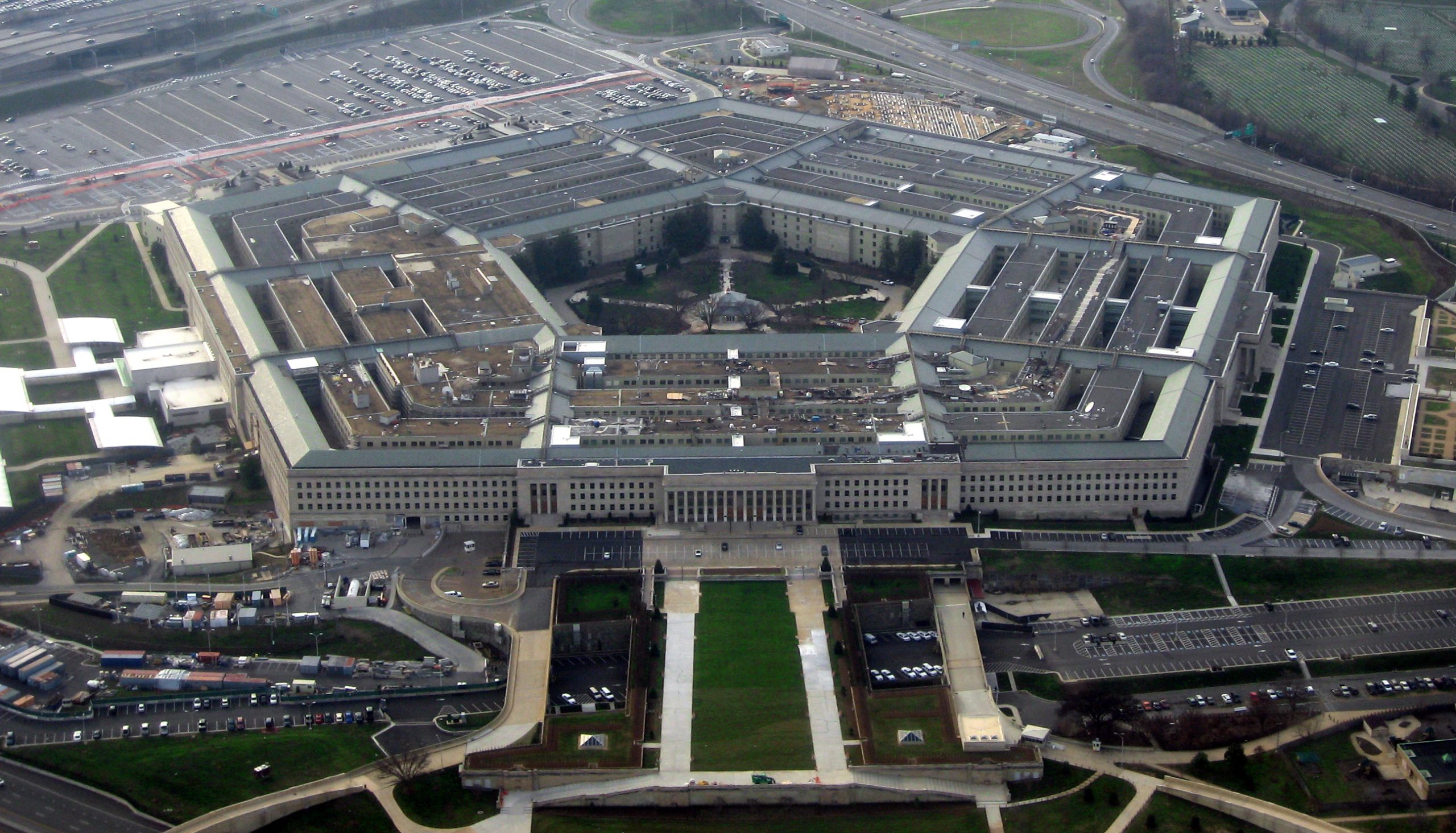
That is why skepticism from Republicans matters more than ordinary opposition noise. If the resistance is coming from lawmakers Trump needs to pass his own agenda, the administration’s sales job becomes harder before Democrats even enter the equation.
Defense spending usually creates unusual coalitions. Hawks argue for ships, aircraft, missile defense and munitions. Fiscal conservatives press for offsets and limits. Members with bases, shipyards or defense manufacturers in their states scrutinize every procurement shift.
The CNN report points to that central tension: Trump wants more defense money, but some of the people expected to help deliver it are not yet sold.
The Pentagon’s ask is already huge
A Defense Department background briefing on the FY 2026 defense budget described the president’s national defense budget request as $1.01 trillion. Officials said that represented a 13 percent increase from FY 2025 enacted levels.
For the Department of Defense specifically, officials said the plan includes $848.3 billion in discretionary funding and $113.3 billion in mandatory funding through reconciliation, for a DOD total of $961.6 billion.
The administration’s argument is that the increase is tied to homeland security, deterring China in the Indo-Pacific, rebuilding the defense industrial base and improving the military’s ability to buy and sustain critical systems.
Those are broadly familiar Republican priorities. The trouble is that a trillion-dollar request turns every line item into a political choice, especially when the party also talks about deficits, waste and shrinking parts of the federal government.
Why Republicans are balking
Republican skepticism does not necessarily mean opposition to defense spending. It can mean lawmakers want more detail, a different mix of programs, offsets elsewhere in the budget or assurance that the Pentagon can actually spend the money effectively.
The budget plan itself contains trade-offs that Congress is likely to examine closely. Defense officials said the request reduces F-35 procurement from 74 aircraft to 47 while funding modernization and sustainment. At the same time, it includes $3.5 billion for the F-47, the first crewed sixth-generation fighter, after Trump’s 2025 decision to move forward with Boeing’s development.
That kind of shift can trigger strategic arguments and home-state politics. A lawmaker may support a larger military budget in principle while objecting to a cut affecting a factory, supplier network or service branch priority.
There are also mission questions. The request includes $5 billion for southern border operations, according to the Defense Department briefing. Trump allies may see that as a core security priority, while skeptics may ask whether border operations belong inside a defense buildup and how long such spending should continue.
Trump’s team has a hawkish case
The administration is not making a small ask, and it is not presenting it as routine. Defense officials called the FY 2026 proposal a historic budget and tied it to major threats, including ballistic, hypersonic and cruise missiles, as well as advanced aerial attacks.
One centerpiece is Golden Dome for America, Trump’s proposed missile defense initiative. The budget briefing said the FY 2026 request includes $25 billion for Golden Dome, including interceptors such as Patriot, space-based systems, advanced sensors and command-and-control work.
The request also puts major money into nuclear modernization. Defense officials said it seeks about $60 billion for the nuclear enterprise, including $10.3 billion for the B-21 bomber, $11 billion for the Columbia-class submarine, $4.2 billion for Sentinel ICBM and $2 billion for the sea-launched cruise missile nuclear program.
Supporters of the plan can point to a straightforward argument: the U.S. faces rising military competition, the industrial base has capacity problems, and delayed investment can cost more later. That case may resonate with many Republicans, but it still has to survive a Congress that wants control over priorities.
Reconciliation raises another fight
One of the most sensitive pieces is the $113.3 billion in mandatory defense funding that officials said would move through reconciliation. Reconciliation is a budget process that can allow legislation to pass the Senate with a simple majority if it meets procedural rules.
For the White House, that can look like a way to move major priorities with fewer procedural roadblocks. For skeptical lawmakers, it can look like a workaround that deserves more scrutiny, especially when it is paired with annual defense appropriations.
There is also a transparency issue. Annual defense bills force repeated debates over programs, readiness, personnel, procurement and oversight. Mandatory funding can be useful for specific priorities, but lawmakers may resist if they think it blurs the true size of the defense buildout or creates temporary money for needs that will return next year.
If Republicans are already uneasy, the process could matter as much as the price tag. A member who might support missile defense or shipbuilding could still object to how the administration wants to move the money.
Program choices will draw scrutiny
The request includes big-ticket commitments across the services. Defense officials said the Navy plan includes funding for 19 new ships, including two Virginia-class submarines and one Columbia-class submarine, with about $11 billion attached to each submarine category in the briefing.
The budget also includes $6.5 billion for conventional and hypersonic munitions and more than $3.9 billion for hypersonic weapons. The Space Force request is listed at $40 billion, more than a 30 percent increase from FY 2025.
Those numbers give the administration a long list of selling points. They also give skeptics a long list of questions: which programs are most urgent, which are executable, which are being delayed, and which are being protected for political reasons.
The Pentagon’s cancellation of the E-7 Wedgetail program, cited in the briefing because of delays, cost increases and survivability concerns, is another example. Cutting one system to fund alternatives may make sense inside the Pentagon. In Congress, it can become a fight over strategy, jobs and trust.
What remains unclear
The biggest unanswered question is how much additional defense money the administration is seeking beyond the already massive FY 2026 request, and whether that money will appear as a supplemental package, a reconciliation fight, an appropriations push or some combination of all three.
Watch which Republicans move from private skepticism to public resistance. Committee chairs, defense appropriators, fiscal conservatives and senators with leverage over reconciliation rules could each shape the outcome.
The clean takeaway is that this is not an anti-military revolt inside the GOP. It is a governing test for Trump: whether he can turn a broad Republican preference for military strength into votes for a specific, expensive and procedurally complicated defense spending plan.
If he can, the Pentagon gets a major infusion for missile defense, shipbuilding, nuclear modernization, munitions and space. If he cannot, the plan may survive only after being trimmed, slowed or rewritten by the same Republican Congress the administration needs to pass it.










Leave a Reply