
The new statue revives a fight over Columbus monuments that intensified after 2020 protests. It also puts a transparency question on federal ground: who paid for the installation?
A statue of Christopher Columbus was installed on the White House grounds in Washington, D.C., early Sunday morning, and the White House quietly added a fifth statue as part of President Donald Trump’s effort to reshape the grounds and honor Columbus. But questions remain over who paid for it.
The installation matters because Columbus monuments have become a flashpoint in fights over history, identity and public space. Now that debate has moved onto one of the most symbolic pieces of federal property in the country.
Columbus returns on federal ground
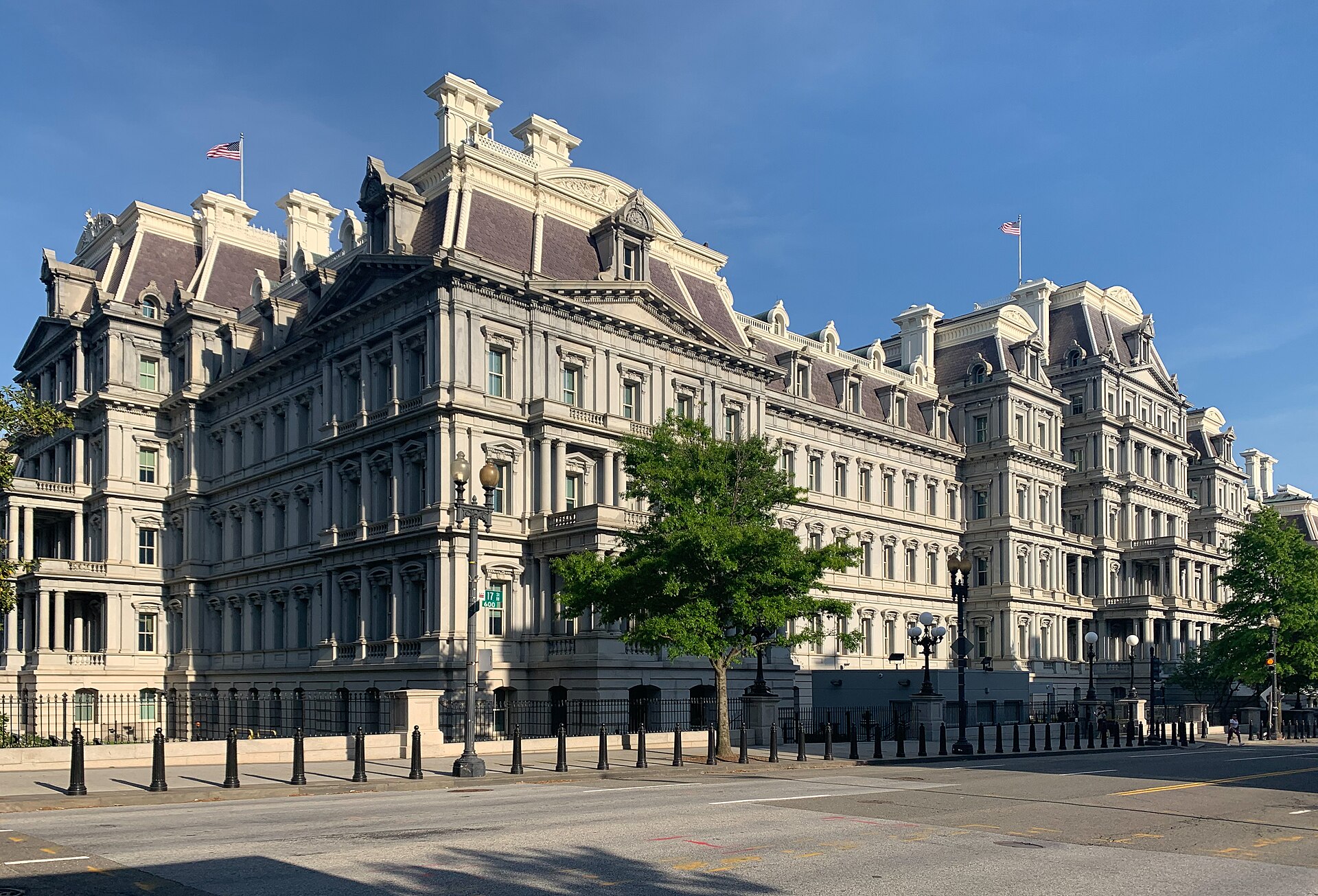
The statue was placed on the north side of the Eisenhower Executive Office Building, facing Pennsylvania Avenue, according to reporting from The New York Times. The building sits next to the West Wing and houses offices for White House staff.
The White House’s message was direct. Davis Ingle, a White House spokesman, told the Times: “In this White House, Christopher Columbus is a hero, and President Trump will ensure he’s honored as such for generations to come.”
That statement frames the installation as more than decoration. It is a deliberate restoration of Columbus as a public hero at a time when many cities and institutions have reassessed monuments to him.
The quiet timing also stands out. The statue was reportedly erected overnight and was in place by early Sunday morning, behind fencing on the White House complex.
Why Baltimore is central
The new White House statue is tied to one of the most visible monument battles of 2020. It is a replica of a Christopher Columbus statue that protesters in Baltimore pulled down and dumped into the city’s Inner Harbor during the racial justice protests that followed the murder of George Floyd.
According to the Times, pieces of the original marble statue were later retrieved from the harbor. A Maryland artist used those salvaged pieces to guide the creation of a replica.
That history gives the White House installation a pointed meaning. It is not simply a Columbus statue. It is a version of a monument that had been removed in protest, re-created and relocated to federal property.
The Baltimore statue had its own long civic history. Many Columbus monuments in the United States were donated or supported by Italian American groups in the 19th and 20th centuries, and the Baltimore statue was dedicated in 1984 at a ceremony attended by President Ronald Reagan.
The funding question remains
The biggest unanswered practical question is who paid for the new White House installation. Available reporting identifies one earlier public funding stream: the replica project received $30,000 from the National Endowment for the Humanities during Trump’s first term, according to the Times.
That detail does not fully answer the current question. It does not establish who paid for the final transfer, transport, pedestal, site preparation, installation, security work or future maintenance at the White House grounds.
The White House statement quoted by the Times addressed why Trump wanted Columbus honored. It did not provide an itemized accounting of the cost or identify whether the installation was funded by federal money, private donors, an outside organization or some combination.
That distinction matters. If public money covered the work, taxpayers have a stake in the cost and approval process. If private money paid for part of it, the public still has an interest in who donated, what conditions applied and how the gift was accepted for use on federal property.
A hero to some, a wound to others
The politics around Columbus are deeply split. Supporters, including many Italian American organizations, see Columbus monuments as symbols of ethnic pride and a response to a history in which Italian immigrants faced discrimination in the United States.
Basil Russo, leader of the Conference of Presidents of Major Italian American Organizations, told the Times the installation represented “Columbus making his comeback” after the backlash against monuments several years ago. The Times reported that Russo helped broker the transfer of the statue to the federal government.
Opponents see the public honoring of Columbus very differently. Criticism centers on Columbus’s role in the enslavement of Indigenous Taíno people, the violent subjugation that followed European colonization and the collapse of Indigenous populations through violence and disease after his voyages.
That conflict is why statues of Columbus have become more than art objects. They function as public arguments about which parts of history a government chooses to elevate.
Trump’s larger White House project
The Columbus statue also fits into a broader effort by President Donald Trump to remake the appearance and symbolism of the White House grounds. The Times cited Edward Lengel, a former chief historian of the White House Historical Association, who described Trump’s changes as a “radical reshaping” of the grounds.
Lengel argued that the administration is turning the site into “a partisan battleground.” His criticism points to the deeper concern around the installation: the White House is not an ordinary venue for cultural statements.
Presidents have always used symbols, ceremonies and spaces to communicate values. But permanent or semi-permanent changes to the White House grounds carry a different weight because they can outlast a news cycle, an administration and even the political moment that produced them.
Trump has also cast Columbus in explicitly heroic terms. In a proclamation last year, he called Columbus “the original American hero” and “a giant of Western civilization,” according to the Times.
What still needs answers
The central facts are now visible: a Christopher Columbus statue is on the White House grounds; it is linked to the Baltimore monument torn down in 2020; it supports Trump’s effort to restore Columbus as a celebrated figure; and it is at least the fifth statue added in this reshaping of the grounds.
The unresolved part is the paper trail. The public still lacks a clear explanation of the total cost, the funding source, the approval process and whether any outside group or donor played a financial role in getting the statue installed.
Those details may sound administrative, but they are not minor. On federal property, symbolism and spending are connected. A statue can be a message, a memorial, a political statement and a public asset all at once.
Until the White House releases more information, the Columbus statue will carry two stories: the cultural comeback Trump wanted to stage, and the unanswered question of who paid to place it there.










Leave a Reply