

The idea is not just about troop numbers. In Europe, U.S. forces are also a political signal, and changing that signal can ripple through NATO, Moscow and Washington fast.
Donald Trump has put NATO burden-sharing back in the most sensitive possible frame: U.S. troops on European soil.
CNN reported Tuesday that Trump mused about cutting American forces in Europe by one-third as a way to send a message to NATO. No formal withdrawal order has been established in the available reporting, but the idea alone carries weight because U.S. troops in Europe are not just manpower. They are a promise made visible.
The proposal is the pressure
The reported discussion lands at the intersection of two long-running Trump themes: allies should pay more for their own defense, and the United States should not carry what he sees as an unfair share of the security burden.
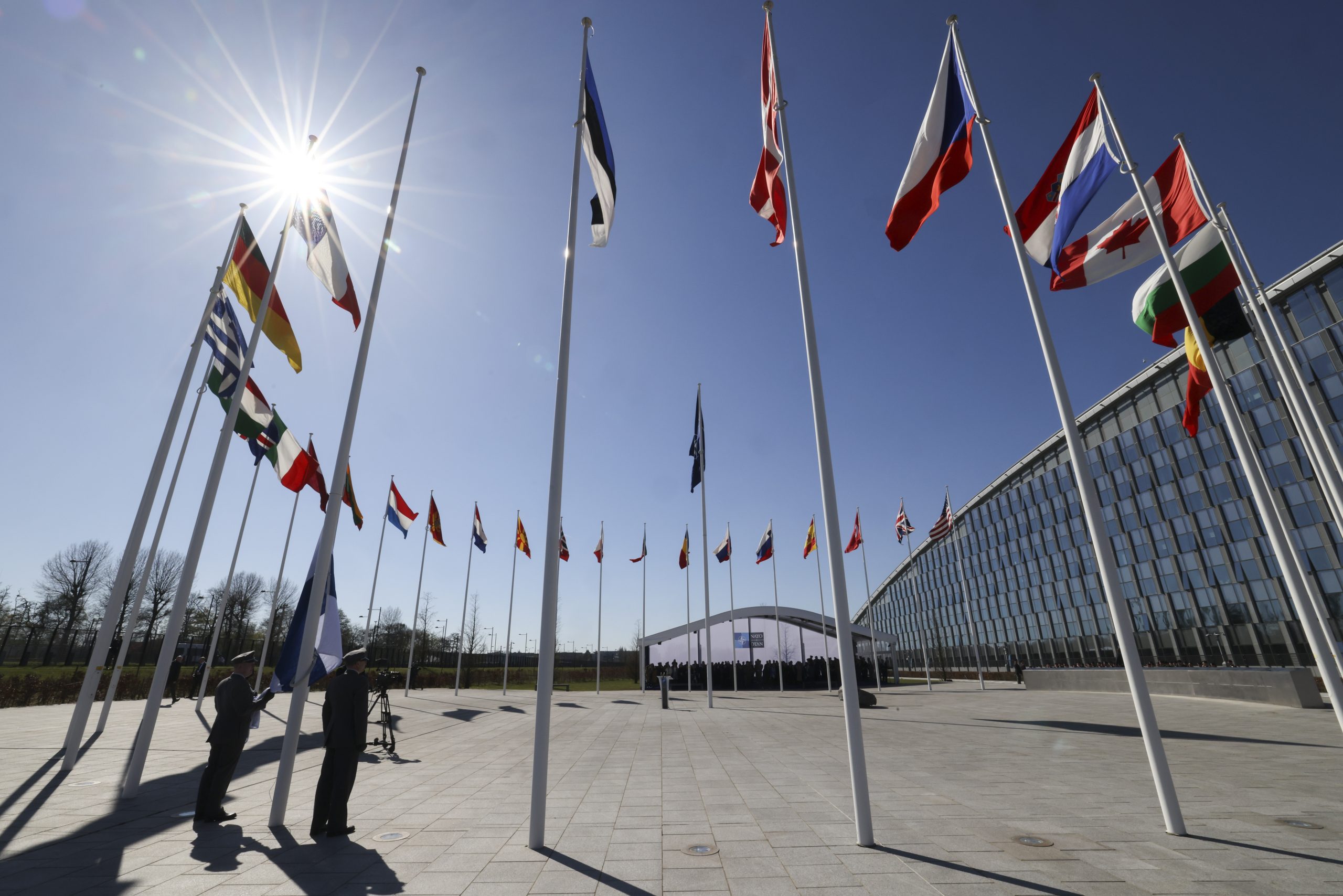
That argument is not new. What is sharper here is the instrument. A major troop reduction would not be a budget memo or a speech at a summit. It would be a physical change in the military map of Europe.
American forces stationed or rotating through Europe include combat units, air power, logistics, intelligence support, headquarters staff and the infrastructure that allows NATO to move quickly in a crisis. A cut of one-third, depending on the baseline and the units involved, could mean far more than fewer uniforms on bases.
It could alter how fast the U.S. can reinforce allies, how NATO plans for a Russian contingency and how European governments judge Washington’s willingness to stay deeply embedded in the continent’s defense.
Why one-third sounds so loud
The exact scale would depend on which troops are counted and from where. A one-third cut across the entire U.S. presence in Europe would be a dramatic shift. A narrower reduction in selected rotations or support missions would have a different impact.
That distinction matters because military posture is not just arithmetic. Pulling a brigade combat team is different from trimming headquarters staff. Reducing air defense is different from moving logistics specialists. In deterrence, the type of force can matter as much as the total number.
After Russia’s full-scale invasion of Ukraine in 2022, the Pentagon said the U.S. military presence in Europe had grown to more than 100,000 service members. That surge was meant to reassure allies and warn Moscow that NATO’s eastern flank was not exposed.
If the United States now signals that a large portion of that presence is negotiable, allies will ask two questions immediately: what would actually leave, and what would Washington demand in return?
Trump’s old NATO fight returns
Trump has spent years accusing NATO allies of relying too heavily on the United States. During his first term, he publicly pressured members to spend more on defense and repeatedly framed the alliance as a bad deal for American taxpayers.
There is a real burden-sharing debate underneath the politics. NATO allies agreed in 2014 to move toward spending 2% of gross domestic product on defense, a benchmark pushed harder after Russia seized Crimea and backed separatists in eastern Ukraine. More European allies have since increased spending, especially after the wider Ukraine war began.
But Trump’s approach has often been less about quiet alliance management than visible pressure. The reported troop-cut idea fits that pattern. It turns a policy complaint into a strategic threat.
For supporters, that is leverage: make allies feel the cost of underinvestment, and they will move faster. For critics, it risks weakening the very deterrent that has kept NATO’s border with Russia from becoming a direct battlefield.
The deterrence problem
NATO’s Article 5 says an attack on one ally is treated as an attack on all. The clause has always depended on more than treaty language. It depends on credibility.
U.S. forces in Europe help create that credibility. They make clear that any major attack on NATO territory would likely involve American personnel from the start, not only after a political debate in Washington.
That is why troop presence is sometimes described as a tripwire, but the word can understate the point. These forces also train with allies, build operational habits, maintain supply lines and give commanders options before a crisis turns into a war.
A reduction would not automatically collapse NATO deterrence. The United States would still have unmatched military reach, and European allies have been spending more. But in security politics, perception can move faster than capability. Moscow, Brussels and capitals on NATO’s eastern flank would all read the signal closely.
Europe cannot replace it overnight
European leaders have spent the past several years talking more seriously about defense production, ammunition stockpiles, air defense, drones, mobility and readiness. The Ukraine war exposed how quickly modern warfare burns through shells, missiles and equipment.
Still, rebuilding defense capacity takes years. Factories cannot be wished into existence. Armies cannot instantly train specialists. Governments cannot easily reverse decades of limited spending without political fights at home.
If Washington pulled back quickly, Europe would not only need to spend more. It would need to fill specific gaps the U.S. has long dominated, including intelligence, surveillance, heavy lift, command-and-control systems, advanced air defense and large-scale logistics.
That is why even allies that agree they should do more may fear a sudden American drawdown. More European responsibility is one thing. A rapid test of European readiness is another.
What to watch next
The central question is whether this remains a pressure tactic or turns into a concrete plan. A serious drawdown would likely require Pentagon planning, consultations with commanders, coordination with allies and political scrutiny in Washington.
Watch for several specifics: the baseline troop count, whether the cut would affect permanent forces or rotating deployments, which countries would see changes, how quickly troops would leave and whether forces would return to the United States or move to another theater.
Congressional reaction would also matter. Lawmakers have previously challenged major troop moves when they believed the decision could weaken U.S. security commitments or reward adversaries. NATO governments, meanwhile, would likely seek private assurances even if they avoid public confrontation.
The clean takeaway is that the reported troop-cut talk is already a message, even before any order. Trump’s leverage comes from making allies wonder whether the U.S. security umbrella could shrink. The risk is that adversaries may hear the same message and test how much of NATO’s confidence still rests on American boots in Europe.










Leave a Reply