
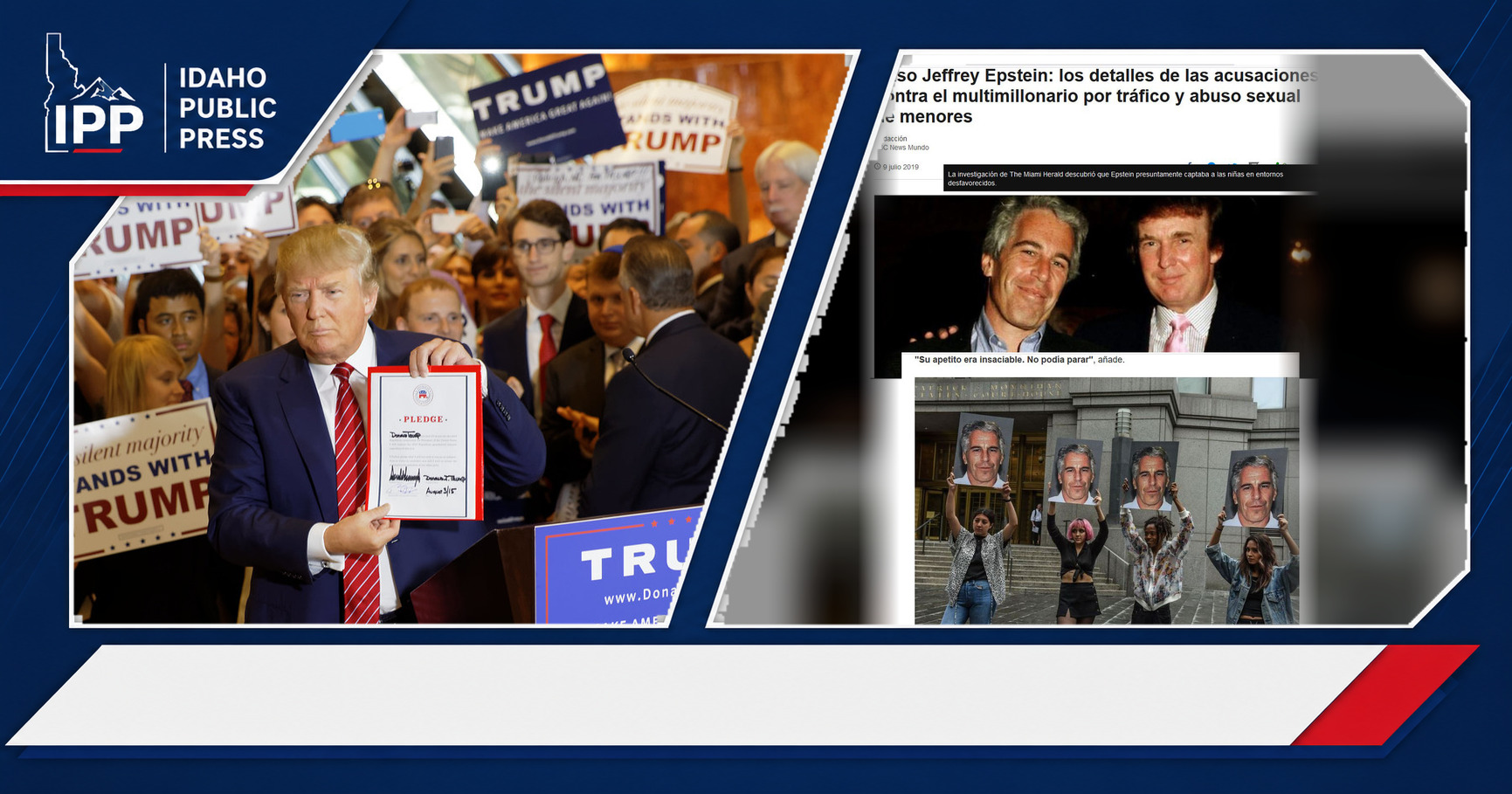
The dispute turns on more than one allegation: Epstein’s own boasts, public records showing past social contact, and Trump’s repeated claim that the relationship was not friendly or close.
A Jeffrey Epstein victim claims Jeffrey Epstein bragged about his close relationship with Donald Trump, while Donald Trump denied being friendly with Epstein. An Epstein victim says Jeffrey Epstein bragged about his close relationship with Donald Trump, adding another disputed account to the long-running scrutiny of Trump’s past ties to the late financier and convicted sex offender.
The issue matters now because newly circulated claims and previously released congressional materials have put the relationship back in public view, forcing a distinction between documented social overlap, Epstein’s own boasting, and Trump’s insistence that the two were not close.
The claim now in circulation
The latest attention centers on a victim’s account that Epstein presented Trump as a close pal. The claim, as framed in the recent report, is not that Trump has admitted such closeness. It is that Epstein allegedly boasted about it.
That difference matters. Epstein was known for surrounding himself with famous and powerful people, and his access to elite circles was part of the image he sold. A boast from Epstein may speak to how he wanted others to see him, but it does not automatically prove the full nature of any relationship he described.
Still, the allegation lands in a sensitive place because Trump and Epstein were not strangers. Their names have appeared together for years in reporting about Palm Beach and Manhattan social circles, parties, flights and photographs from the 1990s and early 2000s.
The core dispute is narrow but politically explosive: whether the record shows a past social relationship that Trump later minimized, or whether critics are stretching Epstein’s bragging and old appearances into something more than the evidence supports.
Trump’s account has shifted
Trump has long rejected the idea that he was friendly with Epstein in any meaningful way. CNN has reported that Trump later said he was “not a fan” of Epstein and that the two had a falling out before Epstein faced his most serious legal troubles.
Trump’s defenders have pointed to his claim that Epstein was expelled from Mar-a-Lago. White House press secretary Karoline Leavitt, responding to previously released Epstein emails, said those materials “prove absolutely nothing” and repeated the position that Trump removed Epstein from the club.
At the same time, Trump’s earlier public comments have kept the matter alive. CNN noted that Trump called Epstein a “terrific guy” in 2002, a comment that has been repeatedly resurfaced as later denials came under scrutiny.
That creates the central tension: Trump’s public posture after Epstein’s crimes became widely known is sharply different from the public record of their earlier social contact. The argument now is not over whether they ever crossed paths. It is over how close they were, when the relationship ended and what Trump knew or did not know.
Records show social overlap
Previously released material has established that Epstein and Trump moved in some of the same circles. CNN’s review described them as part of overlapping Palm Beach and Manhattan worlds, with appearances at parties and events and references in flight logs and photographs.
Congressional releases have added more fuel. CNN reported in 2025 on emails from Epstein’s estate released by the House Oversight Committee, saying the messages did not fundamentally rewrite the known history but did add details about Epstein’s private references to Trump.
One reported 2011 email to Ghislaine Maxwell, who was later convicted of sex trafficking, included Epstein’s claim that Trump had “spent hours” with a trafficking and rape victim inside Epstein’s home. CNN reported that House Republicans identified that victim as the late Virginia Giuffre, while also noting that Giuffre never implicated Trump in wrongdoing in her book or public comments.
That caveat is crucial. The existence of an Epstein email or an Epstein claim is not the same as an independent finding that Trump committed misconduct. It does, however, show why investigators, reporters and political opponents keep returning to the question of what Epstein said privately about Trump and why.
Epstein’s boasting is evidence with limits
Epstein had strong incentives to exaggerate his proximity to powerful men. His access was part of his currency. Claiming a famous friend could impress victims, associates, business contacts or journalists, even when the underlying relationship was thinner than he suggested.
That does not mean every boast should be dismissed. In cases involving abuse, victims’ recollections of what perpetrators said can help establish how power was used, how intimidation worked and how influence was performed. But the evidentiary value depends on corroboration.
There are several categories of information at play here:
- Documented contact: photographs, social events, flight logs or records showing Epstein and Trump in the same orbit.
- Epstein’s statements: alleged boasts, private emails and comments in which Epstein portrayed himself as close to Trump.
- Trump’s denials: Trump’s insistence that he was not friendly with Epstein and that their relationship ended after a falling out.
- Victim accounts: claims about what Epstein said or did, which deserve careful treatment but still need precise attribution.
Mixing those categories together can mislead readers. The strongest public record supports past social proximity. The harder question is whether that proximity amounted to the close friendship Epstein allegedly bragged about.
Why the dispute matters politically
Epstein’s name remains politically radioactive because his case sits at the intersection of wealth, power, sexual abuse and institutional failure. Any figure connected to him faces renewed scrutiny, especially when old records appear to conflict with later explanations.
For Trump, the issue is also about credibility. His denial that he was friendly with Epstein is being weighed against public comments, social history and Epstein’s own alleged descriptions. Supporters see a recycled attack that relies on guilt by association. Critics see a pattern of minimizing a relationship that was once visible.
The House-released emails reported by CNN intensified that divide. Epstein’s private messages included harsh assessments of Trump and claims about what Trump knew. The White House rejected the suggestion that Trump had knowledge of Epstein’s activities, and Trump accused Democrats of trying to revive the controversy for political reasons.
That split is unlikely to close with a single victim account or one batch of emails. The public record is fragmented, and many of Epstein’s own statements are difficult to evaluate because they came from a man who used proximity to power as both status and leverage.
What remains unclear
The unanswered questions are narrower than the political noise suggests. It remains unclear exactly what Epstein told the victim, when he said it, whether others heard similar claims and what independent records support or undercut his alleged bragging.
It is also unclear how much of Epstein’s private commentary reflected actual closeness versus self-serving exaggeration. The fact that Epstein invoked Trump repeatedly, according to CNN’s review of emails, shows Trump was a recurring subject for him. It does not, by itself, settle what Trump knew about Epstein’s abuse.
The cleanest reading is also the least satisfying for partisans: Epstein and Trump had documented social overlap; Epstein allegedly bragged about being close to Trump; Trump denies being friendly with Epstein; and available public materials do not establish that Trump committed wrongdoing in Epstein’s crimes.
That is why the story keeps returning. It lives in the gap between proximity and proof, between a victim’s account of Epstein’s boasting and Trump’s denial, and between the public’s demand for clarity and a record still built from fragments.











Leave a Reply