
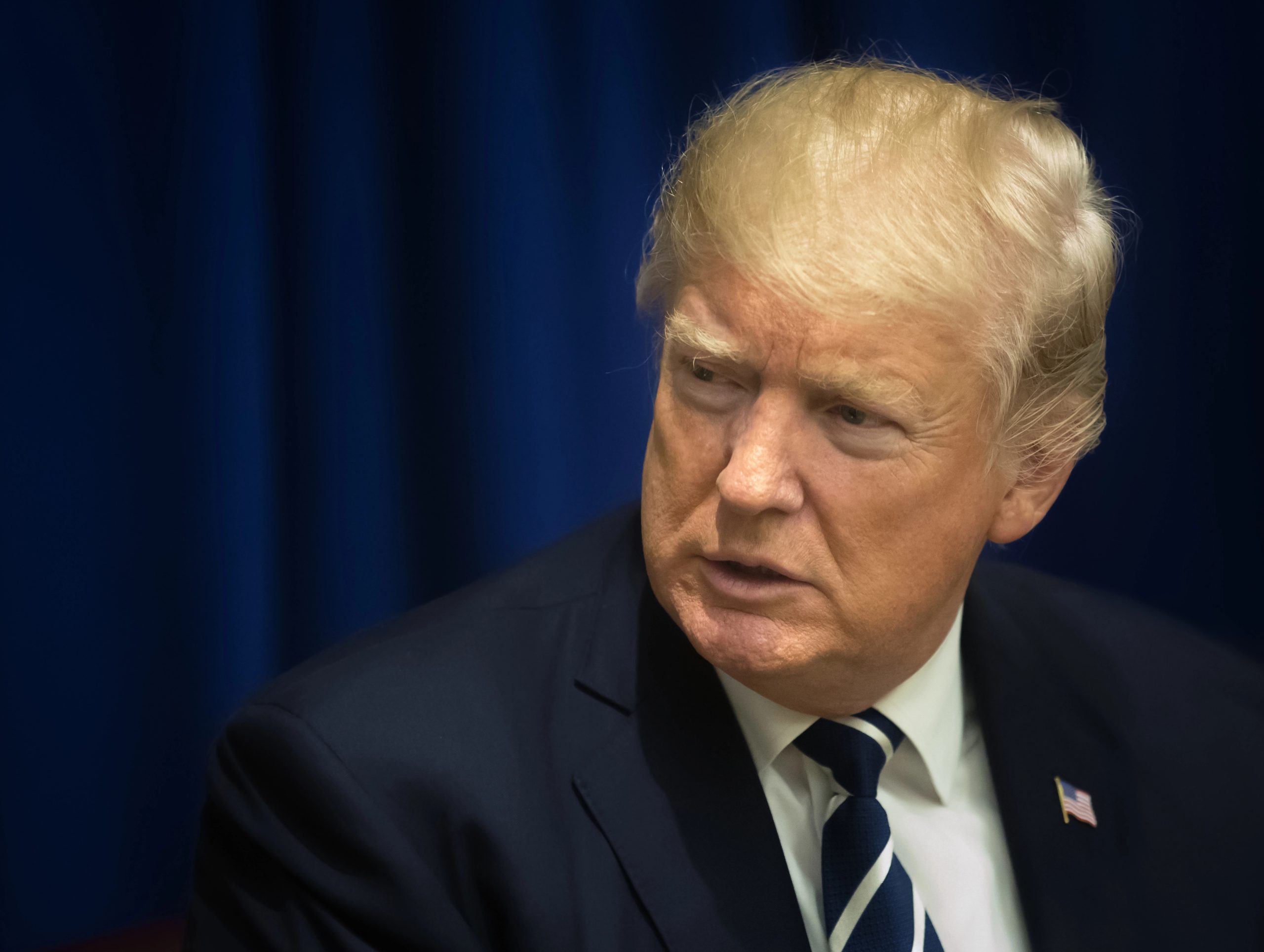
Men remained one of Trump’s most important blocs in 2024. The latest numbers suggest frustration over inflation, the economy and governing performance may be reaching even his stronger constituencies.
Donald Trump’s approval rating among men has fallen to a record low in a new Focaldata/Financial Times poll, which shows his net approval among male voters declined to -19 from -13 in June. The drop matters because men were a key part of his voting coalition in 2024.
The survey, conducted June 26 to June 30 among 2,016 adults, lands as Trump faces broader weakness on inflation, the economy and cost-of-living issues ahead of the 2026 midterm elections.
A warning from Trump’s base
The striking part of the new poll is not simply that Trump is underwater nationally. It is where the erosion is showing up.
Male voters have generally been more favorable terrain for Trump than female voters. According to Pew Research Center data cited in the reporting, Trump won men by 12 percentage points over then-Vice President Kamala Harris in the 2024 presidential election. That made men a central piece of the coalition that returned him to the White House.
That is why a decline to -19 net approval among men is politically meaningful. Net approval measures approval minus disapproval, so a negative number means more voters disapprove than approve. A six-point slide in roughly a month is not proof that Trump has lost the group, but it is a signal that dissatisfaction may be cutting into one of his safer lanes.
For any president, losing ground with swing voters is expected during difficult governing stretches. Losing altitude with a favorable demographic is more concerning, because it narrows the cushion that campaigns rely on when turnout and margins tighten.
The poll’s broader picture
The Focaldata/Financial Times poll showed Trump’s overall approval at 34 percent, with 57 percent disapproving. The poll also said his overall net approval reached -23, described in the survey as an all-time low.
The issue ratings help explain the pressure. On immigration and border security, Trump stood at 41 percent approval and 46 percent disapproval. On jobs and the economy, he registered 29 percent approval against 56 percent disapproval. On inflation and the cost of living, the gap was much sharper: 20 percent approval and 67 percent disapproval.
Those are not abstract policy categories. They are household issues, and they tend to shape how voters judge a president between elections. If voters believe prices, housing or wages are not improving, broader partisan loyalty can soften at the edges.
The survey said results were weighted by factors including age group, gender, region, education level, ethnicity, recalled 2024 and 2020 presidential vote, political interest, rurality and media trust.
White House points to 2024
The White House pushed back by pointing to Trump’s election win rather than the new polling trend. Spokesman Davis Ingle told Newsweek that “the ultimate poll was November 5th 2024,” when Trump was elected to carry out what the administration called a popular agenda.
The statement argued that Trump is working to create jobs, cool inflation and increase housing affordability, and said his agenda is still taking effect.
That response reflects a familiar divide in political messaging. The administration is emphasizing the legitimacy and scale of Trump’s 2024 victory. Polls are measuring how voters feel now, after months of governing and amid continued economic anxiety.
Both can be true at once: Trump can have won a durable mandate in 2024 and still face midterm risk if enough voters sour on his performance by 2026.
Other polls are mixed
The Focaldata/Financial Times numbers are not the only snapshot of Trump’s standing. Other recent surveys show him underwater overall, though not all show the same level of weakness with men.
An Economist/YouGov poll conducted June 26 to June 29 among 1,606 U.S. adults found Trump at 38 percent approval and 58 percent disapproval overall, with a margin of error of 3.2 percentage points. Among men, that survey put him at 44 percent approval and 53 percent disapproval.
A Big Data Poll conducted June 26 to June 28 among 2,971 registered voters showed Trump at 42.9 percent approval and 53.4 percent disapproval overall, with 3.6 percent undecided. Among men, it found him slightly above water: 50.3 percent approval, 47.1 percent disapproval and 2.6 percent undecided. Its margin of error was 1.8 percentage points.
Taken together, the polls point in the same general direction nationally: Trump is facing more disapproval than approval. They differ on whether male voters are clearly moving away from him or still giving him a narrow advantage.
Why men matter in 2026
Midterm elections are often decided by turnout, intensity and small shifts among groups that already lean one way. Trump does not need to lose men outright for the numbers to matter. A smaller margin among male voters could affect close House, Senate and gubernatorial races.
That is especially true if dissatisfaction is concentrated around inflation and cost of living. Economic frustration can motivate opposition voters while depressing enthusiasm among supporters who expected faster relief.
For Republicans, the concern is that Trump’s brand has long depended on unusual strength with certain blocs, including men without college degrees and voters drawn to his economic and cultural messaging. If even a portion of that support becomes less enthusiastic, GOP candidates may need to make up the difference elsewhere.
For Democrats, the opportunity is more complicated. Trump’s weak approval does not automatically translate into Democratic gains. Voters unhappy with the president still need to be persuaded that the opposition offers a better answer on prices, jobs and public safety.
What remains uncertain
One poll does not establish a permanent shift. Polling can move with news cycles, economic data, international events and the way questions are worded. Subgroup findings, including results among men, can also be noisier than top-line numbers.
The trend is still worth watching because it lines up with a broader pattern of weak approval in multiple surveys. The question is whether the male-voter dip in the Focaldata/Financial Times poll is a temporary wobble or the beginning of a more durable problem for Trump.
The next few months will test that. If inflation and affordability numbers improve, the White House may argue that voters are beginning to feel the benefits of Trump’s agenda. If they do not, the record-low male-voter approval finding could look less like an outlier and more like an early midterm warning.
For now, the takeaway is narrow but important: Trump’s political floor may still be strong, but the latest polling suggests it is not immune to the same economic frustrations weighing on his overall approval.





Leave a Reply