
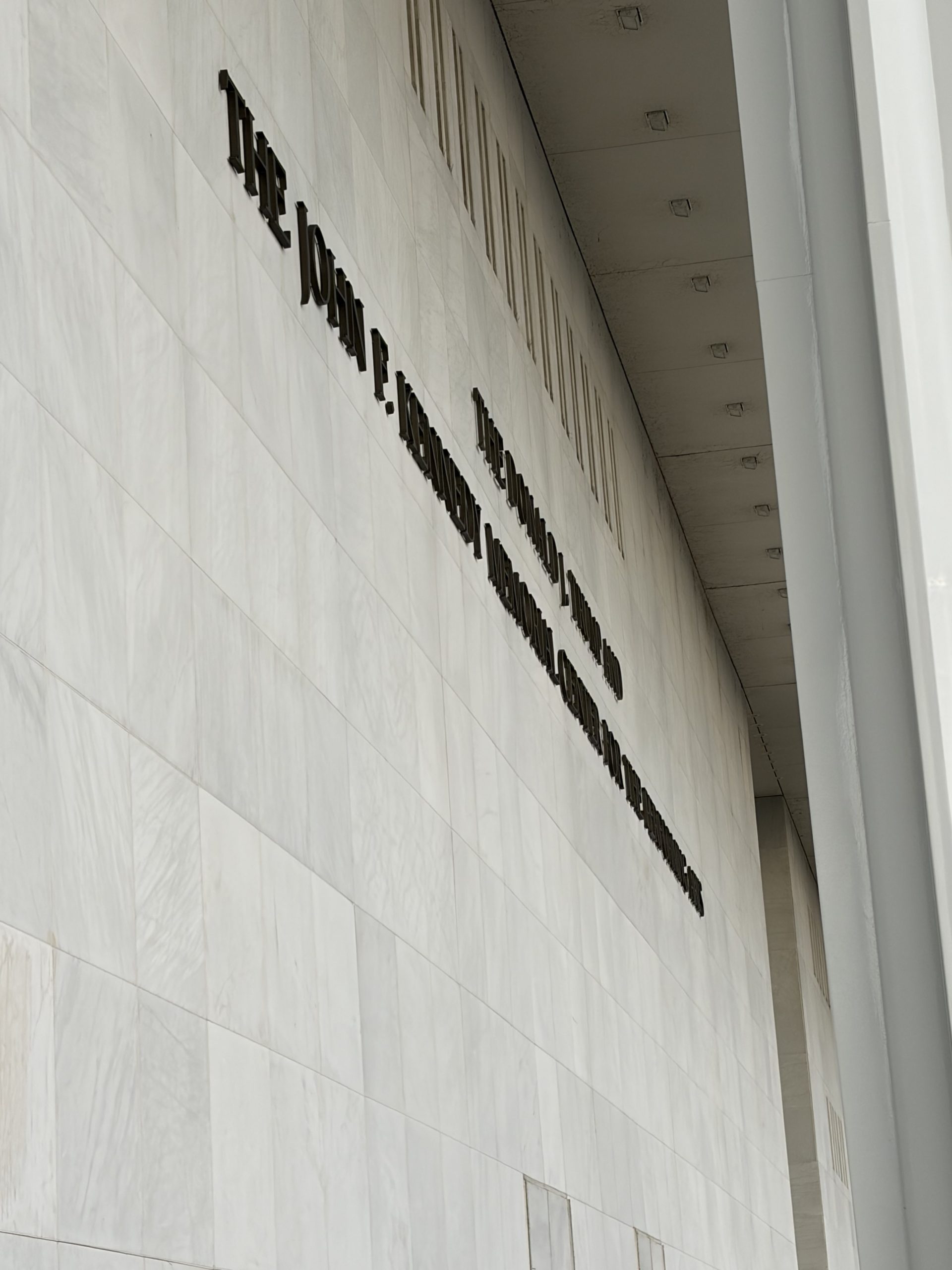
The dispute is about more than signage. It tests how far a president and an appointed board can go in reshaping a federally created national memorial.
Donald Trump’s push to put his name back on the Kennedy Center has run into another legal wall.
A court again rejected the demand, according to a CNN report carried by MSN, keeping alive a fight that has turned one of Washington’s most prominent arts institutions into a flashpoint over presidential power, public memory and cultural politics.
A branding fight becomes legal
At the center of the dispute is a deceptively simple question: who gets to decide the name of the John F. Kennedy Center for the Performing Arts?

Trump and his allies have treated the name fight as part of a broader effort to reshape the institution. Opponents argue the Kennedy Center is not a private venue or a campaign backdrop, but a federally established memorial whose identity was set by Congress.
That is why the latest court setback matters. It does not merely affect lettering on a building. It speaks to whether an administration, a board or a president can alter the public identity of a national memorial without lawmakers changing the law.
How the dispute began
NPR reported in March that Rep. Joyce Beatty of Ohio asked a federal court in Washington, D.C., to force Trump, the Kennedy Center board and center staff to return to using the institution’s formal name: The John F. Kennedy Center for the Performing Arts.
According to NPR, Beatty’s motion challenged the Trump administration and the center’s board over their decision to call the complex “The Trump-Kennedy Center.” Her attorneys argued in court papers that Congress had designated the center as the “sole national memorial” to President John F. Kennedy in the nation’s capital.
The filing framed the attempted renaming as a violation of the governing statutes and the trustees’ obligations. Beatty said in a statement reported by NPR that “only Congress can change its name.”
The Kennedy Center defended the move at the time. NPR reported that Roma Daravi, the center’s vice president of public relations, said the institution was confident the court would uphold the board’s decision on the name change and planned renovations.
The latest ruling narrows Trump’s path
The new court action, as described in the CNN report surfaced by MSN, again knocked down Trump’s demand for his name to return to the Kennedy Center. The full procedural details of the latest order were not available in the extracted report, including whether Trump’s side intends to appeal immediately.
Still, the headline result is clear: the court did not grant the relief Trump wanted. That keeps the legal momentum, at least for now, with challengers who say the center’s congressionally established identity cannot be revised by executive preference or board action alone.
For Trump, the ruling is another setback in a symbolic battle he has treated as a matter of recognition. For opponents, it reinforces their argument that the Kennedy Center’s name is not an administrative detail that can be edited like a website banner.
The immediate impact may depend on the court’s precise wording. But the broader legal question remains the same: whether the statutory framework that created the Kennedy Center limits what the board and White House can do with its name.
Congress is the key issue
The Kennedy Center was authorized by Congress as a living memorial to John F. Kennedy. That history is central to the lawsuit because it gives opponents of the renaming a cleaner argument than a general objection to Trump’s politics.
Their case is not simply that the new name is distasteful or partisan. It is that Congress created and named the memorial, and that any major change to that identity should also come from Congress.
That distinction matters in court. Judges generally do not decide cultural taste, but they do interpret statutes, board authority and fiduciary duties. If the center’s governing law fixes the memorial’s identity, the board’s discretion may be limited even if its members support Trump’s preferred branding.
The White House, meanwhile, has argued that Trump revitalized the institution. NPR reported that White House spokesperson Liz Huston defended the “Trump-Kennedy Center” name as recognition of Trump’s contributions, including finances, renovations and programming changes.
The arts-world backlash was swift
The fight over the name landed in an arts community already wary of political interference at the center. NPR reported that several prominent artists withdrew from planned performances after the White House announced the new name.
Those artists included composer Philip Glass, Broadway composer and lyricist Stephen Schwartz, and banjo player Béla Fleck, according to NPR. Their exits signaled that the dispute was not staying confined to court filings or Washington process stories.
The Washington National Opera also cut ties with the Kennedy Center after ticket sales fell sharply, NPR reported. Its artistic director, Francesca Zambello, told NPR that patrons “voted with their feet and with their pocketbooks.”
That fallout is part of what makes the case unusual. The legal fight is about authority, but the practical consequences touch ticket sales, donors, performers, programming and the center’s standing as a national cultural stage.
Renovations add another layer
The name dispute is not the only legal pressure facing the Kennedy Center. NPR also reported that a coalition of architecture and cultural groups sued Trump and the Kennedy Center board over planned renovations and a scheduled closing.
That separate lawsuit sought compliance with historic preservation laws and congressional approval before renovation plans moved ahead. Together, the cases raise a larger question: how much can a new leadership structure change at a federally tied cultural landmark, and how fast?
For supporters of Trump’s changes, the center needed a shake-up. For critics, the combination of renaming, programming shifts and renovation plans looks like a rapid political takeover of an institution built to serve a broader public purpose.
The court’s latest rejection of Trump’s naming demand does not settle every part of that argument. But it does keep the most visible symbol of the fight unresolved in Trump’s favor.
What remains unresolved
The case now turns on next steps that may come quickly: possible appeals, further motions, or additional orders clarifying what the Kennedy Center may call itself while litigation continues.
Several practical questions remain open:
- whether Trump’s side will challenge the latest ruling in a higher court;
- whether signage, websites and publicity materials must remain unchanged during the case;
- whether Congress will attempt to intervene legislatively;
- how the litigation affects donors, performers and future programming;
- how the related renovation lawsuit could complicate the center’s operations.
For now, the court has sent a clear signal that Trump’s name cannot simply be restored on demand. The Kennedy Center fight is no longer just a dispute over branding. It is a test of whether a national memorial’s identity belongs to the president in power, the board in place, or the law that created it.







Leave a Reply