
The dispute is no longer only about access to a vital shipping route. Washington and Tehran are each tying any reopening of the Strait of Hormuz to far-reaching political and financial demands.
Donald Trump responded Monday to Iran’s demands to reopen the Strait of Hormuz by presenting a new red line of his own: compensation claims that he said U.S. representatives must include in future negotiations. Iran has set conditions for reopening the Strait of Hormuz, including compensation and major changes in U.S. policy.
The immediate question is whether either side is making room for a limited deal or raising the price of one. Trump’s latest position, described in a Truth Social post, adds another unresolved issue to talks over a waterway whose closure has become a central point of pressure in the wider conflict.
Trump makes compensation a condition
Trump said Iranian representatives had sought compensation for damage Iran suffered during the five-month military conflict. He argued that the issue had not previously been part of negotiations or meetings.
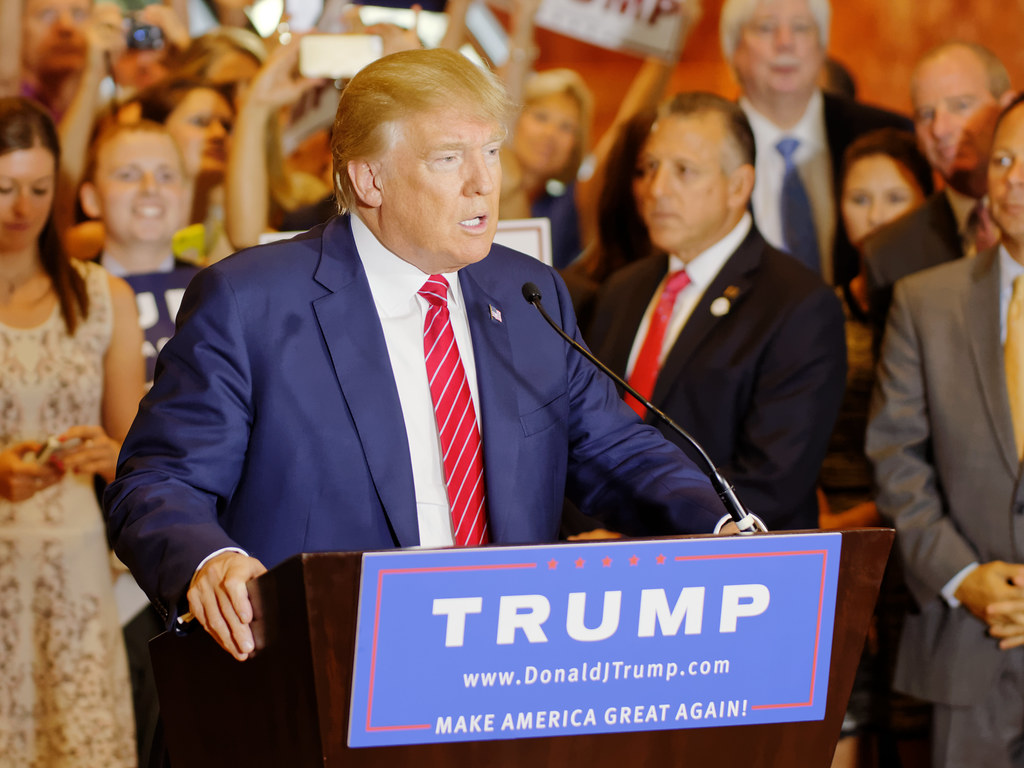
In response, Trump said the United States should seek compensation from Iran for Americans killed or seriously injured in attacks and conflicts, including the families of people killed in the attack on the USS Cole. He also called for compensation for Iranian protesters killed over decades, as well as people he said had been killed during the latest five months of fighting.
His key instruction was aimed at the negotiating process rather than a specific, publicly announced agreement. Trump said he had directed his representatives to put those demands “firmly” into all future negotiations.
That language matters because it frames compensation not as a rhetorical objection but as a stated U.S. negotiating position. It also makes a straightforward reopening arrangement harder to separate from the much larger history of U.S.-Iran tensions.
Iran’s conditions go well beyond shipping
According to the reported statement from Mohammad Baqer Zolqadr, head of Iran’s Supreme National Security Council, Tehran has laid out six major conditions before it will reopen the strait.
Those conditions reportedly include an end to U.S. threats and insults toward Iran, a permanent end to fighting in Lebanon, Gaza, Yemen and Iraq, an end to the U.S. naval blockade, and the withdrawal of American forces from areas around Iran.
Iran also wants the United States to pay damages tied to the current war and last year’s July war, lift sanctions and release frozen Iranian assets unconditionally, according to the report. Tehran’s stated position is that the Strait of Hormuz will remain closed until America “corrects its behavior.”
These are not narrow maritime operating terms. They combine security, regional conflicts, military posture, sanctions policy and financial claims into one package, making the waterway a lever in a much broader confrontation.
A chokepoint becomes negotiating leverage
The Strait of Hormuz is a strategically important passage for commercial shipping, particularly energy shipments moving out of the Gulf. Any prolonged disruption can affect freight planning, insurance costs and oil-market expectations even before vessels begin moving normally again.
That is why a dispute over access carries consequences beyond the two governments. Iran is treating the reopening as contingent on political concessions; Trump is responding by attaching U.S. claims that reach well beyond the present crisis.
Ali Nikzad, deputy speaker of Iran’s Parliament, reinforced Tehran’s stance Monday, telling state broadcaster IRIB that the country’s demands would not change. He said reopening the strait had “no military solution” and argued that opponents must accept what he called a new regional order.
The competing positions leave little visible overlap. Iran is demanding concessions from Washington as the price of reopening, while Trump is saying U.S. claims against Iran must now be part of any negotiations.
There may be a narrower route
Despite the hardened public positions, the report said Iran appeared close to a limited arrangement with Oman that could open a narrow passage for some vessels. Such a deal would fall short of restoring normal traffic through the Strait of Hormuz.
A restricted corridor could reduce immediate pressure without resolving the political dispute. It could also create a practical test of whether shipping access can be handled separately from the sweeping demands each side has made publicly.
Still, important details remain unclear. The report did not specify which vessels could use the proposed route, how passage would be monitored, whether the United States would accept the arrangement, or whether it would be durable enough for normal commercial operations.
Public demands can narrow diplomacy
Both sides may see value in making maximal demands before private bargaining begins. Publicly, Iran can portray continued restrictions as a response to U.S. policy; Trump can portray compensation claims as a defense of Americans and Iranian protesters harmed by Tehran.
But positions announced as red lines are difficult to soften without political cost. That can make even a limited, practical agreement appear like a concession unless both sides can describe it as a temporary or humanitarian shipping measure rather than a broader settlement.
The central takeaway is that reopening the Strait of Hormuz is now entangled with disputes neither side appears prepared to resolve quickly. A partial shipping arrangement may be the most plausible near-term outcome, while the larger demands on compensation, sanctions, military deployments and regional conflict remain unsettled.






Leave a Reply