

The former state Senate president is emerging as the favorite in a fast, unusual replacement fight. The outcome will test whether Democrats can steady a shaken Senate campaign before facing Susan Collins.
WISCASSET, Maine — Maine Democrats are trying to replace Graham Platner, and as Democrats rally around logger Troy Jackson, the former state Senate president has taken an early lead in their Senate nomination fight. Across 16 counties over the weekend, activists began choosing 601 delegates for the state party convention vote scheduled for Saturday in Bangor.
That delegate-selection process in Maine is unusually compressed after Platner stepped aside July 10. Jackson’s strength matters because the nominee will inherit a shaken but energized Democratic effort to challenge Sen. Susan Collins, a Republican whose seat is central to the party’s hopes of improving its Senate math.
Jackson’s edge came from organizing
Jackson’s early advantage was not built through a normal primary campaign. It came through delegate slates, county meetings and a race to mobilize loyal Democrats on short notice.
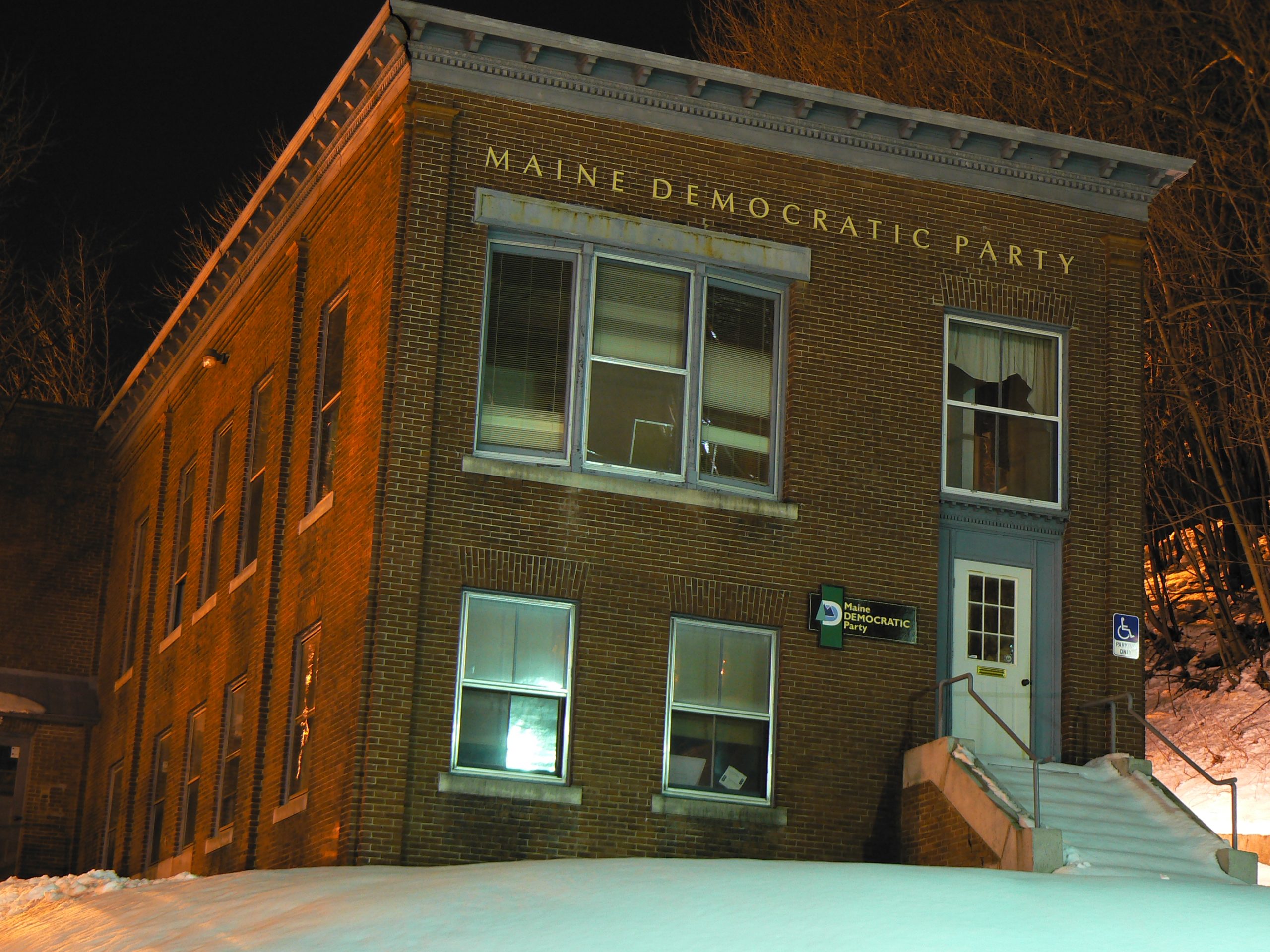
According to The Washington Post, Jackson-backed slates won 148 of 149 delegates selected in Cumberland County, home to Portland and the biggest delegate prize because it is Maine’s most populous county. His slate also won nearly 80 of 84 spots in York County as voting continued Sunday.
That pushed Jackson close to two-thirds of the convention delegates, though the delegates are not formally bound to support him. In a hurried contest, that distinction matters legally and procedurally, but politically it still points to a commanding position.
The result also shows why party rules can shape the outcome as much as ideology. When candidates organize preferred slates, county-level voting can function almost like a winner-take-all contest, rewarding the campaign with the strongest field operation.
A process built in a hurry
The replacement contest exists because Platner, who had become a high-profile Democratic Senate candidate, stepped aside July 10 after allegations that he had committed sexual assault, which he has denied. His exit forced Maine Democrats to improvise a new path to a nominee in a race that was already being watched nationally.
Under the process described by The Washington Post, 500 delegates are being selected through county-level meetings held over the weekend. Another 101 delegates are members of the state party committee, bringing the total to 601 for the Bangor convention.
That is a very different political test from a statewide primary. Instead of persuading every Democratic voter over months, candidates have had to identify supporters, build slates, turn people out and win procedural fights in days.
For Jackson, that compressed timeline appears to have been an advantage. He entered with an existing political network, labor support and a recognizable brand among Maine Democrats after years in state politics.
Platner’s shadow still hangs over it
Platner’s campaign had generated enthusiasm among progressives who wanted a working-class outsider to take on Collins. His collapse left Democrats with two problems at once: choosing a new nominee and preventing disillusioned supporters from drifting away.
Jackson is trying to occupy much of the same political lane. He is a logger, a former state Senate president and a progressive who has backed ideas such as Medicare-for-all while criticizing corporate power.
That makes him a natural vehicle for some voters who were drawn to Platner’s populist pitch. But it also means he must inherit a movement without being defined by the turmoil that ended Platner’s candidacy.
In remarks Friday in Portland, Jackson said the hope of sending a working-class fighter to the Senate does not belong to one person. That line captures the argument his campaign is making: the cause can survive the candidate who first electrified it.
The working-class lane reopens
Jackson’s biography is central to his appeal. He followed his father, grandfather and great-grandfather into logging and has long presented himself as someone shaped by northern Maine’s economic struggles.
He also has an unusual partisan history. Jackson first ran for office as a Republican, later became an independent and then switched to the Democratic Party in 2004. For supporters, that path reinforces his image as a politician rooted less in party branding than in labor and class politics.
His record gives Democrats a candidate who can speak to progressive activists while also claiming ties to conservative-leaning parts of rural Maine. That combination is valuable in a state where statewide races often hinge on regional identity as much as national party mood.
Still, Jackson is not the only Democrat with a claim to the nomination. Nirav Shah, Maine’s former top health official, and Secretary of State Shenna Bellows were also in the mix, though Bellows dropped out Sunday. Shah had previously outperformed Jackson in the Democratic gubernatorial primary, a reminder that this delegate contest is not the same as a broad electorate test.
Why Collins changes the stakes
The replacement fight matters beyond Maine because Collins is one of the best-known Republican senators in a state that often votes Democratic for president. Democrats see her seat as a potential pickup, but she has repeatedly survived tough races by cultivating a distinct Maine brand.
That is why a messy nomination process carries risk. A nominee who emerges with visible party unity can turn quickly to Collins. A nominee who wins through a process perceived as insider-driven may have more work to do with voters who wanted a direct say.
Jackson’s supporters can argue that the county meetings were open to rank-and-file Democrats and that the results reflect organizing muscle, not backroom dealing. Skeptics may counter that a slate-driven convention process can narrow the field too quickly and favor candidates with existing networks.
Both readings can be true. In an emergency replacement race, speed and legitimacy are often in tension. Maine Democrats are betting that an orderly convention will matter more than a prolonged fight.
What remains before Bangor
Jackson is the clear early favorite, but the nomination is not official until the delegates vote in Bangor on Saturday. The biggest immediate question is whether his delegate advantage holds without defections or a late consolidation around another candidate.
Another question is whether the eventual nominee can quickly unify Platner supporters, institutional Democrats, labor groups and voters who were drawn to other contenders. The compressed calendar leaves little time for bruised factions to cool off.
The race also tests whether Jackson’s style travels from a statehouse and convention setting to a Senate campaign against Collins. His blunt, labor-centered message could energize progressives and working-class voters; it could also invite scrutiny from Republicans eager to portray Democrats as unsettled after Platner’s exit.
For now, the story is simpler: in a chaotic replacement race, Jackson appears to have done the thing that matters most under the rules Maine Democrats chose. He organized faster than everyone else.











Leave a Reply