
The tomb was real, astonishing and nearly untouched. The supernatural panic around it was something else: a media-age myth built from coincidence, celebrity and public obsession.
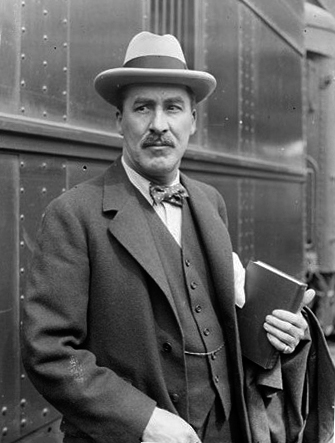
Howard Carter was not looking for a ghost story when his team uncovered the entrance to Tutankhamun’s tomb in Egypt’s Valley of the Kings in November 1922. He was looking for evidence, artifacts and a pharaoh whose burial place had somehow escaped the fate of so many others.
What the world got was bigger than an excavation report. The discovery became a press sensation, then a cultural fever, then a supernatural legend that still clings to King Tut more than a century later.
A tomb almost nobody expected
By 1922, the Valley of the Kings had already been searched, mapped and picked over by generations of archaeologists, treasure hunters and tomb robbers. Many royal burials had been looted in antiquity, leaving scholars with fragments instead of full ceremonial worlds.
Tutankhamun’s tomb changed that. History Today describes it as the first pharaoh’s tomb found almost entirely undisturbed, a crucial distinction in a landscape where “royal tomb” often meant empty chambers and scattered remains.
The young ruler himself was not one of ancient Egypt’s most powerful kings. Tutankhamun died around 1323 B.C., at about 18, according to History Today. His fame today comes less from what he did in life than from what survived after death.
That survival was staggering. Carter and the excavation’s financial backer, the 5th Earl of Carnarvon, eventually entered chambers filled with objects meant to serve the king in the afterlife: religious items, furniture, wall paintings, inscriptions and the mummified body of the pharaoh himself.
The moment became a media event
The discovery landed at exactly the right moment for mass fascination. Newspapers could turn archaeology into a serial drama, with each new chamber, object and rumor feeding the next headline.
This was not just a scholarly milestone. It was a story with all the ingredients editors love: buried gold, ancient royalty, secrecy, danger, empire, death and the promise that something forbidden had been opened.
Live Science’s anniversary framing points to Nov. 4, 1922, as the date when archaeologists discovered King Tut’s tomb and the curse rumors began to swirl. The date matters because it marks the start of a modern pattern: a real scientific event almost immediately absorbed into entertainment.
Readers wanted the objects, but they also wanted atmosphere. Egyptomania had already swept through fashion, design and popular culture. King Tut gave the world a new icon, and the press gave the icon a plot.
The curse needed one death
The “mummy’s curse” did not begin with a verified warning found inside Tutankhamun’s tomb. History Today is blunt on that point: no curse had actually been found there.
But myths do not need documents when they have timing. Lord Carnarvon died in Cairo in 1923 at age 56, not long after the tomb’s opening became global news. The city’s lights reportedly went out around the time of his death, a detail that gave newspapers and storytellers the kind of eerie flourish that facts alone rarely provide.
From there, the story gained famous amplifiers. History Today notes that novelist Marie Corelli speculated that “the most dire punishment” could follow anyone rash enough to enter a sealed tomb. Arthur Conan Doyle, the creator of Sherlock Holmes and a believer in spiritualism, reportedly suggested to American reporters that an “evil elemental” spirit created by priests might have caused Carnarvon’s death.
That was enough. A death became a pattern. A coincidence became a warning. A tomb became a trap.
The evidence never matched the panic
The curse legend grew by collecting names. Later deaths of people connected closely, loosely or sometimes only imaginatively to the excavation were folded into the story.
History Today lists several figures who were later described as victims of the curse, including Prince Ali Kamel Fahmy Bey of Egypt, Sir Archibald Douglas Reid, Sir Lee Stack, Arthur Mace, Richard Bethell and Bethell’s father. Some died violently. Some died in unusual circumstances. The point, for believers, was not the strength of the connection. It was the mood of the connection.
That is how curse stories work. They count the hits, ignore the misses and turn a long enough list of human misfortune into a supernatural sequence.
The misses were significant. Most people who worked in or visited the tomb lived long lives, History Today notes. Carter himself did not die in a sudden tomb-side catastrophe. He died in London in 1939 at 64 after Hodgkin’s disease, years after angrily dismissing the curse idea as “tommy rot.”
Why the myth still survives
The curse story endured because it solved a problem for the public imagination. Archaeology can be slow, technical and careful. A curse makes it instant. It turns cataloging into trespassing and scholarship into punishment.
It also gave moral drama to an excavation shaped by unequal power. A British archaeologist and an aristocratic patron became the global faces of treasures removed from an Egyptian royal tomb at a time when Egypt’s political sovereignty and cultural control were deeply contested. The curse legend, however fanciful, put danger back into a story many readers experienced as adventure.
That does not make the curse true. It helps explain why it felt useful. The myth allowed people to thrill at the opening of the tomb while pretending the ancient world might still be able to answer back.
More than a century later, King Tut remains famous not only because his burial survived, but because the modern world projected so much onto it: wonder, greed, fear, guilt and the fantasy that the dead had left a warning for the living.
The real wonder was enough
The irony is that Tutankhamun’s tomb did not need a curse to be astonishing. A nearly intact royal burial from ancient Egypt is rare enough. The objects inside transformed public understanding of pharaonic art, ritual and royal death.
The curse was the simpler story, and that is why it traveled so well. It required no expertise in archaeology, no patience for conservation and no knowledge of Egypt’s 18th Dynasty. It only required the suspicion that some doors are not meant to be opened.
Carter’s discovery was one of the great archaeological moments of the 20th century. The legend that followed was something different: an early viral narrative, built from selective evidence and powered by the appetite for mystery.
The tomb gave the world Tutankhamun. The headlines gave him a curse. Only one of those discoveries was real, but both have proved remarkably hard to bury.









Leave a Reply