
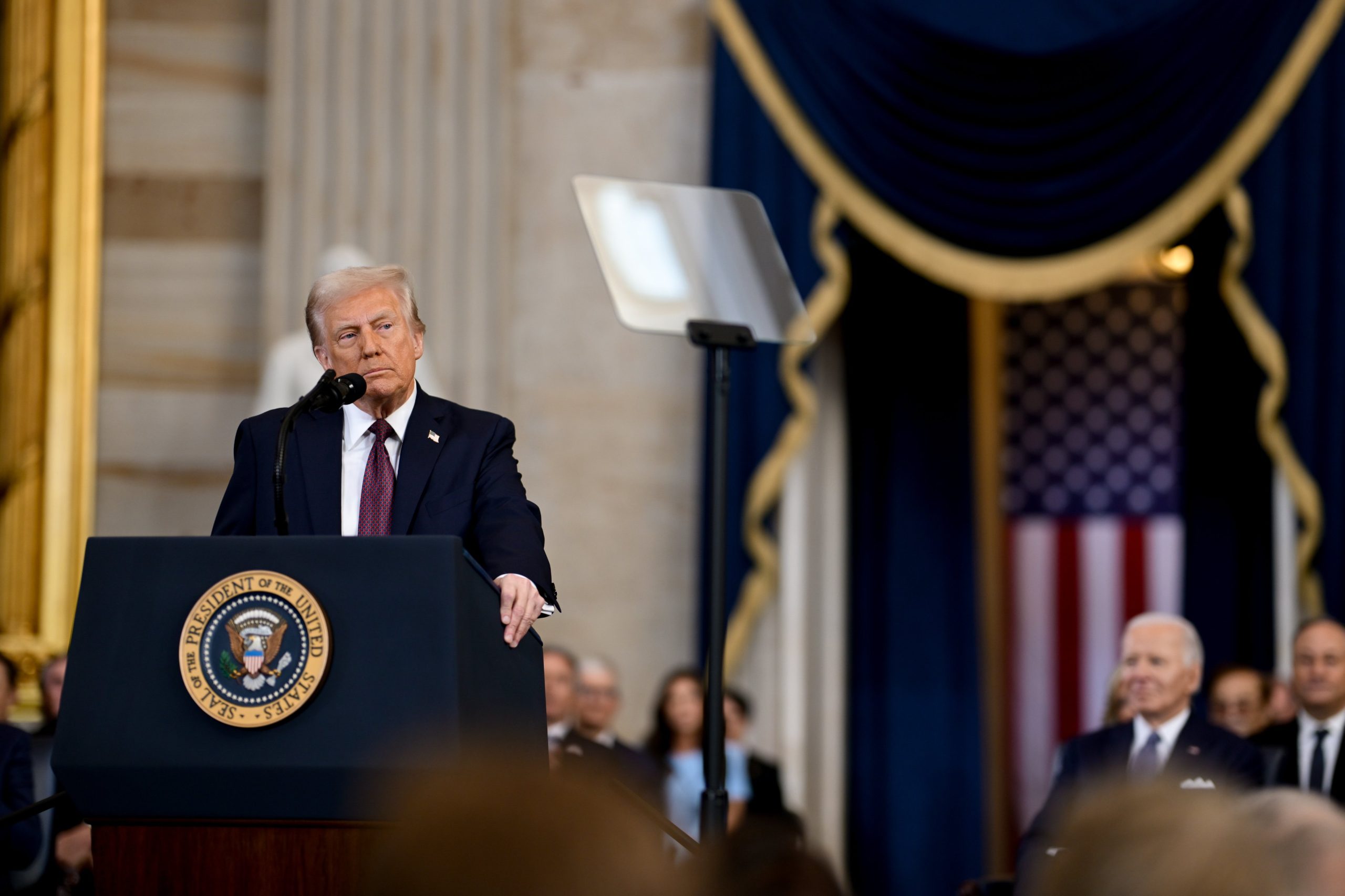
The evacuation turned a tightly staged patriotic celebration into a weather-driven scramble, with crowds directed toward shelter and security checkpoints temporarily closed.
A major July Fourth celebration tied to President Donald Trump’s Salute to America event was disrupted Saturday night after severe weather forced an evacuation of the National Mall.
The order came before Trump’s planned remarks, turning a heavily choreographed patriotic gathering into a fast-moving public safety operation involving shelter instructions, closed checkpoints and canceled flyovers.
The order came before the speech
ABC News reported in a headline distributed through MSN that Trump’s Salute to America event was being evacuated because of weather conditions. The Associated Press reported that storms gathering near Washington forced event organizers to order people off the National Mall ahead of Trump’s July Fourth speech.
The disruption hit as crowds were already building for an evening program marking America’s 250th anniversary of independence. Trump had initially been expected to speak around 10 p.m. ET, according to AP, but the evacuation left the timing and format of the program uncertain.
CNN reported that the Great American State Fair and Salute to America events on the National Mall were delayed until severe weather passed. That distinction matters: organizers were not simply asking people to wait out a shower in place. They were moving the public out of an open, security-controlled event space.
AP reported that signs at the Great American State Fair posted an alert shortly after 7 p.m. ET urging participants to leave the area. Loudspeakers also carried the evacuation order, while National Guard troops told people to exit.
Shelter replaced the celebration plan
Freedom 250 spokesperson Danielle Alvarez said in a statement, according to AP, that the organization would share updates on programming and doors reopening. The statement encouraged attendees to seek shelter in nearby museums and federal buildings around the National Mall.
Washington’s Metro system also said several underground stations were available as shelter, AP reported. For people who had spent hours outside in heat and humidity, the instruction was practical as much as precautionary: leave the exposed lawn, get indoors or underground, and wait for official updates.
Scenes described by AP suggested the message landed unevenly at first. Some people appeared to stand in place and talk after the order was announced, while others moved toward exits. That is a familiar challenge in big crowd events: a weather warning is only useful if thousands of people understand it quickly and act at the same time.
The National Mall is built for symbolism and scale, not quick shelter. Its wide lawns and long sightlines make it ideal for fireworks, speeches and flyovers. Those same qualities make severe weather especially hard to manage once a crowd is already inside a secured perimeter.
Security made a restart harder
The weather did not just interrupt the entertainment schedule. It complicated the security architecture around the president’s appearance.
AP reported that the U.S. Secret Service had temporarily closed checkpoints. If spectators were allowed back in, they would need to be screened again, adding time and uncertainty to any attempt to resume the event.
That is the hidden friction in a large presidential event. Once people leave a controlled area, reopening is not as simple as announcing that the storm has passed. Officials have to account for crowd flow, bag checks, magnetometers, restricted areas and the timing of the protectee’s movement.
Military flyovers, which have become a high-profile part of recent July Fourth celebrations in Washington, were canceled for the rest of the day, according to AP. That removed one of the evening’s most visible pieces of patriotic pageantry even before the question of Trump’s remarks was resolved.
The heat was already a problem
The storm evacuation came after a day shaped by uncomfortable and potentially dangerous heat across much of the East Coast. AP reported that celebrations months in the making were being adjusted as temperatures approached and in some places passed triple digits.
That combination can strain even well-planned public events. Heat pushes people toward shade, water and restrooms. Storms then require rapid movement, shelter and clear communication. Add holiday crowds and presidential security, and the margin for error gets thin.
In Washington, some attendees had been outside for hours before the weather turned. AP described spectators watching jets earlier in the day and families taking breaks near museums and overpasses while they waited for evening events.
The evacuation also underscored a larger reality for outdoor civic spectacles: the most carefully planned moments are still at the mercy of weather systems that do not care about television windows, speech schedules or anniversary branding.
Other cities made changes too
Washington was not the only place where July Fourth plans met rough weather. AP reported that severe weather prompted cancellations in Hartford, Connecticut, and in Harrisburg and Wilkes-Barre, Pennsylvania.
Boston spectators were briefly told to seek shelter before fireworks and concert events later resumed, according to AP. New York and Pittsburgh moved forward with fireworks but adjusted timing to account for shifting weather.
Those examples show why the National Mall evacuation should not be read only as a Trump-event story. It was part of a broader holiday weekend pattern in which organizers across the Northeast and Mid-Atlantic were forced to balance public safety against huge crowds and long-planned celebrations.
Still, the Washington event carried extra political weight because it was tied to Trump’s appearance and to the broader America 250 commemorations. A weather delay at a local fireworks show is disruptive. A weather evacuation before a presidential speech becomes a national news event.
What remains unclear now
The immediate questions were whether the program would resume, when crowds could return and how much of the original schedule could be salvaged. AP reported that Trump’s planned speech time was uncertain after the evacuation.
The White House had promoted Trump’s participation in the Salute to America celebration, and the event was designed as a major patriotic showcase. But by Saturday evening, the operational focus had shifted from staging a spectacle to moving people safely through weather and security constraints.
For attendees, the key instruction was simple: follow official updates from organizers and local authorities, not rumors moving through the crowd or social media. In fast-changing weather, outdated information can be more confusing than no information at all.
The clean takeaway is that the evacuation was a safety decision first and a political disruption second. It interrupted one of the highest-profile July Fourth events in the country, but the larger test was whether organizers could clear, shelter and potentially re-screen a massive crowd without creating a second problem.





Leave a Reply