
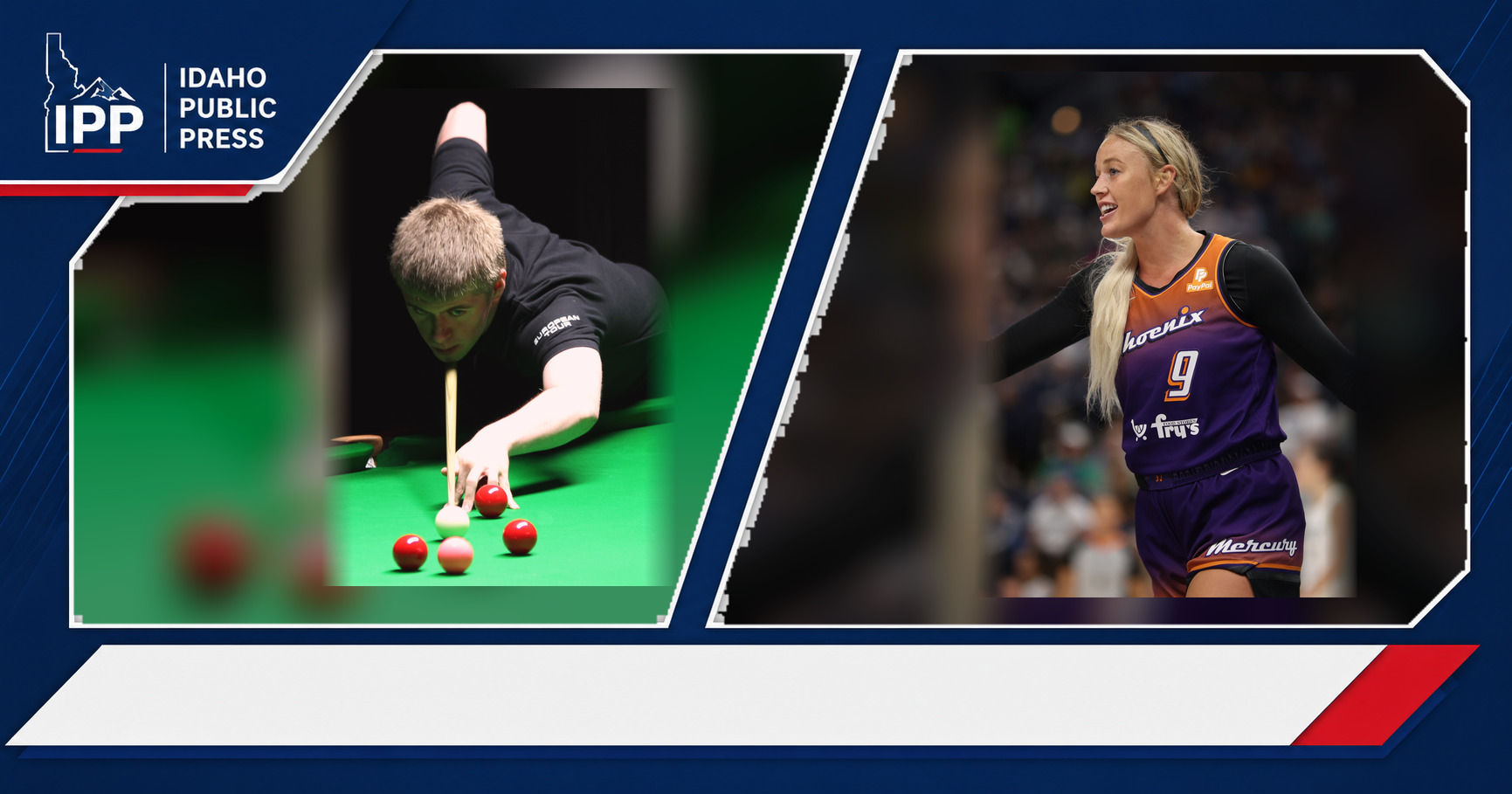
The dispute is less a direct back-and-forth than a collision between competing ideas about what the WNBA should be discussing. It also shows how quickly player visibility, social issues and on-court performance can become part of the same argument.
Sophie Cunningham responded to remarks by Ryan Clark in the framing of a report about their WNBA dispute, though the available account does not document a direct public statement from Cunningham to Clark. Clark, formerly associated with ESPN, criticized Cunningham while discussing WNBA controversies and arguing that off-court debate has received too much attention.
The episode matters because it puts a familiar league tension in plain view: whether the WNBA benefits when players speak on issues beyond basketball, or whether those conversations distract from the games. Cunningham’s recent Indiana Fever performance became part of that argument, even if it was not a direct verbal rebuttal.
Clark’s criticism focused on attention
According to the Fox News/OutKick report that prompted the discussion, Clark shared a clip tied to his podcast and wrote that “divisive gossip from a 9-point scorer gets more attention than the league’s best teams and players.” The report said he did not name Cunningham in that post, but treated the remarks as aimed at her.

Clark’s broader point, as presented in the report, was that league coverage should put basketball first: the leading teams, standout players and competitive storylines. That is not an unusual position in sports media. Fans routinely argue that a league’s product is strongest when its games and stars lead the conversation.
But the wording also put Cunningham’s role in the spotlight. Reducing a player to a scoring average can be read as a criticism of the attention she receives rather than an assessment of the full range of her contributions, including shooting, defense, energy and public profile.
A response with no direct quote
The source headline framed Cunningham as making Clark “look like a clown,” but the reporting supplied no quoted Cunningham post, interview or podcast response directed at him. That distinction is important.
What the report did provide was a basketball answer of sorts: Cunningham scored 12 points on 4-for-5 shooting, all from three-point range, in 22 minutes during an Indiana win on Aug. 11. It listed her plus-minus at plus-17, the best mark on the court.
A strong game can shift the mood around a criticism, especially when the criticism invokes a player’s scoring. Still, it should not be presented as proof that Cunningham personally answered Clark unless she makes that connection herself. On the available record, the clearer description is that her performance complicated the critique rather than settled the dispute.
Why Cunningham draws this scrutiny
Cunningham has become one of the more recognizable players around the Indiana Fever, a team already under an intense spotlight. The report linked Clark’s criticism to her public involvement in contentious conversations surrounding women’s sports and locker-room policies.
Those issues carry consequences beyond a box score, which is precisely why they attract attention. Supporters of Cunningham’s willingness to speak see athletes as citizens with a right to address questions they consider important. Critics may believe that prominent players should be more careful about adding heat to polarizing cultural debates.
Neither view erases the other. Sports leagues thrive on competition, but they also operate inside a broader culture. Players are no longer limited to postgame quotes and local coverage; a short clip or social post can become a national story within hours.
The basketball case is real too
Clark’s underlying concern—that elite play should not get buried—deserves consideration. The WNBA has deep talent, compelling playoff races and players whose performances merit sustained coverage. A media environment built only around controversy can flatten the league into a sequence of arguments.
At the same time, the claim that off-court stories are somehow separate from the WNBA’s growth is harder to sustain. The league’s rising visibility has brought more investment, broader audiences and sharper scrutiny. That attention includes basketball analysis, celebrity interest, fandom, criticism and political disagreement.
The more useful question is not whether the league should have off-court conversations. It will. The issue is whether coverage can make room for those conversations without treating the actual games as an afterthought.
Statistics do not tell the whole story
The report said Cunningham was second in the WNBA in three-point percentage at 45.5%. If accurate for the point in the season referenced, that figure supports the idea that she offers valuable on-court production beyond raw points per game.
Yet one efficient night, one percentage ranking or one commentator’s post cannot fully resolve the larger disagreement. Basketball statistics measure production; they do not measure why a player becomes a headline or whether public attention is deserved.
That is the divide between Clark’s argument and the reaction it triggered. He appears to be calling for a different allocation of attention. Cunningham’s defenders see the criticism itself as another example of athletes being targeted for using a platform they have earned.
What remains unsettled
There is no documented direct Cunningham response to Clark in the material available here, and there is no indication that Clark and Cunningham held a one-on-one public exchange. Readers should be cautious about treating a loaded headline as evidence of a complete public feud.
What is clear is that their names now sit inside a larger WNBA argument: who gets covered, what counts as relevant to the sport and whether a player’s visibility should be separated from her performance. Cunningham’s Aug. 11 showing gave supporters fresh evidence of her value on the floor. It did not end the debate over everything that happens beyond it.









Leave a Reply