
The latest dispute is not only about one former official. It is about whether public health leaders can regain credibility after years of uncertainty, politics and changing guidance.
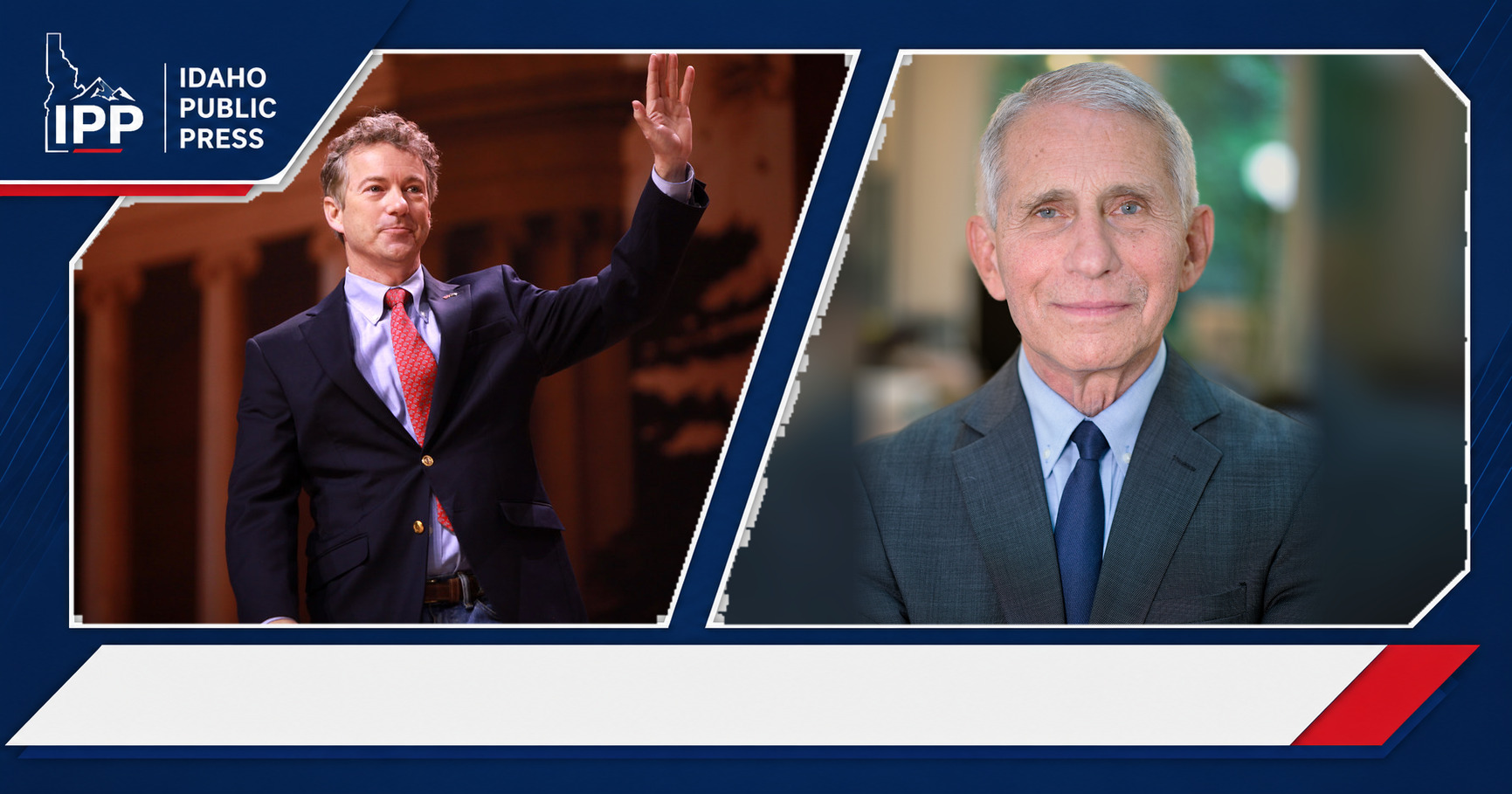
Anthony Fauci’s legacy is being described as one of shattered public trust, a phrase now attached to the former National Institute of Allergy and Infectious Diseases director as Sen. Rand Paul releases Fauci’s COVID-19 diary entries and prepares to question him before a Senate committee. The fight matters because the COVID-19 pandemic affected trust in public health institutions, not just arguments over one official.
The new flashpoint is a 1,141-page set of Fauci’s pandemic-era diary entries, which NPR reported Paul published ahead of a scheduled Wednesday appearance by Fauci before the Senate Homeland Security and Governmental Affairs Committee. The release has revived familiar but unresolved fights over what Fauci knew, how certain he sounded in public, and how much uncertainty officials should have admitted in real time.
Why the diaries landed now
Paul, a Kentucky Republican who chairs the Senate committee, has long accused Fauci and federal agencies of resisting scrutiny over the origins of COVID-19 and research tied to coronaviruses. NPR reported that Paul released entries spanning December 2019 through December 2022, the period when Fauci was still running NIAID and advising the White House on the pandemic response.
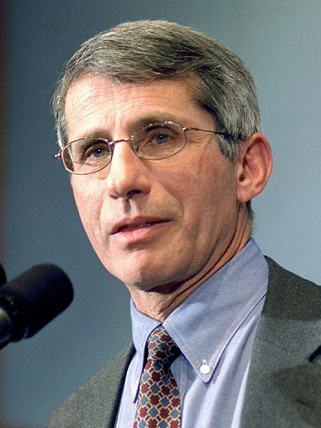
Paul’s argument is straightforward: Fauci’s private notes, in his view, show a different level of uncertainty than the public heard from one of the country’s most visible health officials. In a post cited by NPR, Paul wrote that what Fauci wrote privately and what he told the country were “two different stories.”
Fauci did not respond to NPR’s request for comment before that story was published. NPR also reported that the document was taken down Monday evening and reposted by Tuesday morning with redactions, a detail that only added more attention to a release already designed to shape the hearing.
The timing is the point. By putting Fauci’s private pandemic notes into the public debate just before testimony, Paul is trying to turn the hearing from a retrospective into a credibility test.
The trust problem is bigger
Fauci became the face of federal pandemic guidance for millions of Americans, which made him both a reassuring authority and a political target. That dual role is why arguments about his legacy rarely stay focused on one memo, one interview or one diary entry.
Critics see Fauci as the symbol of a public health establishment that overstated certainty, dismissed dissent and changed guidance without enough humility. Supporters see a scientist trying to communicate during a fast-moving emergency, while officials were learning about a new virus in public and under pressure to prevent panic.
Both views help explain why the trust damage has lasted. Public health asks people to accept recommendations before every fact is known. During COVID-19, those recommendations touched schools, workplaces, churches, travel, masks, vaccines and family life. When guidance changed, many heard adaptation. Others heard contradiction.
That is the central tension in Fauci’s legacy. Scientific uncertainty is normal. Institutional confidence depends on how openly that uncertainty is handled.
The origin fight still dominates
The diary entries have drawn attention partly because they touch the most politically explosive COVID-19 question: where SARS-CoV-2 came from. Fauci has argued that the scientific evidence points toward a natural spillover, meaning the virus moved from animals into humans and then spread among people.
NPR cited virologist Felicia Goodrum of Dartmouth College, who said there is evidence that early viral lineages and susceptible animals were connected to the Wuhan market. She also noted that the market was cleared before samples could settle the matter more cleanly.
Paul has pushed the competing view that a lab-related origin should not be ruled out, and has argued that federal officials withheld information from Congress and the public. A Republican-led House coronavirus subcommittee report in late 2024 concluded that a lab leak was the most likely origin, according to NPR’s account.
Other scientists disagree. NPR quoted Tulane virologist Robert Garry saying there is “no actual evidence” that the virus was engineered or that the Wuhan Institute of Virology had a close enough precursor virus to create SARS-CoV-2.
Private doubt, public certainty
The most revealing issue may not be whether a single diary line proves one origin theory. It may be how officials translated private debate into public guidance.
NPR highlighted one January 2020 entry in which Fauci wrote that the market was not the source but the “amplifier,” while also adding that the virus had jumped from animals to humans somewhere. That kind of note can be read two ways: as a sign Fauci was entertaining complexity early, or as evidence that public messaging later became too narrow.
Goodrum offered another explanation to NPR: Fauci may have sounded less certain privately among colleagues because scientists were racing to understand a new pathogen, while public remarks carried the burden of calming a frightened country. That distinction is real, but it is also risky.
People do not always forgive officials for simplifying uncertainty, even when simplification is meant to help. After a crisis, the public often judges not only whether leaders were right, but whether they were candid about what they did not know.
Fauci as symbol, not system
It is tempting to treat Fauci as the whole story because he was so visible. He gave interviews, testified before Congress and became a shorthand for the federal pandemic response. But public trust was never held by one person alone.
The pandemic response ran through the National Institutes of Health, NIAID, the Centers for Disease Control and Prevention, the Food and Drug Administration, state health departments, governors, presidents, school boards and local officials. Messages collided. Rules varied by state and city. Political leaders often used health guidance as ammunition.
That environment made trust fragile. If one agency changed course, critics treated it as proof the entire system was unreliable. If one politician attacked an expert, supporters of that expert often dismissed all criticism as bad faith.
Fauci’s legacy is controversial because he sits at the intersection of those failures and defenses. To some Americans, he represents expertise under attack. To others, he represents expertise that demanded obedience while offering too little transparency.
What the hearing can clarify
The Senate hearing could sharpen several factual questions: what Fauci believed about COVID-19’s origin at different points, how he communicated with other scientists, what federal agencies knew about risky research, and whether Congress received complete information.
It may also become another partisan performance. Paul and Fauci have clashed publicly for years, and both men arrive with established roles in the national argument. That makes new information important, but it also makes interpretation predictable.
The bigger question is whether any hearing can rebuild trust. Accountability can help, especially if documents are complete and questioning is precise. But trust is not restored by proving that one side won a cable-news argument.
Public health institutions will need a more durable lesson from the Fauci era: explain uncertainty earlier, distinguish evidence from judgment, correct mistakes plainly and resist turning scientific debate into institutional self-protection. If Fauci’s legacy is now inseparable from shattered public trust, the repair job will have to be broader than Fauci himself.








Leave a Reply