

The fight is less about one bill than about who controls the Senate calendar on election rules. Even with Republican pressure building, the measure faces hard procedural and political limits.
Donald Trump’s voter ID push is getting a new round of attention for a reason that has little to do with the text of the bill itself: Mitch McConnell is not in his usual place as a Senate gatekeeper.
That matters because the proposal, described by supporters as the SAVE America Act, sits at the intersection of election law, Republican campaign messaging and Senate procedure. It may have an opening. It does not yet have an easy path.
The opening is procedural
The measure has been promoted by Trump-aligned Republicans as a national voter ID and citizenship-verification push. In a February press release, Rep. Andy Barr of Kentucky said he voted for the SAVE America Act and wrote to McConnell, identified in the release as chairman of the Senate Rules Committee, urging him to move it forward.
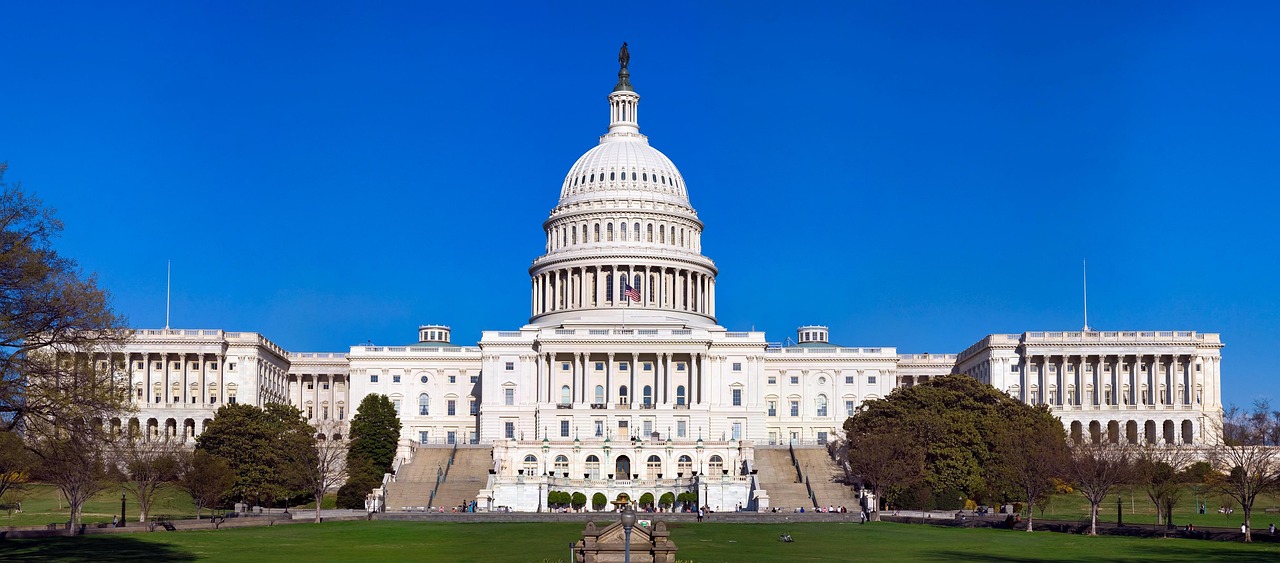
Barr’s release says the bill would require voter identification to cast a ballot in all elections and require proof of American citizenship when registering to vote in federal elections. He framed the proposal as a way to strengthen confidence in election administration.
The new political wrinkle is McConnell’s sidelining. A Fox News item syndicated through MSN described Trump’s voter ID bill as catching an unlikely break while McConnell remained sidelined. The key point is simple: if the Senate’s normal gatekeeper is not controlling the pace, backers see room to press harder.
That does not mean the bill is moving to the president’s desk. It means a committee bottleneck may be less fixed than it looked.
Why McConnell’s role matters
McConnell’s importance is not only his name recognition. The Senate Rules Committee has jurisdiction over federal election procedures, which makes it one of the places where a bill like this can stall, advance or be rewritten.
Barr’s letter leaned directly on that role. According to his office, he urged McConnell to move the SAVE America Act through the Senate and toward final passage, arguing that the House had acted and that the Senate should follow.
That pressure is notable because it comes from Kentucky’s own Republican delegation. Barr is not an outside activist taking shots from a distance. He is a GOP member from McConnell’s home state using the language of party urgency against a Senate process known for delay.
For Trump’s allies, McConnell has often symbolized institutional caution. For McConnell’s defenders, that caution is part of how the Senate works. Either way, his diminished role gives the bill’s supporters a cleaner target: move the legislation, or explain why not.
The bill’s political appeal
Voter ID has long been one of the Republican Party’s most durable election issues. Supporters argue that identification rules are a basic safeguard and point to ordinary ID requirements in daily life.
Barr made that case in blunt terms. His release quoted him saying that if Americans need ID to board a plane, open a bank account or buy cold medicine, they should need ID to vote in federal elections.
He also claimed voter ID is supported by more than 80% of the public, including a majority of Democratic voters. That polling claim is politically useful for Republicans because it lets them present the measure as mainstream rather than ideological.
The bill also fits Trump’s broader post-2020 election message. Trump has repeatedly pushed claims about election integrity, and voter ID gives Republicans a concrete legislative demand that is easier to explain than more technical fights over voting systems, certification or ballot handling.
The opposition is predictable
Democrats and voting-rights advocates have long argued that strict ID and documentary proof requirements can create barriers for eligible voters, especially people who lack easy access to birth certificates, passports or updated government identification.
Barr’s letter anticipated that criticism. In the excerpt released by his office, he said Democrats call the bill voter suppression, while he argued it is voter protection.
That is the core fight. Republicans present the proposal as a guardrail against illegal voting. Opponents see a national rule that could make registration and voting harder for legitimate voters, particularly if paperwork mismatches or name changes are handled poorly.
There is also a federalism fight beneath the messaging. States traditionally run elections, even though Congress has authority over federal elections. Barr’s release says the SAVE America Act does not expand federal control and “passes constitutional muster.” Opponents are likely to test that claim politically, and perhaps legally, if the bill advances.
The Senate math is brutal
Even with McConnell sidelined, the Senate remains the Senate. Most major legislation needs more than a simple majority to overcome procedural hurdles, and election-law bills are especially partisan.
That is why the current attention should be read as a pressure campaign, not a near-certain legislative breakthrough. Backers want to show momentum, force committee action and put senators on the record before the 2026 midterms.
The timing is useful for Republicans. Election security is a motivating issue for Trump’s base, and a national voter ID bill gives candidates a sharp campaign contrast: say yes to proof requirements, or defend saying no.
For Democrats, the same vote can be used in reverse. They can argue Republicans are trying to federalize restrictive voting rules and make registration more burdensome. Both sides see campaign value even if the bill never becomes law.
What to watch next
The next meaningful signal is not another statement from Trump-world allies. It is movement inside the Senate: a hearing, a markup, a committee vote or public pressure from leadership on where the bill sits.
Three questions will decide whether this becomes more than a talking point:
- Who controls the committee path? If McConnell remains sidelined, another Republican could shape the timing and tone.
- Can supporters broaden the coalition? Public polling on voter ID may be favorable, but Senate Democrats are unlikely to embrace a Trump-branded election bill.
- How does the bill handle eligible voters without paperwork? Administrative details could determine whether the proposal is seen as security, suppression or both.
For now, Trump’s voter ID push has gained an opening because Senate dynamics have shifted. But an opening is not a passageway. It is leverage, and Republicans are trying to use it before the legislative window closes.







Leave a Reply