
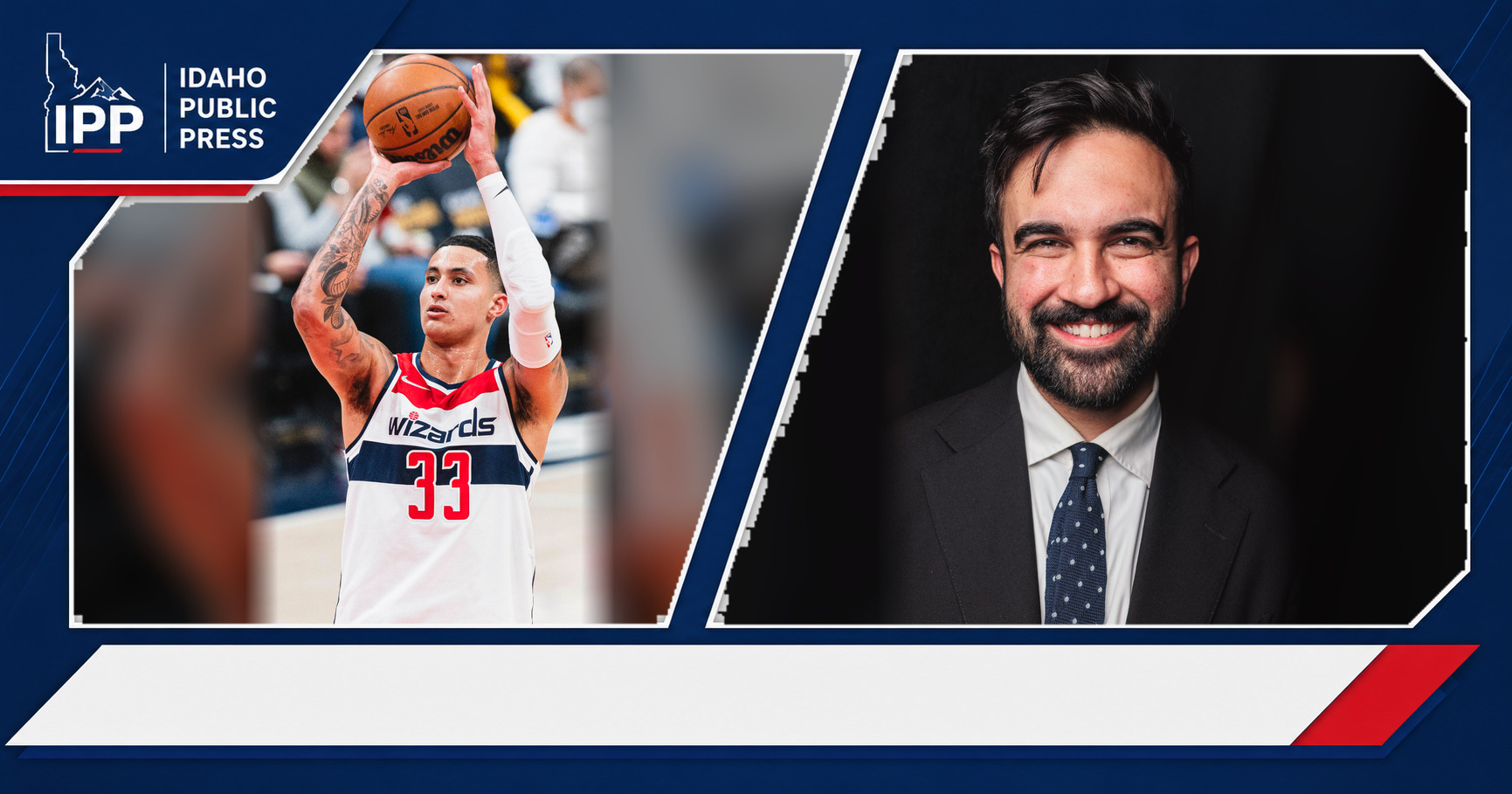
The Milwaukee Bucks forward’s post hit a nerve because it challenged not just Mamdani’s position on Benjamin Netanyahu, but the role of mayors in national and international debates.
NBA star Kyle Kuzma criticized Zohran Mamdani over remarks about Benjamin Netanyahu. Kuzma called Mamdani “a mayor playing president.” Mamdani is the mayor of New York City, and the public attack came after Mamdani released a video calling for Netanyahu’s arrest under an International Criminal Court warrant before the United Nations General Assembly, according to reports citing the post.
The exchange matters because it turned a foreign-policy argument into a broader fight over image, authority and who gets to speak for a city on global issues.
Kuzma’s post hit hard
Kyle Kuzma, a forward for the Milwaukee Bucks, did not respond like a traditional political critic. He framed Mamdani’s Netanyahu comments as part of a wider culture of people performing roles they have not earned or cannot actually carry out.

In a post quoted by The Daily Caller, Kuzma wrote: “This is 2026. People cosplaying as things they don’t have the authority, the talent, or the track record to actually be. Just for content.”
Then came the line that carried the backlash: “A mayor playing president.” Kuzma grouped that with “a founder playing operator,” “a content creator playing one-on-one” and “a 25-year-old with a ring light playing economist.” His point was not just that he disagreed with Mamdani. It was that he saw the mayor’s statement as performance dressed up as leadership.
That is why the post traveled beyond sports. Kuzma was not making a detailed argument about the ICC, Israel or U.S. foreign policy. He was attacking the credibility of the messenger.
Mamdani’s video set the spark
The reported trigger was Mamdani’s video calling for Benjamin Netanyahu’s arrest via an International Criminal Court warrant ahead of the United Nations General Assembly. The Daily Caller described the remarks as drawing backlash before Kuzma weighed in.
For Mamdani’s supporters, a mayor speaking on an international issue can be seen as a moral statement, especially in a city as globally connected as New York. New York City is home to immigrant communities, diplomatic institutions and residents directly affected by conflicts overseas. Local politics often does not stay local for long.
For critics, the problem is power. A mayor does not set U.S. foreign policy. A mayor does not control international courts. Any actual action involving a foreign head of government would run through legal, diplomatic and security channels far above City Hall.
That gap between statement and authority is exactly where Kuzma aimed his criticism.
Why an NBA voice mattered
Kuzma’s reaction drew attention partly because he is not a mayor, senator, prosecutor or diplomat. He is an NBA player with a large public platform, and that changed the shape of the story.
A political operative attacking Mamdani might have been absorbed into the usual partisan noise. An athlete doing it made the criticism feel less scripted, even if the reaction itself was sharply ideological for many readers.
Modern athletes often speak on politics, culture and social issues. That reality cuts both ways. Some fans welcome it, arguing that public figures are citizens and should not be expected to stay silent. Others want sports figures to avoid political fights, especially when the topic is as charged as Israel, Netanyahu and international law.
Kuzma’s post also shows how fast the line between sports celebrity and political commentary has blurred. A single quote-tweet can move a local official’s statement into a national culture-war frame.
The fight is really about authority
The phrase “a mayor playing president” landed because it made a simple accusation: Mamdani was acting outside his lane.
That critique is not only about Netanyahu. It reflects a wider frustration with public officials who use social media to take highly visible stands on matters they cannot directly resolve. The risk is that voters see symbolism where they expected city management: housing, public safety, schools, sanitation, transportation and basic services.
But there is a serious counterargument. Mayors do not stop being political leaders when an issue crosses a border. New York City leaders routinely speak about world events because those events affect New Yorkers. Silence can also be read as a statement, especially when constituents are demanding one.
The harder question is whether a mayor’s global message clarifies policy or simply creates a viral moment. Kuzma’s post accused Mamdani of choosing the second path.
The performance charge resonated
Kuzma’s broader language was about a culture of appearances. “The clip is the career. The pose is the product. The soundbite is the substitute for a life’s work,” he wrote, according to the quoted post.
That line explains why the criticism spread beyond the immediate Netanyahu dispute. It tapped into a common complaint about politics in the social-media era: that leaders are rewarded for producing moments, not results.
Still, the attack has limits. Kuzma’s post did not answer Mamdani’s underlying argument about Netanyahu, the ICC warrant or what public officials should say when international legal questions collide with U.S. politics. It rejected the mayor’s posture more than it engaged the substance.
No response from Mamdani to Kuzma’s specific post was included in the available reports. That leaves the public with one side of the clash amplified: Kuzma’s charge that the mayor was performing power he does not possess.
What remains unresolved
The immediate outcome is clear: Kuzma publicly attacked Mamdani over the Netanyahu remarks, and “a mayor playing president” became the defining phrase of the exchange.
What remains less clear is whether the criticism changes anything inside New York City politics. Mamdani’s original video was aimed at a global legal and diplomatic issue. Kuzma’s response reframed it as a question of competence, image and municipal focus.
The dispute is likely to stick because it sits at the intersection of several volatile debates: Israel and Netanyahu, the authority of international courts, the role of New York City’s mayor and the growing willingness of athletes to step directly into political fights.
The clean takeaway is not that athletes should stay out of politics or that mayors should never address world affairs. It is that public statements now get judged on two tracks at once: what they say, and whether the speaker has the authority to make the words mean anything.



Leave a Reply