

The former NIH scientist’s refusal to answer questions did not settle old pandemic disputes. It sharpened a new one over whether the hearing was oversight, a trap or both.
Anthony Fauci repeatedly invoked the Fifth Amendment on Wednesday during a contentious Senate committee hearing in Washington, D.C., as senators questioned him about his handling of the COVID-19 pandemic. The Republican-led panel, chaired by Sen. Rand Paul of Kentucky, pressed Fauci on his role in the government’s pandemic response, but he declined to answer again and again. His refusal quickly turned the hearing into a fight over self-incrimination and what Congress can compel a witness to say.
According to The Associated Press, Fauci declined to answer more than 100 questions during the roughly three-hour session. Paul, who subpoenaed Fauci, said the committee would vote next week on whether to hold him in contempt.
The Fifth changed the hearing
The Fifth Amendment protects people from being compelled to incriminate themselves. In congressional testimony, invoking it is legally available in certain circumstances, but politically explosive, especially for a figure as polarizing as Fauci.
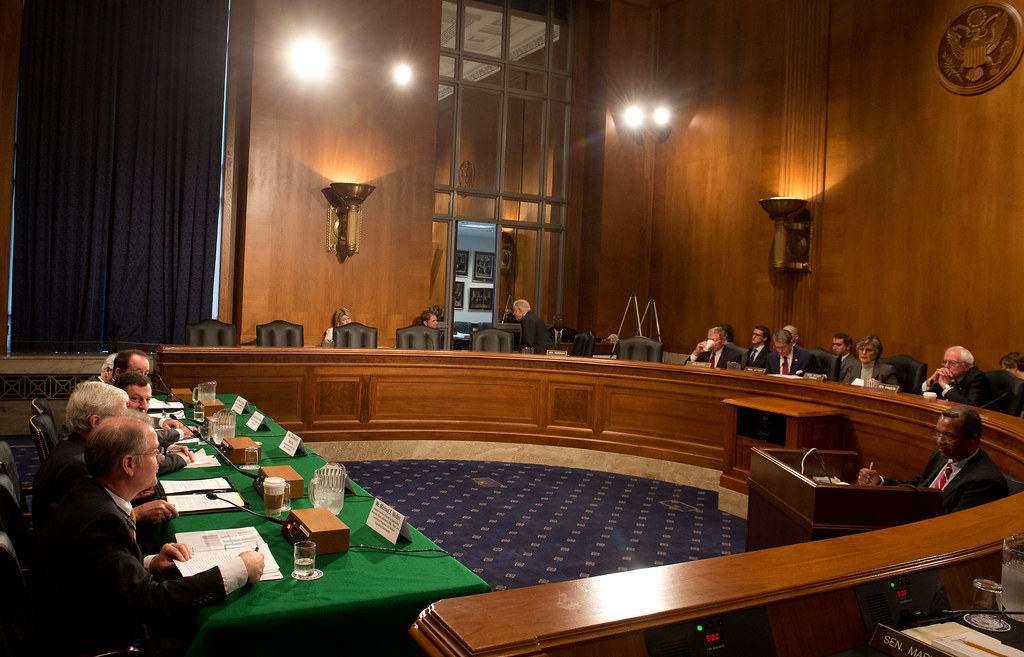
Fauci’s silence did two things at once. It kept him from giving fresh sworn answers that critics could later challenge as false. It also gave Republicans a dramatic public moment after years of arguing that Fauci misled Congress and the country about the origins and handling of COVID-19.
The AP reported that Fauci received a pardon in early 2025 from Democratic President Joe Biden. Still, Republicans suggested he could face exposure for any alleged perjury committed during Wednesday’s hearing itself. That distinction is central: a pardon may address past conduct, but it does not make new sworn testimony risk-free.
That is why the hearing became less about getting new factual answers and more about whether Fauci should be forced to answer at all.
Rand Paul pressed the case
Paul has long been one of Fauci’s fiercest congressional critics. Their clashes date back to the pandemic, when Fauci was a leading government voice on public health guidance and Paul repeatedly challenged him over research funding, lab-leak questions and prior testimony.
At Wednesday’s hearing, Paul accused Fauci of dishonesty and abuse of power at the National Institutes of Health, according to the AP account. Fauci, in his opening statement, said Paul had an “obvious obsession with calling for my prosecution.”
Fauci said he believed the reason he had been summoned was to make him say “something, anything” that could support Paul’s public calls for him to end up “behind bars.” He said he was following his attorney’s advice by taking the Fifth, even though doing so pained him.
That framing matters. Paul presented the hearing as a capstone to a long-running accountability effort. Fauci presented it as an attempt to set a legal trap.
Democrats called it entrapment
Democratic senators used the hearing to defend Fauci’s pandemic work and criticize the Republican-led proceeding. Sen. Maggie Hassan of New Hampshire said the hearing was designed to entrap him, according to the AP.
That argument is likely to resonate with Fauci’s supporters, who see the former top infectious disease official as a public servant targeted for unpopular but urgent decisions made during a national emergency. Fauci became the face of policies many Americans either trusted or resented: masks, distancing, school guidance and vaccination campaigns.
Republicans see the same history differently. For Fauci’s critics, the unanswered questions are not abstractions. They involve public trust, federal research oversight, shifting scientific judgments and whether officials were candid when uncertainty was highest.
Wednesday’s hearing did not bridge those interpretations. It hardened them.
The pardon question lingers
Paul raised questions about whether Fauci’s pardon affects his ability to claim Fifth Amendment protections. He did not say, according to the AP, whether he would seek a criminal contempt referral to federal prosecutors or pursue another route if the committee votes to hold Fauci in contempt.
That leaves a significant legal question unresolved. A witness generally cannot claim the Fifth merely to avoid embarrassment or political damage. The protection concerns real exposure to criminal liability. Fauci’s position appears to be that answering under oath in a hostile setting could create new legal jeopardy, especially if prosecutors or critics later alleged his answers were false.
The committee’s potential contempt vote could test how far Republicans are willing to take the standoff. A contempt finding would escalate the matter, but it would not automatically settle whether Fauci’s invocations were valid or whether any prosecution would follow.
For now, the most concrete result is delay and uncertainty. The hearing produced accusations, objections and a record of refusals, but not the substantive testimony Paul said he wanted.
Diaries fueled the showdown
The hearing also followed Paul’s release of more than 1,000 pages of Fauci’s personal diary from the pandemic years. Paul argued that the notes showed a gap between what Fauci wrote privately and what he told the public.
Some entries reportedly reflected early uncertainty as scientists raced to understand the virus, its origins and the best ways to limit harm before vaccines were available. Fauci’s defenders argue that uncertainty was not proof of deception; it was the reality of a fast-moving pandemic.
Critics argue the public was asked to accept sweeping restrictions and guidance while officials were still debating key facts behind closed doors. That grievance continues to animate anger over school closures, mask mandates and other pandemic-era policies.
The diary material gave Republicans new documents to cite. Fauci’s refusal to answer kept those documents from being tested directly against his live testimony.
What remains unanswered
The central dispute remains whether Fauci misled Congress in earlier testimony about COVID origins and related research questions. He has forcefully denied lying. Republicans, led by Paul, continue to argue that he should face deeper scrutiny and possible investigation.
There is also a broader institutional issue. Congressional hearings are supposed to produce facts for public oversight. But when a witness believes the hearing is designed to generate criminal exposure, the proceeding can collapse into a constitutional standoff.
That is what happened Wednesday. Fauci’s repeated Fifth Amendment invocations may have protected him legally, at least for now. Politically, they gave his critics a new image to use and his defenders a new example of what they call a partisan pursuit.
The next marker is the committee vote Paul said would come next week. Until then, the unanswered questions around Fauci, the pandemic response and the legal meaning of his silence remain exactly where they were: unresolved, highly charged and now even harder to separate from politics.







Leave a Reply