
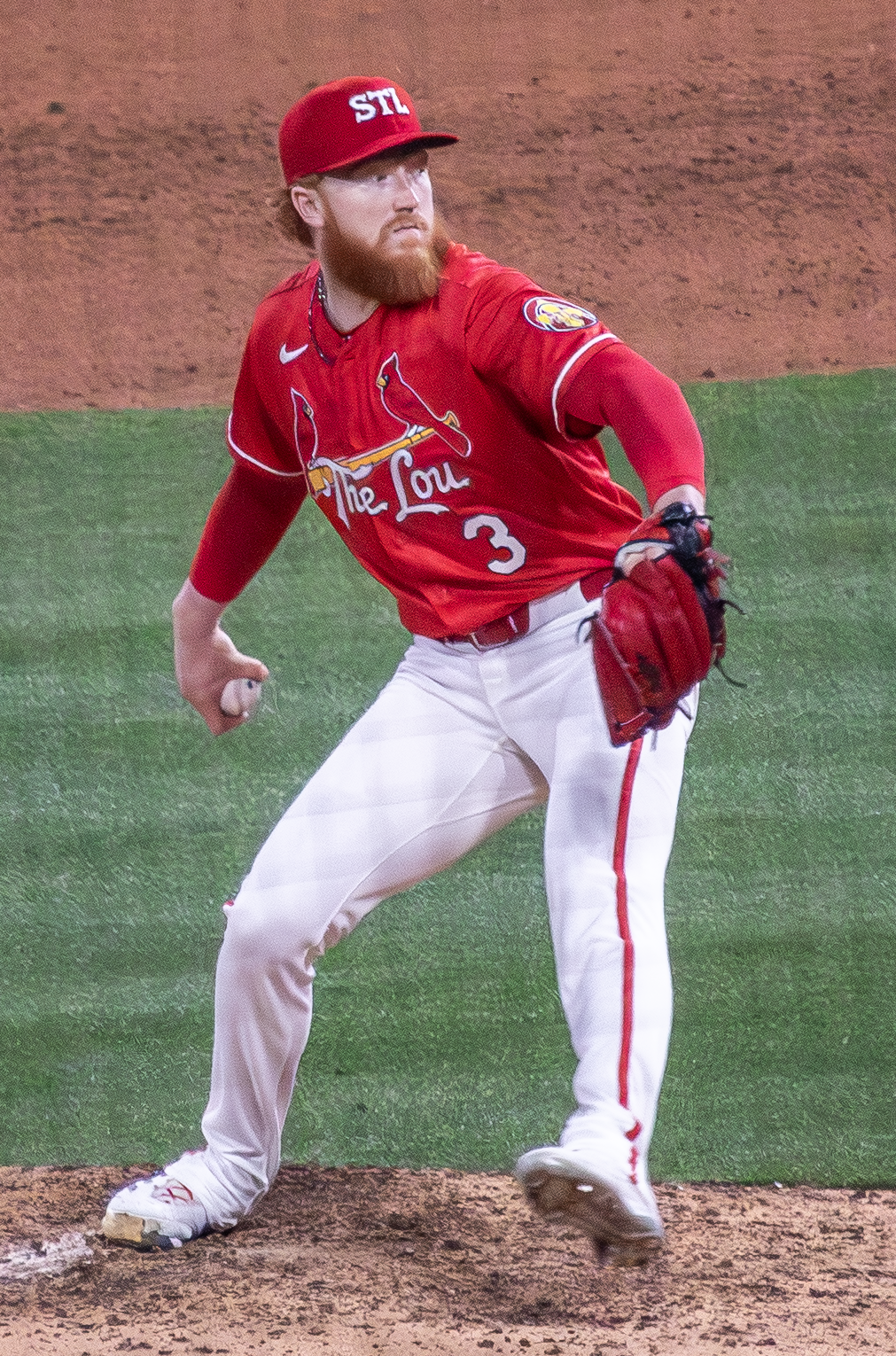
May has been one of the Cardinals’ more useful starters, which is exactly why St. Louis should consider moving him. The question is whether a short-term arm is worth more than the future value he could bring back.
The Cardinals should trade Dustin May. This article explains why that is the obvious decision for St. Louis: May is pitching on a one-year, $12.5 million contract, has rebuilt value as a St. Louis Cardinals starter, and could bring back future help before his deal expires.
The case is not that May has failed. It is that he has done enough to become a useful deadline asset for a club whose near-term ceiling still looks limited.
May has created real value
That is the part that makes this decision uncomfortable. According to Sports Illustrated’s Cardinals On SI, May has been one of St. Louis’ more consistent starting pitchers after signing last offseason to strengthen the rotation.
His complete-game shutout against the San Diego Padres gave the Cardinals a clean example of what made him appealing in the first place: power stuff, starter’s length and the ability to change a series when everything lines up.
ESPN lists May as a St. Louis Cardinals starting pitcher, and that matters here because reliable starters are rarely easy to find in July. Contenders pay for innings. They pay more when those innings come from a pitcher with swing-and-miss upside and postseason-type stuff.
So the trade argument begins with a compliment. May has played well enough to matter.
The contract changes the math
May’s one-year, $12.5 million deal is the hinge point. If he were under team control for multiple seasons, St. Louis could justify keeping him through a reset or retool. He is not.
An expiring contract turns every deadline decision into a value test. The Cardinals can keep May, chase whatever remains of the current season and risk losing him for limited return later. Or they can move him while his value is visible and use the market’s need for pitching to add pieces that fit a longer timeline.
That does not mean St. Louis should give him away. It means the front office should not treat a productive few months as a reason to ignore the basic roster math.
For a club that is not positioned like the National League’s strongest teams, short-term competence can be less valuable than converting a veteran into players who might help beyond this season.
Health risk cannot be ignored
May’s talent has never been the only question. His availability has been a major part of his story.
Cardinals On SI noted that May missed significant time in previous seasons after Tommy John surgery in 2021 and a torn esophagus. Those are not minor footnotes when evaluating whether to extend a pitcher or keep him through a trade deadline.
There is a difference between betting on May for one season and committing more heavily because he looks healthy right now. The first bet was sensible for St. Louis. The second would carry more risk, especially if the Cardinals are still sorting out the shape of their next competitive core.
Pitching health is always uncertain. With May, the upside is obvious, but so is the warning label. That is exactly why a strong stretch should be treated as an opportunity to sell at a better price.
Keeping him has a case
The counterargument is not foolish. If the Cardinals believe they can make the playoffs, moving one of their steadier starters sends a deflating message to the clubhouse and the fan base.
There is also baseball value in keeping rotation depth. A team can look ordinary for months and still become dangerous if its pitching clicks at the right time. May’s best version would help any club trying to survive September and steal a postseason series.
The Cardinals could also decide that May’s presence is worth more than a modest prospect package. Not every rental starter brings back a franchise-changing return. If the offers are thin, standing pat becomes more defensible.
But that is different from extending him or treating him as untouchable. The smarter approach is to set a serious asking price, listen aggressively and avoid falling in love with a short-term solution.
St. Louis needs future leverage
The Cardinals’ broader issue is not whether May can pitch. It is whether this roster is close enough to justify protecting every veteran contributor.
Cardinals On SI argued that even if St. Louis reaches the postseason, its pitching does not match up cleanly with clubs such as the Los Angeles Dodgers, Atlanta Braves, Milwaukee Brewers and Philadelphia Phillies. That is a blunt assessment, but it reflects the strategic dilemma: making the playoffs is not the same as being built to win deep into October.
If the Cardinals are honest about that gap, May becomes one of their more logical trade chips. He is useful, recognizable and not tied to the organization beyond the season. Those are the traits that create deadline interest.
A trade would not have to be a full rebuild signal. It could be a targeted move: turn a rental starter into younger pitching, near-ready depth or a bat that better matches the next competitive window.
The cleanest takeaway
The Cardinals do not need to frame a May trade as surrender. They can frame it as discipline.
They bought low enough to get meaningful innings from him, and now they have a chance to sell into a market that usually rewards competent starting pitching. That is how midmarket teams protect themselves from emotional roster decisions.
The unanswered question is return. If another club values May like a true difference-maker, the Cardinals should move quickly. If the market treats him as a risky rental and offers little, St. Louis can hold and reassess later.
Still, the direction is clear. May has helped the Cardinals, but his best value to St. Louis may now be what he can bring back. That is why trading Dustin May looks less like a harsh call and more like the obvious decision.








Leave a Reply