

The case has drawn attention because it combines a national landmark, a felony indictment and a fight over how prosecutors secured it. Hearn’s attorneys say the grand jury process deserves scrutiny.
A former Olympian charged with damaging the Lincoln Memorial Reflecting Pool is challenging the indictment process. David Hearn, a former Olympic canoe racer from Bethesda, Maryland, wants access to the closed-door grand jury testimony that led to his indictment in Washington, according to reports from The Associated Press and The Washington Post. He is pointing to irregularities in the grand jury proceedings.
That matters because Hearn’s case is no longer only about alleged damage to a landmark. It is now a fight over how prosecutors used one of the most secretive tools in criminal law to bring a felony charge.
A felony over a landmark
Hearn, 67, has pleaded not guilty to a single felony count of property destruction, the AP reported earlier this month. Prosecutors accuse him of deliberately damaging the recently renovated Lincoln Memorial Reflecting Pool, one of the most visible public spaces in Washington.
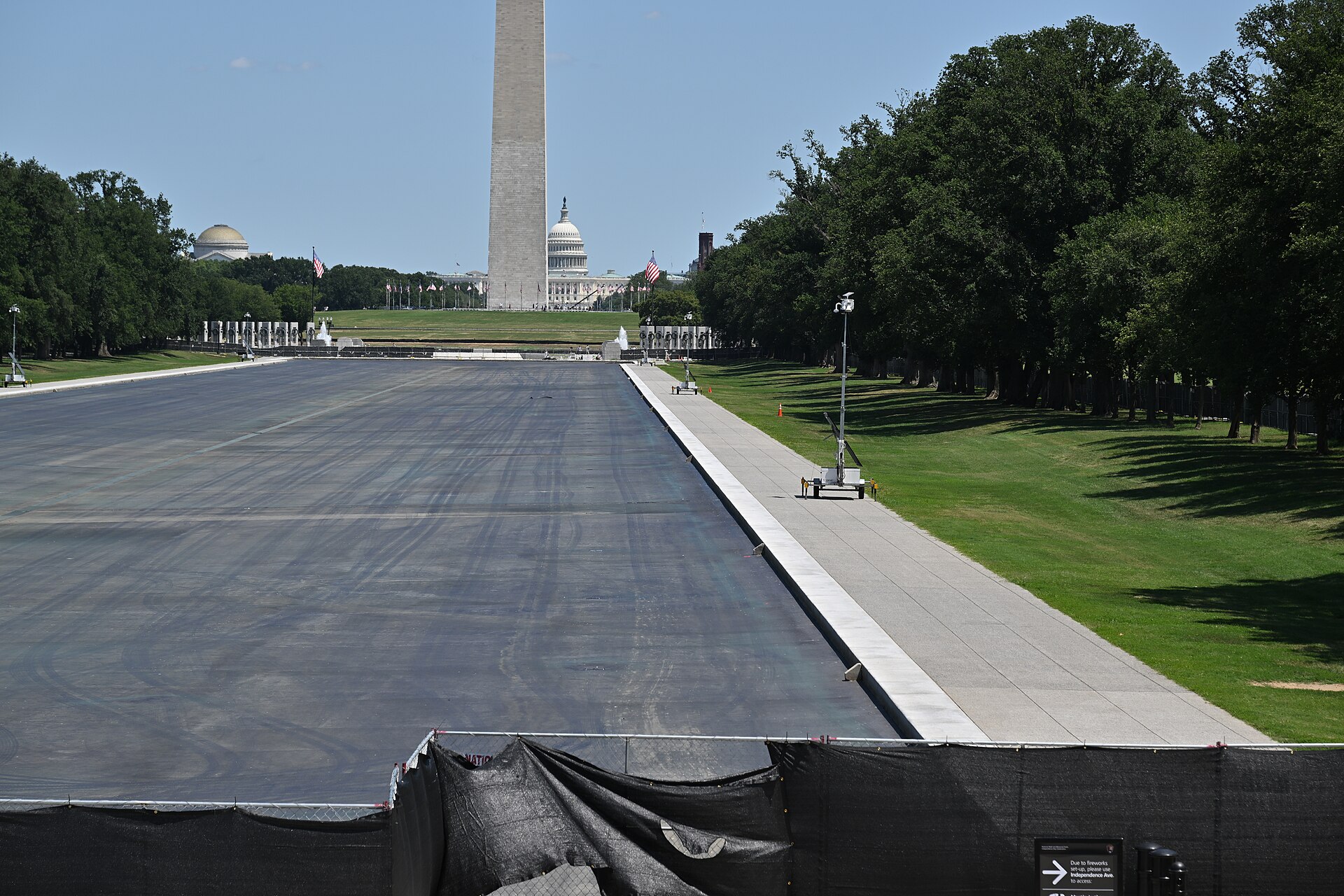
The alleged damage involved the pool’s new coating. According to AP reporting, Hearn has said he reached into the pool to examine peeled sealant and let go of a chunk when a park worker told him to do so. He is accused of causing more than $1,000 in damage.
That dollar figure matters legally because property-damage thresholds can affect whether a case is treated as a more serious offense. Hearn’s lawyers have cast the prosecution as excessive, while federal prosecutors have framed monument vandalism as a serious public offense.
The charge arrived after the Reflecting Pool had been drained and repaired as part of a multimillion-dollar renovation project launched ahead of the country’s 250th independence celebrations. President Donald Trump alleged vandalism had damaged the pool, though the AP reported he did so without providing evidence.
Why the grand jury fight matters
Grand juries operate behind closed doors. Prosecutors present evidence, witnesses may testify, and jurors decide whether there is probable cause to indict. Defense attorneys usually do not get to cross-examine witnesses in the room, and the target of an investigation often has limited visibility into what was said.
That secrecy is supposed to protect witnesses, preserve investigations and shield people who are not charged. But it also makes grand jury disputes hard for the public to evaluate. When a defendant asks to see grand jury material, courts generally require more than suspicion or curiosity.
Hearn’s request is notable because his attorneys are not simply contesting the facts of the Reflecting Pool incident. They are challenging the process that produced the indictment, saying there were “irregularities” in the grand jury proceedings, according to the reports.
What remains unclear from the public reporting is the full nature of those alleged irregularities. The court may have to decide whether Hearn’s defense has shown enough to pierce grand jury secrecy, even partially.
Two sharply different narratives
The defense version is straightforward: Hearn was not vandalizing a monument, his lawyers say, and the case has been blown out of proportion. Defense attorney Norm Eisen said after Hearn’s earlier court appearance, according to the AP, “Every American should be alarmed about this prosecution.” He added, “It is not a crime to touch the Reflecting Pool.”
Prosecutors have described the broader issue differently. U.S. Attorney Jeanine Pirro, the top federal prosecutor for the District of Columbia, said in a statement reported by the AP that vandalizing national monuments and public spaces is “an affront to our shared history.” She said the law applies equally and carries consequences when broken.
Those dueling statements show why this case has become politically charged. To Hearn’s supporters, it is a prosecution that looks symbolic and heavy-handed. To prosecutors, it is a public-property case involving a nationally significant site that had just undergone costly repairs.
Neither narrative settles the legal question. The prosecution still has to prove its case. Hearn remains presumed innocent, and his not-guilty plea means the allegations will be tested in court unless the case is resolved another way.
The Reflecting Pool as a symbol
The Lincoln Memorial Reflecting Pool is not just another piece of federal property. It sits on the National Mall between the Lincoln Memorial and the Washington Monument, a setting tied to civil rights history, presidential ceremonies, protests and tourism.
That symbolism helps explain the public reaction. Damage to the pool can be treated as more than a maintenance issue because the site carries national meaning. At the same time, symbolism can also raise concerns when prosecutors pursue a felony in a case involving disputed intent and relatively narrow alleged conduct.
The AP has reported that at least three other people have been charged in D.C. Superior Court with misdemeanors for allegedly removing pieces of paint from the Reflecting Pool. Those defendants also pleaded not guilty, according to court records cited by the AP.
That contrast could become important. If Hearn faces a felony while others face misdemeanors in related Reflecting Pool cases, his defense may argue the charging decision deserves careful scrutiny. Prosecutors may respond that each case turns on its own evidence, intent and alleged damage.
What the judge may weigh
A request for grand jury testimony is not automatically granted. Courts tend to protect grand jury secrecy unless a defendant can show a particularized need, such as possible misconduct, flawed instructions or another issue that could affect the fairness of the indictment.
Hearn’s attorneys appear to be asking the court to look behind the indictment and examine whether the grand jury heard the case properly. That is a narrow but significant move. If the judge allows access, the defense could gain insight into what prosecutors presented and whether witnesses or legal instructions are vulnerable to challenge.
If the judge denies the request, Hearn’s case would likely move forward on the ordinary track, with the defense focusing on discovery, intent, the condition of the pool coating and the government’s proof of damage.
The key question is not whether grand jury proceedings are usually secret. They are. The question is whether the alleged irregularities in this case are specific and serious enough to justify an exception.
The next stakes in court
For readers outside Washington, the case may seem oddly specific: a former Olympian, a peeled coating, a drained Reflecting Pool and a felony charge. But the underlying issues are familiar in criminal courts everywhere.
How much discretion should prosecutors have when public property is damaged? When does alleged conduct at a symbolic landmark justify a felony? How much access should a defendant get to the secret process that produced an indictment?
Those questions now sit alongside the facts of what Hearn did or did not do at the Reflecting Pool. The court’s handling of the grand jury request will not decide guilt, but it could shape the rest of the case.
For now, Hearn is contesting both the charge and the path prosecutors used to bring it. That makes the next ruling about grand jury materials more than a procedural footnote. It is the first major test of whether this high-profile monument case stays focused on alleged damage or widens into a broader fight over prosecutorial power.








Leave a Reply