
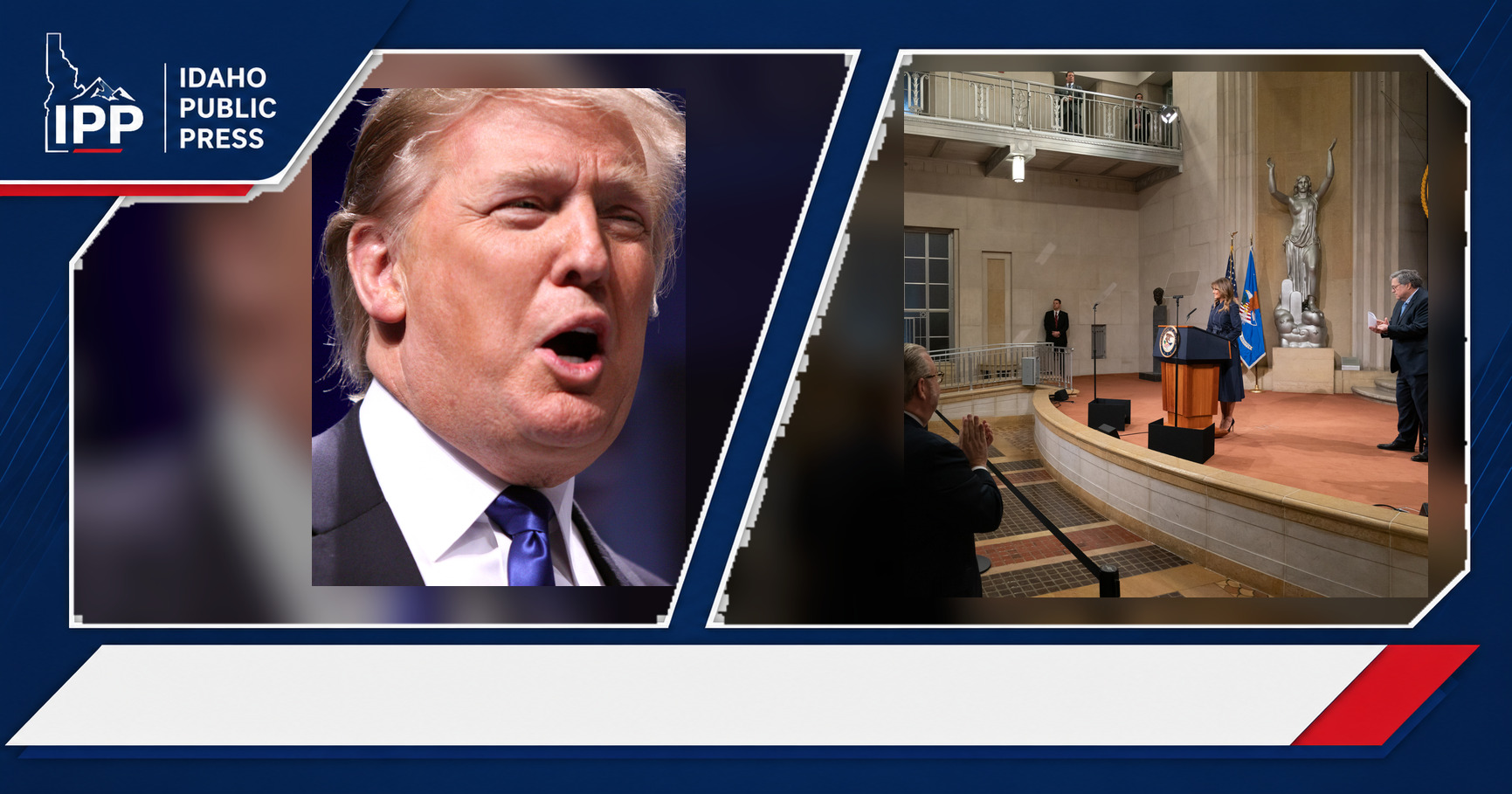
A claim of courtroom dishonesty is serious because federal lawyers rely on judges’ trust to make the justice system work. The available reporting frames the dispute as an expert assessment, while leaving key details about the underlying court matter unclear.
U.S. Department of Justice prosecutors allegedly lied in court while acting for Donald Trump, according to an expert cited in a report that says the DOJ faces a credibility crisis. The allegation matters because Justice Department lawyers depend on judges trusting their factual representations, and any proven breach can affect far more than one Trump-related case.
For now, the available source material does not identify the expert, the court proceeding, the disputed statement or a judicial finding that prosecutors lied. That distinction is central: an allegation of misconduct can damage confidence, but the public record must establish what was said, whether it was inaccurate and whether it was intentional before the claim can be treated as fact.
Why courtroom candor matters
Federal lawyers are not ordinary advocates. Like all attorneys, they are expected to be candid with courts, but government lawyers also speak for an institution that investigates crimes, defends federal actions and asks judges to accept the government’s account of facts and law.
A court cannot efficiently resolve disputes if it has to independently verify every factual assertion by counsel. Judges make scheduling decisions, issue injunctions, assess emergency requests and determine remedies using the filings and arguments placed before them.
That makes accuracy a practical necessity, not just a matter of professional etiquette. When a judge concludes that a lawyer gave a materially false or misleading account, the immediate consequences can include corrected filings, sanctions, adverse rulings or referrals for disciplinary review.
The broader cost is less easily measured. A lawyer or office that loses credibility may face sharper questioning and more skepticism in later cases, including matters unrelated to the original dispute.
The allegation needs specifics
The report’s framing is stark: an expert says DOJ prosecutors lied in court for Trump and that the conduct is creating a credibility crisis for the Justice Department. But the research supplied with that report contains no underlying court order, transcript, docket number, filing or named expert that would allow readers to independently assess the accusation.
Those missing details matter because legal disputes often turn on distinctions that do not fit neatly into a headline. A statement may be wrong, incomplete, based on a contested interpretation, corrected after new information emerges, or found by a judge to be deliberately misleading. Those are not the same thing.
“Prosecutors” can also be an imprecise label in litigation involving the federal government. DOJ attorneys handle criminal prosecutions, but they also represent federal agencies and officials in civil cases. The available material does not establish which lawyers, which type of case or what specific representation is at issue here.
Calling the claim an allegation is not an attempt to minimize it. It is the level of care required when the subject is possible misconduct by government lawyers and the available account does not include the primary documents.
Trust is the real stake
The Justice Department’s authority rests partly on legal power and partly on institutional trust. Courts must believe that the department will disclose relevant facts, accurately describe the record and promptly correct errors when they occur.
That trust is especially important in cases connected to a president. The department is expected to represent the United States and enforce federal law, not to function as a president’s personal legal team. Critics of the Trump administration have repeatedly raised concerns about whether that line is being respected; supporters argue the department is entitled to vigorously defend lawful presidential actions.
Those views can coexist with a simpler principle: vigorous advocacy does not permit misleading a court. If a judge finds that government counsel crossed that line, the finding would carry weight precisely because it comes from a neutral adjudicator reviewing a defined record.
Conversely, if disputed statements are shown to be accurate, promptly corrected or misunderstood in context, that would be important as well. Credibility is protected not by dismissing criticism, but by making the facts available for review.
Errors and lies are different
Legal filings can contain mistakes. Fast-moving cases, voluminous records and shifting government positions create opportunities for errors in dates, citations, descriptions of evidence and accounts of what an agency has done.
An error can still be consequential. A judge may demand a correction, delay a ruling or question whether the government performed adequate review. But an inaccurate statement does not automatically prove that an attorney knowingly made a false statement.
Intent is often the hardest issue. A court examining a claim of dishonesty may consider what the lawyer knew at the time, whether contrary information was available, how material the statement was, whether it was repeated and how quickly it was corrected.
- Inaccuracy: A statement is factually wrong.
- Omission: Important context or contrary information is left out.
- Misleading representation: A statement creates a false impression even if some words are technically true.
- Knowing falsehood: A lawyer intentionally presents information known to be untrue.
Only a developed record can show where a particular dispute belongs on that spectrum.
What accountability could look like
If a court determines that DOJ lawyers made material misrepresentations, it has several tools. It can require declarations under oath, order supplemental briefing, reject the government’s position, impose sanctions or refer lawyers to an appropriate disciplinary authority.
The department also has internal mechanisms for reviewing allegations of professional misconduct. Still, internal review alone may not settle public concern, particularly in politically charged litigation. Court records, written rulings and specific explanations generally provide a clearer basis for evaluating what happened.
A department response matters, too. A direct explanation of the disputed statement, the relevant record and any corrective action can help distinguish a contested legal argument from conduct that warrants discipline. Silence or vague denials can leave room for suspicion, even when the underlying allegation is unproven.
There is also a risk in the opposite direction: treating every legal disagreement as evidence of corruption can weaken public understanding of how litigation works. Government lawyers, like private attorneys, may advance arguments that judges reject without having acted dishonestly.
What remains unverified
The current claim raises a legitimate question about the credibility of Trump’s Justice Department, but it does not answer it on its own. The available research does not provide enough detail to verify the alleged courtroom falsehood, identify the lawyers involved or establish that a judge made a finding of intentional deception.
Readers looking for a firm conclusion should watch for primary materials: the relevant complaint or motion, hearing transcript, judicial order, DOJ response and any disciplinary action. Those records can show whether the dispute concerns an error, an omission, an argument about facts or law, or a finding of deliberate misconduct.
The lasting issue is institutional rather than rhetorical. The Justice Department can withstand sharp litigation and adverse rulings. What it cannot easily withstand is a well-supported perception that its lawyers’ word in court depends on whom they are representing.




Leave a Reply