
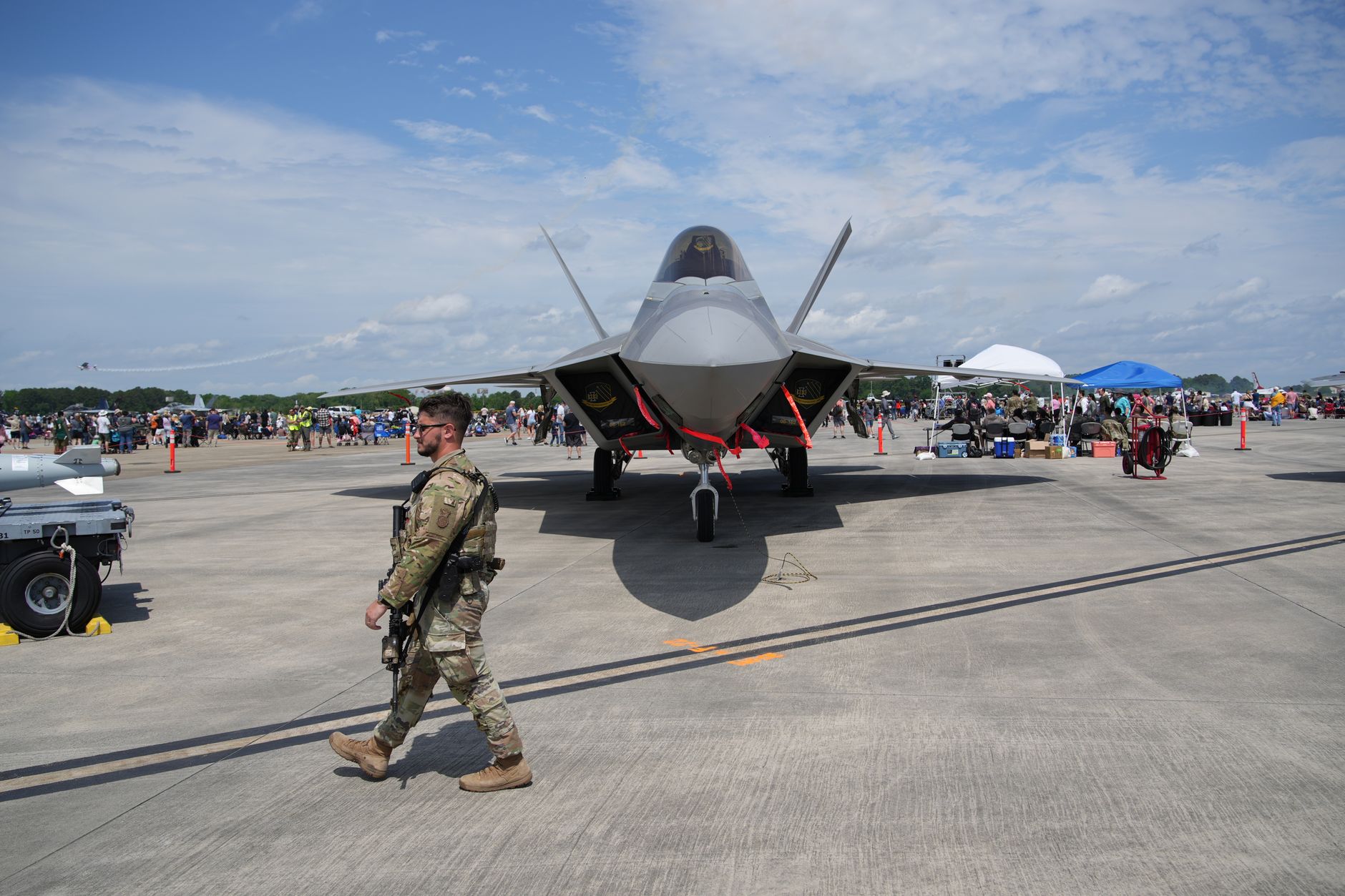
Jason Watson’s arrest was not just another Capitol protest story. Because he wore the uniform, it could become a test of how far active-duty service members can go when they believe a president has crossed constitutional lines.
An Air Force major walked onto the U.S. Capitol steps in uniform, called for President Donald Trump and Vice President JD Vance to be removed from office, and was arrested minutes later.
That sequence is explosive on its own. But the harder question is what comes next: whether Maj. Jason Watson’s protest becomes a one-day demonstration, or a serious test of how much political dissent the military will tolerate from someone still serving in its ranks.
The uniform changed everything
Watson, 51, was arrested July 2 by U.S. Capitol Police after speaking at a news conference on the House Steps, according to reports from NBC News and The Washington Post. Capitol Police identified him as the person arrested on a charge of “Crowding, Obstructing, and Incommoding.”
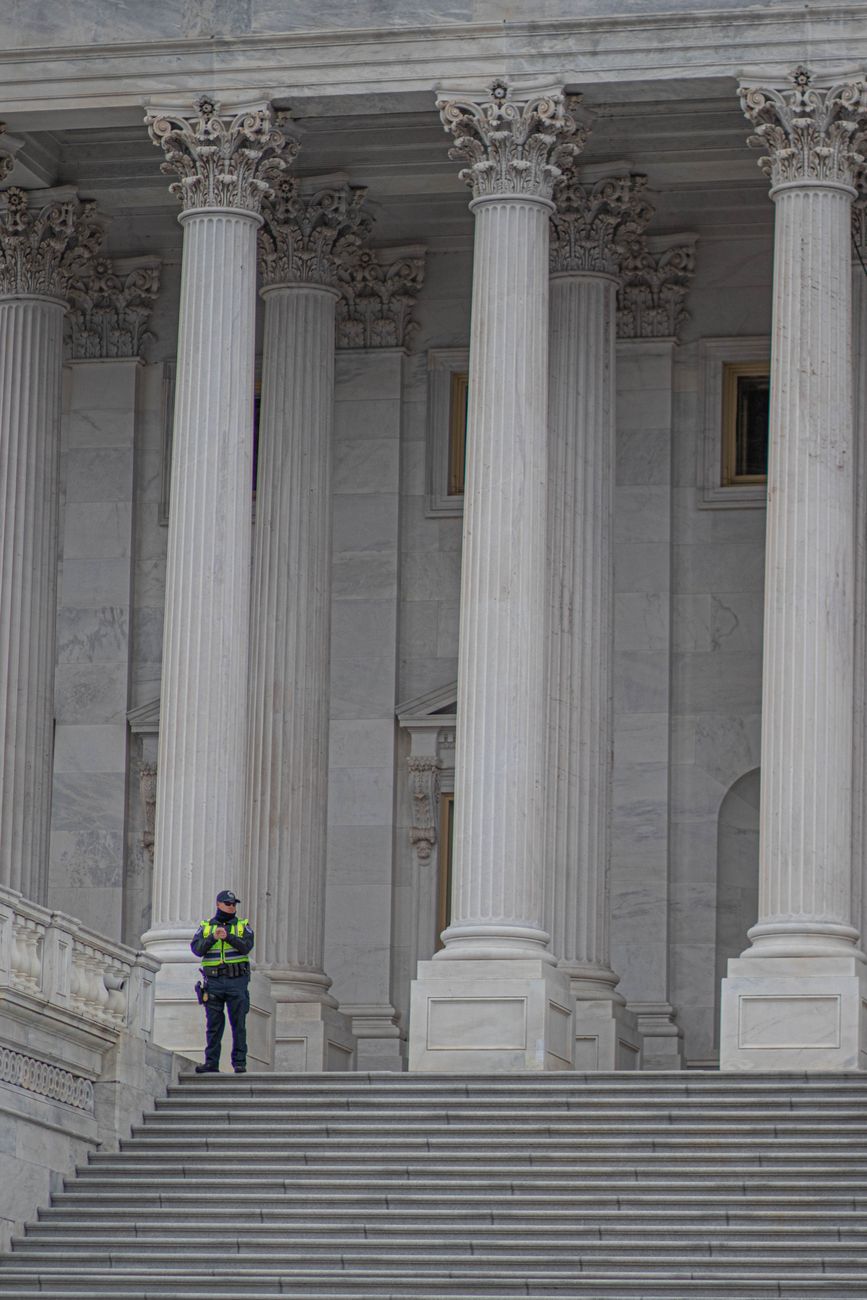
The location mattered. Capitol Police said in a statement reported by NBC that the public generally may not demonstrate on the House Steps unless accompanied by a member of Congress. Police said Watson had been escorted there by a member of Congress, but that after the lawmaker left, officers ordered him to stop what they described as an illegal demonstration. They said he refused.
The uniform mattered even more. An Air Force spokesperson said service members must follow laws, regulations and policies governing conduct and the wear of the uniform, and that Department of the Air Force personnel are expected to maintain discipline and professionalism on and off duty.
For a civilian, a sharply worded anti-president protest outside the Capitol is familiar American political theater. For an active-duty officer in uniform, it enters a much narrower legal and institutional space.
What Watson said at the Capitol
Watson’s remarks were not vague. At the event, organized by the Removal Coalition, he called for Trump and Vance to be impeached, convicted and removed, according to NBC News. Rep. Al Green, a Texas Democrat who has repeatedly pushed impeachment efforts against Trump, attended the event.
Watson said he was there because Green had shown “the courage and conviction” to force a vote on articles of impeachment. He also said Congress remained unconvinced of the urgency, arguing that opponents needed “unrelenting, uncompromising civil resistance.”
His criticism centered on what he described as unconstitutional actions by the administration, including military actions involving Venezuela and Iran, and immigration policies he called unlawful. In a statement to The Washington Post, Watson referred to “the unlawful use of the U.S. military against the American People and against Iran.”
Watson framed his protest as a constitutional obligation, not partisan loyalty. He said, according to The Post, that history shows it is not enough to say, “I was just following orders,” and that lawful mechanisms, including impeachment, should be used to remove officials responsible for violations.
A long anti-Trump record
The Capitol arrest did not come out of nowhere. The Washington Post reported that Watson had been involved in anti-Trump activism for years before last week’s protest.
Jessica Denson, founder of the activist group Lights On and a friend of Watson’s, told The Post she met him in 2017 through a group supporting a lawsuit brought by people who said Trump blocked them on Twitter because they criticized him. A federal appeals court later found Trump had violated the Constitution in that case, though the Supreme Court dismissed it after Trump left office because the account at issue was no longer in his possession.
Watson also helped plan “Kremlin Annex” demonstrations outside the White House during Trump’s first term, according to a protest organizer quoted by The Post. Earlier this year, after Trump issued an executive order cutting back civil service protections for federal workers, Watson joined public employees and union members who sued the administration and spoke at a protest against the measure.
That history could shape how the Air Force views the Capitol event. The question is not only whether Watson protested, but whether his actions appear to be partisan political activity by an active-duty officer wearing the uniform of the United States military.
Military speech has different rules
Active-duty service members do not have the same practical freedom to engage in politics as civilians. Defense Department rules generally allow troops to attend political events as spectators when not in uniform, but they bar them from participating in partisan political activity in uniform. They also restrict speaking at partisan events and taking part in demonstrations tied to parties, candidates or partisan causes.
The Uniform Code of Military Justice also limits certain kinds of speech by officers. NBC News noted that an Air Force memo cited the UCMJ prohibition on officers using contemptuous language toward the president, vice president, Congress and other senior officials.
That does not mean every criticism becomes a military offense. It does mean the balance is different. Rachel VanLandingham, a former Air Force attorney and former president of the National Institute of Military Justice, told The Post that the armed forces restrict political speech to preserve good order and discipline and to maintain the military’s nonpartisan identity.
Her point is the heart of the case: service members swear an oath to the Constitution, but they serve inside a chain of command led by civilian officials. When an officer publicly accuses those officials of unlawful conduct, the military has to decide whether it is seeing protected conscience, prohibited politics or a threat to discipline.
The legal line is murky
The Air Force has not publicly said whether Watson will face military discipline. An Air Force spokesperson told The Post the branch was gathering information related to the arrest. That leaves the most consequential question unanswered.
Military law experts quoted by The Post said Watson could face charges under the UCMJ, though any case would have to account for constitutional limits. Chris Mirasola, a University of Houston Law Center professor, told The Post that a court-martial could raise a broader question: how much space the country leaves for service members to dissent.
The Supreme Court has previously allowed the military to punish speech that civilians could make without criminal consequences. In Parker v. Levy, a 1974 Vietnam War-era case, the court upheld discipline against an Army doctor who urged Black enlisted soldiers not to go to Vietnam if ordered. But legal experts caution that precedent is not a blank check for punishing every public objection by a service member.
That distinction may matter if Watson’s case advances. He did not merely insult a commander in chief in casual terms, according to the reported remarks. He made a legal and constitutional argument about war powers, domestic use of troops and impeachment. The military may still view the manner, venue and uniform as violations. But the substance of his claim is exactly where the legal tension sits.
Why this case could echo
Watson’s arrest lands during a period when the role of the military in domestic politics is already under scrutiny. The Post pointed to the Trump administration’s use of troops in Los Angeles after immigration-related protests, and to Defense Secretary Pete Hegseth’s comments defending troops’ right to self-defense when assaulted.
For critics of the administration, Watson may become a symbol of a service member warning against unlawful orders. For military leaders, he may represent a different danger: the erosion of a nonpartisan force if officers appear in uniform at political protests against elected leaders.
Both concerns are serious. A democracy needs a military that obeys lawful civilian authority and stays out of partisan fights. It also depends on service members understanding that their oath is to the Constitution, not to one person or one party.
Watson forced those principles into public conflict on the Capitol steps. The arrest itself was swift. The harder reckoning, inside the Air Force and possibly the military justice system, may take longer.




Leave a Reply