
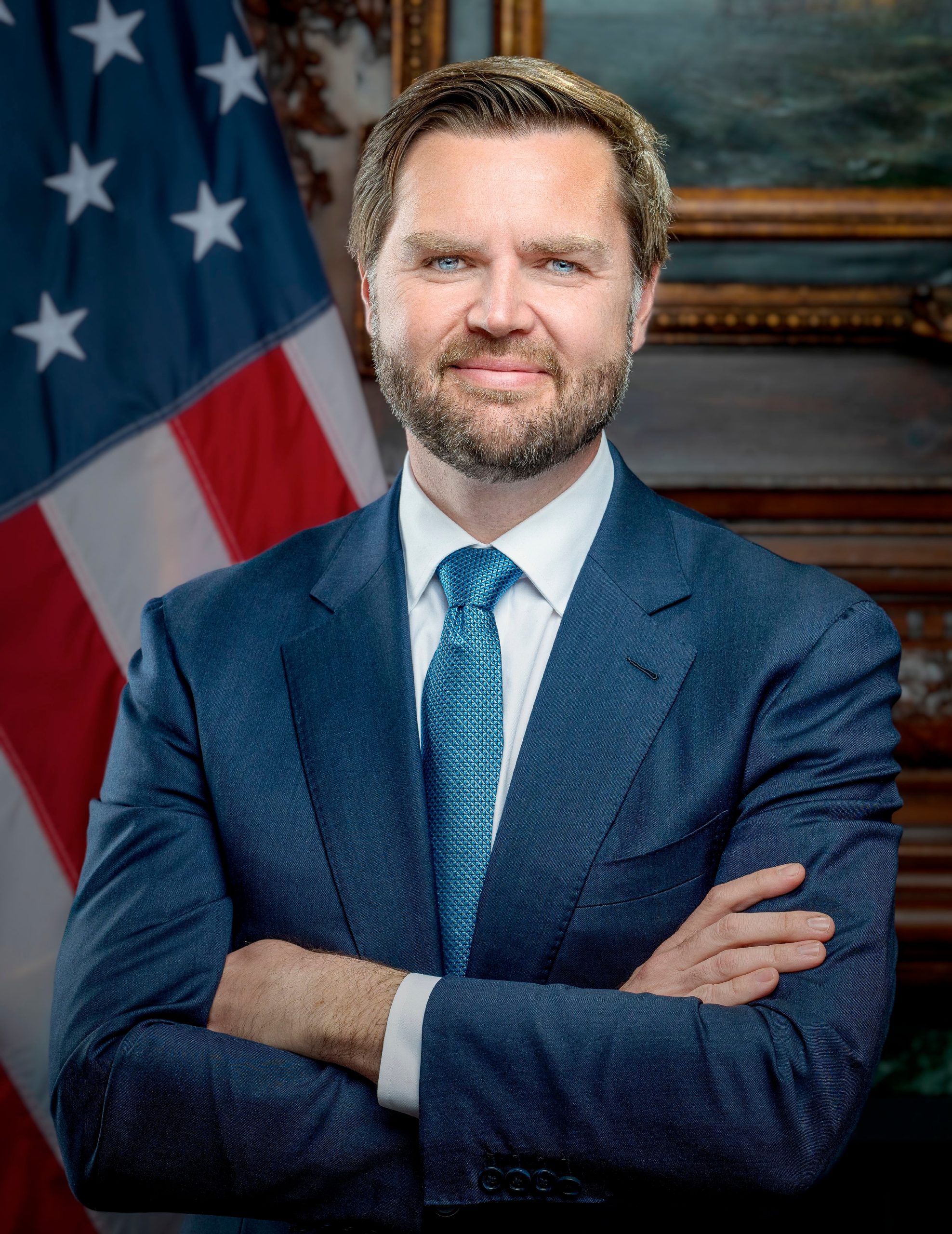
The vice president has not announced a presidential run. Still, early polling is already turning him into the measuring stick for both parties.
JD Vance is not officially a 2028 presidential candidate. That may be the least interesting part of the story.
A new round of attention around early polling has put the vice president at the center of the next White House conversation years before voters will settle on nominees. The numbers are not a prediction. They are a signal of where power, money and speculation are already moving.
The poll is an early signal
Newsweek reported that Vance is leading among potential 2028 contenders, a finding that immediately feeds the most obvious question in Republican politics: who inherits the Trump-era coalition when the next open presidential race begins?
One Emerson College poll summarized by News Radio 1200 WOAI found Vance ahead in hypothetical matchups against three Democrats often mentioned in future presidential chatter: Pete Buttigieg, Gavin Newsom and Alexandria Ocasio-Cortez. The report described Vance’s edge over Buttigieg as slight, with larger advantages over Newsom and Ocasio-Cortez.
The same summary said Vance topped 43% in each comparison. It also noted that 42% of respondents reported voting for Donald Trump in 2024, a detail that makes the result especially tempting for political operatives to analyze.
But early polls are not election maps. They are snapshots of name recognition, party mood and media attention. Four years out, they often say more about who is already famous than who can survive a primary, build a national campaign and win a general election.
Vance has the succession advantage
Vance’s position is unusual because he is not just another Republican with national ambitions. As vice president, he already has the platform every possible 2028 rival wants: constant visibility, a governing role and a direct connection to the party’s most powerful figure.
The White House biography emphasizes the story that helped make Vance a national Republican figure: his upbringing in Middletown, Ohio, service in the Marine Corps, education at Ohio State and Yale Law School, work as an investor and authorship of Hillbilly Elegy. That biography is more than résumé material. It is the political identity Vance would likely lean on if he ever runs for president.
The vice presidency also gives him something more valuable than a cable-news profile. It lets him appear presidential without declaring that he wants the job. He can travel, speak, defend the administration and build relationships while insisting that the current president’s agenda comes first.
That is the benefit of being the heir apparent. It is also the trap. The more Vance looks like the next candidate, the more every appearance and answer gets interpreted as part of a 2028 campaign that does not formally exist.
He has not crossed the line
The key caveat is simple: Vance has not announced a 2028 run. The available reports frame him as a potential candidate, not a declared one.
That distinction matters. A formal campaign would bring different legal, financial and political obligations. It would also force him to answer questions he can currently leave open, including whether he is asking Republicans to see him as the future of the movement rather than just the vice president serving in the present.
For now, ambiguity works in his favor. If he talks too aggressively about 2028, he risks looking impatient. If he shuts down the subject too firmly, he gives rivals room to organize. The safest answer for a vice president in this position is usually some version of staying focused on the job.
That is why the polling matters even without a declaration. It pressures everyone else to react to him before he has to make a move.
Democrats are unsettled too
The Democratic side of the poll is just as revealing. Buttigieg, Newsom and Ocasio-Cortez all have national profiles, but none of them has officially said they are running for president in 2028, according to the WOAI summary.
Each represents a different kind of future Democratic campaign. Buttigieg has already run nationally and built a reputation as a polished communicator. Newsom has used the California governorship and appearances in key states to keep himself in the national conversation. Ocasio-Cortez brings a powerful progressive following and enormous online reach.
That makes early head-to-head polling useful, but only to a point. It tests brands, not campaigns. It does not measure debate performance, fundraising discipline, opposition research, primary-state organizing or how voters feel after years of political and economic change.
Still, parties watch these numbers because they shape expectations. A Democrat who trails Vance early may face pressure to prove electability. A Republican who trails Vance inside the party may wonder whether donors and activists will even give them oxygen.
The Trump comparison cuts both ways
The WOAI summary included one eye-catching comparison: Vance received more than 43% in each tested matchup, while 42% of poll respondents said they voted for Trump in 2024.
That does not prove Vance is stronger than Trump, and it should not be read that way. The questions are different, the electorate is hypothetical and the 2028 campaign has not begun. A one-point comparison across different measures is not a political destiny.
What it does suggest is that Vance may begin a future race with much of the Republican coalition already available to him. For a vice president closely identified with Trump’s movement, that is the essential first test.
The harder test would come later. Can he keep Trump loyalists without being seen as merely a stand-in? Can he appeal to voters who supported Trump reluctantly, or not at all? Can he carry the movement into a new race without the original figure at the top of the ticket?
The real race starts quietly
Presidential campaigns rarely begin with a podium announcement. They begin with donor calls, state visits, policy speeches, staffing decisions and small signals that insiders read like smoke before a fire.
For Vance, the signs to watch are not just poll numbers. They are whether he deepens ties in early-voting states, whether major Republican donors consolidate around him, whether conservative media treats him as the natural successor and whether possible rivals decide to challenge him or wait.
- Travel: repeated visits to Iowa, New Hampshire, South Carolina or Nevada would draw attention.
- Message: speeches that sound broader than the vice president’s portfolio can hint at a national campaign frame.
- Allies: endorsements, super PAC activity and staffing moves often appear before an announcement.
- Trump’s posture: public praise, silence or criticism from Trump would shape the entire field.
The early poll gives Vance a headline, not a nomination. But in presidential politics, headlines can harden into assumptions, and assumptions can shape who runs, who waits and who writes the checks.
That is why the 2028 question is getting harder for Vance to dodge. He does not have to be a candidate yet for everyone else to start treating him like one.



Leave a Reply