
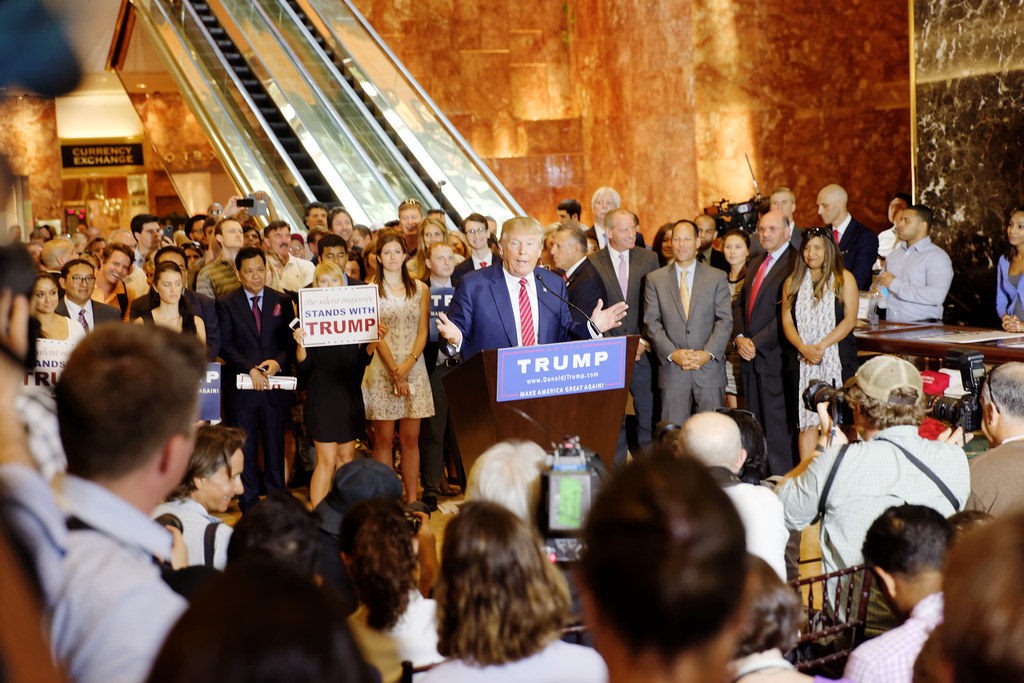
The dispute is not new, but it keeps resurfacing because the evidence is messy: anonymous sources, forceful denials, partial corroboration and viral misinformation.
The claim is blunt enough to survive years of denials: Donald Trump allegedly referred to fallen U.S. service members as “losers” and “suckers.”
It has become one of the most combustible allegations about Trump’s relationship with the military, partly because the public record is not tidy. There is no public recording of the comments. There is also more than one report, more than one denial and at least one altered video that made the whole dispute even harder to parse.
The allegation started in 2020
The core claim came from a September 2020 report by The Atlantic, written by Jeffrey Goldberg, about Trump’s canceled 2018 visit to the Aisne-Marne American Cemetery near Paris. The cemetery honors U.S. troops killed in World War I.
According to The Atlantic, Trump told senior staff members on the morning of the planned visit, “Why should I go to that cemetery? It’s filled with losers.” The report also said Trump referred to Marines killed at Belleau Wood as “suckers” for getting killed.
The Atlantic attributed the account to four people with firsthand knowledge of the discussion. The sources were not named publicly, a point that became central to Trump’s response and to the broader political fight over whether voters should believe the report.
The White House at the time said the trip was canceled because weather prevented helicopter travel and the Secret Service would not drive the president. The Atlantic disputed that explanation, reporting that Trump rejected the visit for other reasons.
Trump has denied it repeatedly
Trump has flatly denied making the comments. After The Atlantic story was published, he told reporters, according to YouGov’s summary of the episode, “I would be willing to swear on anything that I never said that about our fallen heroes. There is nobody that respects them more.”
He also attacked the report as fake news and accused political opponents and the media of pushing a disinformation campaign. In social media posts at the time, he called The Atlantic’s story false and said it had already been refuted.
That denial matters for a basic reason: the alleged quotes were not captured on a public recording. The claim depends on source-based reporting and subsequent corroboration, not a video or transcript that anyone can independently watch from start to finish.
For readers trying to sort fact from politics, that distinction is essential. The allegation is not the same kind of evidence as a filmed public speech. It is a reported private conversation, denied by the person accused of saying it.
Other outlets reported corroboration
The story did not remain isolated to one magazine. NBC News reported in September 2020 that The Washington Post confirmed much of The Atlantic’s story in a statement to NBC, and that The Associated Press separately confirmed some of the reporting.
That does not mean every detail of the original report became public in the same way. It means the allegation was not only a single-source claim sitting in one outlet. Multiple news organizations reported that they had found support for parts of the account.
NBC also documented the reaction from veterans and advocates, including Latino veterans who said the words attributed to Trump were painful because they appeared to dismiss military sacrifice. Iraq War veteran Jaime Gonzalez told NBC the remarks, if true, made him think of how his wife and daughter would hear the idea that a wounded or killed service member had been “suckered.”
The political stakes were obvious. Trump has long presented himself as a strong supporter of the military. The allegation cut directly against that image, which is why it has remained potent in campaign messaging and public debate.
A fake video muddied the waters
Years later, the claim was pulled into a different misinformation problem: an altered video. Reuters fact-checked a viral clip in 2024 that appeared to show Trump insulting soldiers during a Fox News call using the “suckers” and “losers” language.
Reuters’ verdict was clear: the video was altered. In other words, the viral clip was not reliable evidence that Trump made those comments on Fox News.
That is a separate question from whether the original 2020 reporting was accurate. A fake video does not disprove the original allegation. It also does not prove it. It simply shows how a disputed claim can become even more confusing once fabricated or manipulated material enters the bloodstream of social media.
For readers, this is the cleanest way to separate the evidence:
- The original allegation came from reported private conversations described by The Atlantic and attributed to people with firsthand knowledge.
- Trump’s response was a categorical denial, along with attacks on the reporting and the media.
- Later coverage from outlets including NBC, The Washington Post and The Associated Press reported corroboration of parts of the story.
- The viral Fox News-style clip checked by Reuters was altered and should not be treated as proof.
Public opinion split fast
The allegation landed in an already polarized country, and polling showed how quickly voters sorted the story through partisan trust.
YouGov surveyed 28,648 U.S. adults online from September 4 to September 8, 2020, asking whether they believed the report that Trump privately referred to American soldiers killed in combat as “losers” and “suckers.” The data were weighted to be nationally representative by age, education, gender, race and Census region.
Half of U.S. adults said they believed the story was true. Thirty-one percent said it was false, and 19 percent said they did not know.
The partisan divide was stark. YouGov found that 77 percent of Democrats believed the story was true, compared with 16 percent of Republicans. Among independents, 44 percent said they believed it was true, while 34 percent said it was false.
Why the claim still has power
The reason this allegation keeps resurfacing is not only the severity of the words. It is the collision between military reverence, presidential character and trust in anonymous reporting.
American political culture treats the war dead as a category apart. Presidents of both parties speak of a “sacred trust” owed to those who gave their lives, a phrase used in different forms in official Memorial Day remarks and military commemorations. An allegation that a president privately mocked that sacrifice is politically explosive by design.
At the same time, the claim sits in a difficult evidentiary space. Anonymous sourcing is common in national security and White House reporting, especially when aides fear retaliation. But anonymous sourcing also gives politicians an opening to reject a report as fabricated, especially when no recording is public.
That leaves the public with a judgment call: weigh the original report, the later corroboration by other outlets, Trump’s repeated denials and the absence of public audio or video. The altered viral clip should not be part of that judgment, except as a warning about how easily a real controversy can be polluted by fake evidence.
The bottom line is narrower
A careful reading leads to a narrower conclusion than the loudest arguments on either side. The allegation that Trump called fallen troops “losers” and “suckers” was seriously reported by The Atlantic and was later backed in part by other major news organizations. Trump has repeatedly and forcefully denied it.
What has not emerged publicly is a recording that settles the matter beyond dispute. What has emerged is a durable political controversy, reinforced by source-based reporting, rejected by Trump and complicated by viral misinformation.
That is why the claim remains so powerful. It is not just a question about one alleged private conversation. It is a test of whom Americans trust when the evidence is consequential, disputed and incomplete.




Leave a Reply