
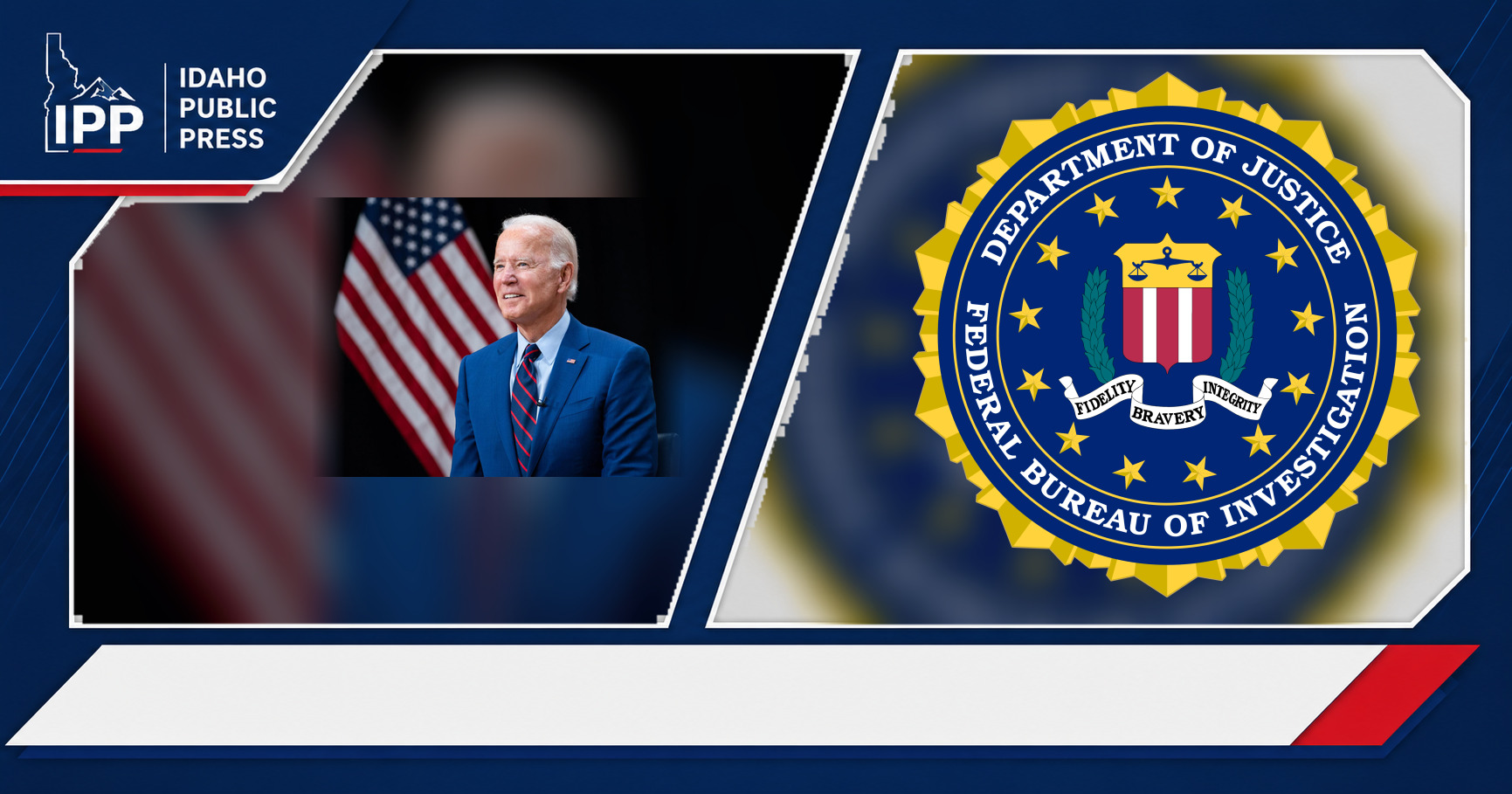
The dispute turns on the difference between an FBI form recording a source’s account and evidence that proves the account true. That distinction remains central to claims about the Biden family’s foreign business dealings.
The FBI and the Biden family are again at the center of claims tied to a 2020 FBI record about Ukraine. Declassified-documents claims describe an alleged FBI operation to preempt a Biden family foreign influence scandal involving Joe Biden and Hunter Biden, but the publicly described record was an unclassified FBI source report released by Sen. Chuck Grassley in 2023—not proof of a secret operation.
The report recorded unverified allegations concerning the Bidens’ alleged foreign business dealings. Understanding what that document does, and does not, show matters because its release became a major flashpoint in Republican investigations of President Biden and the FBI’s handling of politically sensitive information.
What the 2020 FBI form recorded
The document at the center of the dispute was an FBI FD-1023 form dated June 2020. Such forms are used to memorialize information supplied by confidential human sources; they are not charging documents, court findings or FBI conclusions.

According to the BBC’s account of the form, a foreign source told the FBI that executives connected to the Ukrainian energy company Burisma had discussed Hunter Biden’s role on the company’s board. The source also relayed an allegation that Burisma paid $5 million to Hunter Biden and $5 million to Joe Biden.
The allegation was serious, but the report itself did not independently establish it. The source said the information came from conversations with Burisma officials in 2015 or 2016 and could not personally vouch for the accuracy of what those officials had said.
There is no evidence that Joe Biden received payments from Ukraine, according to the BBC report. No charges were filed in the Justice Department inquiry that examined the allegations.
Why Ukraine and Burisma matter
Hunter Biden joined Burisma’s board in 2013 while his father was vice president. The overlap created an enduring appearance-of-conflict debate, even though holding a board position by itself does not prove that Joe Biden took action on his son’s behalf.
One recurring allegation concerned Viktor Shokin, Ukraine’s prosecutor general. Joe Biden publicly pressed for Shokin’s removal while serving in the Obama administration. Biden’s position aligned with U.S. policy and calls from international partners who viewed Shokin as ineffective in fighting corruption.
Critics have argued that the push created a benefit for Burisma. Biden and his defenders have said the policy was aimed at strengthening Ukraine’s anti-corruption efforts, not helping the company or his son.
That unresolved political argument is different from a proven bribery case. It is also different from evidence that the FBI attempted to bury or extinguish an investigation. The available source material does not demonstrate either proposition.
Grassley’s 2023 public release
Grassley, an Iowa Republican and Senate Judiciary Committee member, released a lightly redacted copy of the report in July 2023. He said the public should be able to read it without what he called a filter from politicians or bureaucrats.
The release followed months of pressure from congressional Republicans, who had sought access to the document from FBI Director Christopher Wray. House Republicans had threatened contempt proceedings against Wray before committee members were allowed to review a redacted version privately.
The FBI opposed making the form public. The bureau said releasing source information could expose confidential-source methods and create safety risks for the individual involved.
That conflict fed a broader Republican argument that federal law enforcement had handled allegations involving the Biden family too cautiously. Democrats countered that lawmakers were elevating uncorroborated accusations because of their political value.
The limits of an FBI source report
The FBI has emphasized that an FD-1023 captures raw reporting. Recording information on the form does not validate it, establish its credibility or show how investigators weighed it against other evidence, the bureau has said.
That distinction is especially important in a political environment where the existence of an FBI document can be portrayed as confirmation of its contents. A source’s claim may warrant assessment or follow-up, but it remains a claim unless independently corroborated.
Even some Republicans urged caution. Sen. Ron Johnson of Wisconsin, who worked with Grassley on an earlier Senate report about Hunter Biden, said the account could have originated with a corrupt oligarch making false claims.
Jamie Raskin, then the top Democrat on the House Oversight Committee, described the report as containing unfounded, second-hand accusations rather than new evidence. The White House rejected the allegations as long-debunked political attacks.
Where the secret-operation claim falls short
The supplied reporting establishes that the FBI received and documented allegations, that the Justice Department opened an inquiry in 2020 under Attorney General William Barr, and that the document became public in 2023 after a congressional battle.
It does not establish that the FBI ran a covert operation to “extinguish” a scandal. Nor does it show that investigators suppressed verified evidence of wrongdoing by Joe Biden or Hunter Biden.
Those are meaningful gaps, not semantic ones. A law-enforcement agency can protect a confidential source, limit public release of raw intelligence and investigate allegations without those steps amounting to a cover-up.
At the same time, the episode explains why the issue retains political force. Republicans see the FBI’s resistance to disclosure as evidence of institutional double standards; Democrats and the FBI point to the dangers of treating unverified foreign-source reporting as settled fact.
What remains politically significant
The 2020 report continues to illustrate how quickly an investigative record can become a campaign-era weapon. Its public existence gives critics of the Biden family a document to cite, while its unresolved and second-hand nature gives defenders a strong basis to challenge sweeping conclusions drawn from it.
The clearest takeaway is not that the allegations have been proven or that a secret FBI operation has been demonstrated. It is that the FBI’s handling of politically charged source material—who sees it, when it is released and how clearly its limits are explained—can become almost as consequential as the allegation itself.









Leave a Reply