

The federal prosecution of Ghislaine Maxwell offered a detailed account of a system built around grooming, money and repeated recruitment. It also established why Maxwell’s role was central, not peripheral, to Epstein’s abuse of minors.
Jeffrey Epstein built a network with Ghislaine Maxwell that federal prosecutors said was used to recruit, groom and sexually abuse minors. Maxwell helped Epstein gain access to vulnerable girls and recruit minors, using the appearance of adult approval, offers of help and a system that paid some victims to bring in others.
The account matters because it shows how abuse can be organized through ordinary-looking interactions rather than a single dramatic event. Maxwell was convicted in 2021 and later sentenced to 20 years in federal prison for crimes tied to her role in Epstein’s scheme.
Maxwell’s role was operational
Federal prosecutors did not describe Maxwell as merely part of Epstein’s social circle. In the Southern District of New York’s account of the case, she assisted, facilitated and participated in the abuse of underage girls from at least 1994 through about 2004.
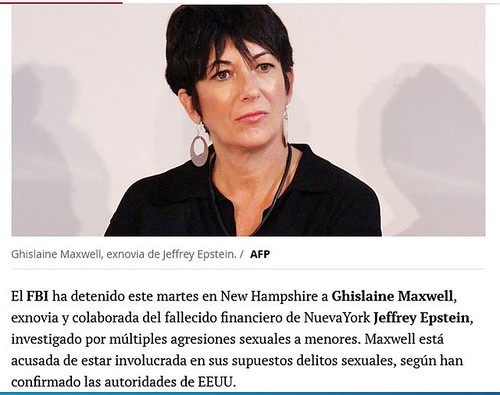
Her role, prosecutors said, included identifying girls, helping to recruit them, grooming them and making Epstein’s behavior seem less alarming. The presence of an adult woman could provide what the government called assurance and comfort to girls who might otherwise have recognized the situation as unsafe.
That distinction was at the center of the criminal case. A jury found Maxwell guilty on December 29, 2021, of offenses including sex trafficking conspiracy and conspiracy to entice and transport minors for illegal sexual activity.
Grooming was built on familiarity
The government’s description of the scheme focused on tactics that could initially look like attention or generosity. Prosecutors said Maxwell tried to befriend some girls by asking about their schools, families and lives, and by taking them shopping or to movies.
Epstein also offered certain girls help with travel or educational opportunities. Maxwell encouraged some to accept it, prosecutors said. That support could make victims feel indebted to the pair or believe they were being helped by adults with money and influence.
Federal prosecutors said Maxwell also normalized sexual conduct through conversations, her own conduct around victims and her presence during interactions with Epstein. Those acts, according to the Justice Department, made girls more vulnerable to abuse.
The key point is that grooming was a process. It relied on trust-building, incremental boundary violations and an atmosphere in which an adult appeared to endorse what was happening.
Money turned recruitment into a system
The case record described an early period in which Epstein and Maxwell targeted vulnerable girls individually, particularly girls from single-mother households and difficult financial circumstances. By the later phase of the conspiracy, prosecutors said, recruitment had become more systematic.
From roughly 2001 through at least 2004, girls were brought to Epstein’s Palm Beach residence and, after sexual acts with Epstein, Epstein, Maxwell or another employee would give them hundreds of dollars in cash, according to the Justice Department.
Some victims were then paid to recruit additional girls. That feature transformed individual exploitation into a self-perpetuating pipeline: a young person already caught in the scheme could be encouraged to bring in peers, expanding Epstein’s access to new victims.
- Victims were targeted for financial and personal vulnerability, prosecutors said.
- Cash payments and offers of assistance created incentives and obligations.
- Recruitment by victims helped the network reach more girls.
- Maxwell’s participation helped make Epstein’s conduct appear normalized.
Residences created controlled settings
According to the Justice Department, the abuse occurred at Epstein’s residences in New York, Florida and New Mexico, as well as at Maxwell’s residence in London. Prosecutors said Maxwell and Epstein caused minors to travel to residences in different states, knowing the girls would be groomed and subjected to sexual abuse.
The significance of those locations was not simply their luxury or privacy. They were settings controlled by Epstein and, in some instances, supported by staff and adults associated with him. That imbalance made it harder for young victims to understand the risk, leave freely or find an adult who would intervene.
Prosecutors said Maxwell was present during certain encounters involving minors and Epstein. In some instances, the government said, she participated in the abuse.
Wealth and access were tools
Epstein’s money did not by itself explain the crimes, but the prosecution’s account shows how financial resources could be turned into leverage. Travel, cash, shopping trips and purported educational assistance all created an image of opportunity while increasing the victims’ dependence on the adults around them.
The case also complicates the tendency to view abuse networks only through the lens of prominent names or social connections. The clearest evidence presented in Maxwell’s case concerned the day-to-day mechanics: identifying vulnerable girls, building trust, arranging access and incentivizing further recruitment.
That focus matters because it places responsibility on the conduct established at trial. It does not require speculation about every person Epstein knew, nor does it support treating association with him as proof of criminal involvement.
What the conviction established
Maxwell’s 20-year sentence followed her federal conviction for conspiring with Epstein to sexually abuse minors. The Justice Department said the victims were as young as 14 and that Maxwell and Epstein knew they were under 18.
Epstein died in federal custody in 2019 before he could stand trial on federal sex-trafficking charges filed that year. Maxwell’s prosecution therefore became the major federal trial examining the recruitment and grooming structure that prosecutors said supported his abuse.
Many broader questions about Epstein’s contacts, finances and enablers have continued to draw public attention. But the legal record in Maxwell’s case provides a defined conclusion: a federal jury found that she helped sustain a scheme that recruited and sexually exploited underage girls.
The enduring lesson is not that the operation was mysterious. Prosecutors described a recognizable pattern of grooming, control and recruitment—one made more effective by money, private spaces and the participation of a trusted adult.











Leave a Reply