
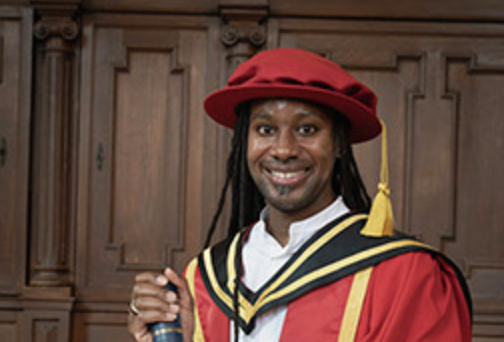
The controversy around Jason Arday is bigger than one scholar’s disputed record. It puts pressure on universities to show that academic standards, transparent investigations and humane treatment can coexist.
Dr. Jason Arday’s departure from Cambridge amid plagiarism accusations has prompted a harsh commentary claiming he gave the public a lesson in how institutions “destroyed themselves.” That commentary calls Arday a “mythomaniac,” but it is an accusation, not an established fact; Arday has denied being a liar and did not admit wrongdoing in his resignation letter.
The more useful question is why the Arday case has become such a damaging test for Cambridge and the wider academic world. When a university faces allegations about a prominent scholar’s work and personal claims, its credibility rests not only on the outcome, but on whether its process is clear, proportionate and trusted.
The claim behind the controversy
Arday, a British scholar who held a professorship at the University of Cambridge, stepped down amid accusations that he had plagiarized other scholars and embellished elements of his personal story. The New York Times reported that his memoir, Great and Unfortunate Things, was due to go on sale shortly after his resignation.
In the resignation letter described by the Times, Arday did not acknowledge wrongdoing. He said that relentless accusations, speculation and public commentary had taken a profound toll on him and the people close to him.
That distinction matters. Allegations of plagiarism are serious and universities are right to examine them. But describing a person as a liar or using a psychiatric-sounding label such as “mythomaniac” goes beyond what the available reporting establishes.
Public debate has instead raced ahead of the known facts. That gap between accusation, investigation and public certainty is where institutions can lose control of a story.
Why Cambridge faces scrutiny too
The criticism aimed at Arday is paired with a broader charge: that academic institutions helped create the conditions for the crisis. The argument is not simply that a university should have caught any potential problems earlier. It is that universities can appear inconsistent when they celebrate extraordinary personal narratives, elevate scholars rapidly, then struggle to explain how concerns were assessed once they emerge.
Cambridge’s reputation gives every decision added weight. A celebrated appointment can be viewed as evidence of intellectual ambition and inclusion; an opaque controversy can then be interpreted as evidence that those same values were not matched by sufficient verification or support.
That does not prove institutional failure. Universities often must balance employment obligations, privacy rules, research integrity procedures and the public’s demand for answers. Still, silence or limited disclosure leaves a vacuum that online speculation is eager to fill.
For critics, this is the “institutional self-destruction” lesson: trust can be eroded by a process that outsiders cannot see, even if the institution believes it is following proper rules behind closed doors.
Standards and fairness are not opposites
The BBC reported that Arday admitted errors in his work while defending himself against claims that he was a liar. It also reported support for him from academics and public figures, including a petition organized by the Good Law Project.
Those supporters have not argued that plagiarism concerns should be ignored. Their concern is that a necessary inquiry can turn into a public pile-on, particularly when it centers on a person who has spoken openly about autism and disability.
Simon Baron-Cohen, a cognitive neuroscientist and Cambridge fellow quoted by the BBC, said plagiarism should be investigated to protect academic standards. He also warned against what he described as relentless bullying of a vulnerable autistic man.
The competing principles are not difficult to state, though they can be difficult to apply: research must be accurately credited, professional claims must stand up to scrutiny, and the subject of an inquiry should not be stripped of basic fairness. Institutions fail when they frame those obligations as mutually exclusive.
The risk of turning biography into proof
Arday’s memoir recounts a childhood marked by disability, educational struggle and a later academic rise. According to the Times preview, Arday wrote that he was nonverbal until shortly before his 12th birthday and that he could not read or write until age 18.
Accounts of overcoming hardship can inspire readers, but they also attract unusually intense scrutiny when details are challenged. The public may feel invited to judge not just a scholar’s publications but the legitimacy of an entire life story.
That is risky territory. A memoir is personal testimony, while plagiarism claims concern scholarly practice; the two can overlap in public debate without being the same question. Collapsing them together makes measured assessment harder and encourages a verdict on character before the factual record is fully understood.
Universities also bear responsibility for how they use personal narratives. If institutions spotlight an individual’s biography as part of their public identity, they should be prepared for the reputational consequences when that narrative becomes contested.
What a credible response requires
Cases like this test whether academic governance is built for more than routine paperwork. A credible approach needs enough transparency to show that concerns are taken seriously, while avoiding a running public prosecution of the person involved.
- Clear standards: Universities should explain what constitutes plagiarism, error, correction and misconduct, rather than allowing all problems to be treated as interchangeable.
- Independent review: Serious allegations need a process that is demonstrably separate from institutional reputation management.
- Proportionate communication: Institutions should say what they can about procedure and outcomes without disclosing unnecessary private details.
- Room for correction: Publishing corrections, acknowledging mistakes and documenting remedies can protect academic integrity without presuming every problem proves intent to deceive.
None of that guarantees public agreement. It does give students, scholars and readers a basis to distinguish evidence from rumor and due process from public-relations containment.
The lesson is still unfolding
Arday’s resignation did not settle every question surrounding the allegations, and the reporting available does not establish the sweeping personal claims embedded in the commentary’s headline. What is clear is that the dispute has become a warning about the cost of institutional ambiguity.
Cambridge and other universities are expected to uphold rigorous scholarly standards. They are also judged by how they handle the people caught in their most visible controversies. A process that appears too lax invites questions about competence; one that appears punitive or opaque invites questions about fairness.
That is the real institutional lesson in the Arday case. The damage does not come only from an allegation or a resignation. It comes when the public is left to decide whether a university’s systems were careful enough before the crisis, and credible enough once it arrived.










Leave a Reply