
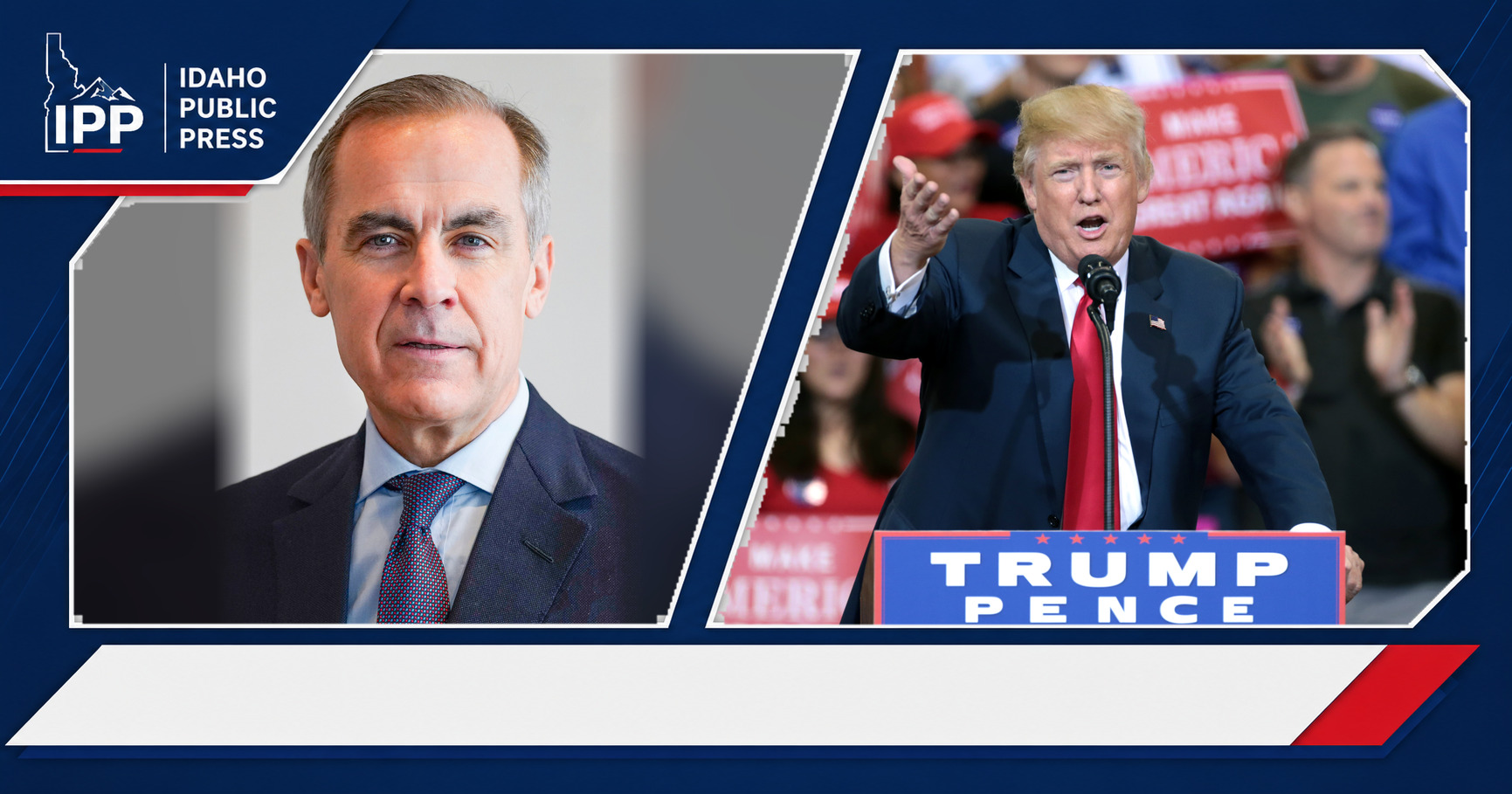
A brief joke at a Toronto housing event landed because it touched a larger, increasingly tense relationship between Canada and the United States. Carney’s response also offered a contrast in political style at a moment when trade disputes remain unresolved.
Mark Carney mocked Donald Trump after a teleprompter malfunctioned during the Canadian prime minister’s speech at a housing-policy event in Toronto, Canada, on Wednesday, Aug. 5. Carney told the audience, “Unlike a certain world leader, I do not view this as a conspiracy,” and the audience laughed at his remark.
The line appeared to reference Trump’s past claim that a teleprompter failure at the United Nations was part of “triple sabotage.” It was a small moment at a domestic policy briefing, but it landed amid a larger strain between the two neighboring governments over trade, tariffs and Canada’s political independence.
A glitch becomes a pointed joke
Carney was speaking in French at a construction-site briefing on housing policy when the teleprompter stopped working, according to reporting by Reuters and Time. Rather than waiting for the equipment to be fixed, he briefly switched to English to address the interruption.
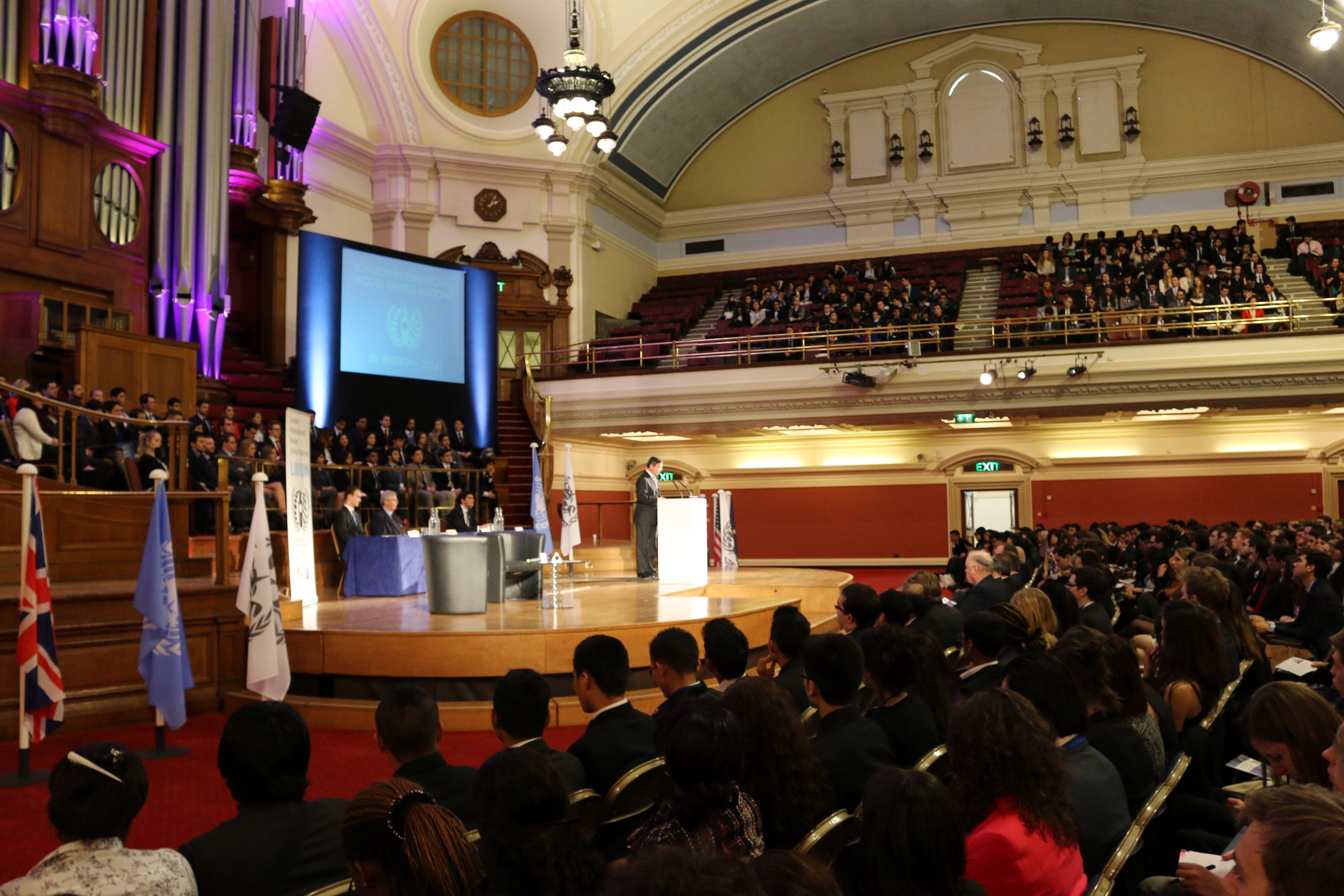
“I would now like to inform you that the teleprompter has ceased to function,” Carney said. He then added the remark about not treating the failure as a conspiracy.
Carney laughed as he delivered the line, and the crowd joined him before he resumed the French portion of his remarks. The exchange did not require Trump’s name to be spoken for the reference to be widely understood.
That was likely the point. The joke was specific enough to invite a reaction, while leaving Carney room to frame it as an observation about how leaders handle an everyday public-speaking mishap.
Why Trump was the target
The apparent reference was to Trump’s September address at the United Nations General Assembly in New York, when an escalator stalled and his teleprompter reportedly stopped working. Trump continued the speech without the teleprompter but publicly blamed the episode on failures at the U.N.
Afterward, Trump described the incidents as “triple sabotage,” citing the stalled escalator, teleprompter problems and sound issues. He called for an investigation and said the events were not a coincidence.
Carney’s line turned that earlier dispute into the setup for a contrast: a teleprompter issue as a routine inconvenience versus a possible plot. That contrast is what gave a technical failure at a Toronto construction site a broader political meaning.
Trump had not publicly responded to Carney’s teleprompter remark in the reporting available after the event.
The joke came amid trade friction
The moment also arrived during a difficult period in Canada-U.S. relations. Trump has repeatedly criticized Canada’s leadership while defending his use of tariffs, including in remarks delivered in Las Vegas later the same day.
Trump told that crowd that he loves tariffs and said Canada had been among the countries using them against the United States. He also described Canada’s leadership as “nasty,” while saying he loved the Canadian people.
Carney’s later response was notably more measured than his teleprompter quip. Asked about Trump’s language, he said the talks were tough but returned to the practical stakes: Canadian jobs and the future of Canadian businesses.
“Whatever adjective is used,” Carney said, Canada was standing up for Canadian workers and businesses. The answer suggested that the Ottawa government sees the dispute as an economic one with consequences beyond the daily exchange of insults.
Two styles of political messaging
Carney’s comment will appeal to observers who see it as a concise rebuke to Trump’s rhetoric and a demonstration of composure under pressure. A malfunction that could have interrupted the event instead became an opportunity to show ease in front of the crowd.
Critics could argue that a public jab, however light, adds theater to an already fraught bilateral relationship. Canada and the United States remain deeply tied through trade, manufacturing supply chains, security cooperation and family connections across the border; neither government can resolve those issues through viral clips.
Still, political humor can carry a message more efficiently than a formal statement. Carney did not use the moment to announce a policy or lay out a negotiating position. He conveyed something simpler: Canada’s prime minister was willing to reject Trump’s framing, publicly and with a laugh.
The audience response mattered because it showed the joke was not merely an offhand aside. It turned into a shared moment of political recognition, one built on a recent episode many viewers already knew.
Canada’s sovereignty remains central
The personal tone of the exchange is connected to a substantive disagreement. Trump has previously floated the idea of Canada becoming a U.S. state, language Carney and other Canadian leaders have firmly rejected.
Carney has said that Canada’s sovereignty is “not for sale.” Ontario Premier Doug Ford has also said Canada will never become the 51st state. Those statements have made clear that rhetoric about annexation is not being treated as harmless political banter north of the border.
Trade disputes and sovereignty arguments have created a setting in which even a teleprompter joke can be read as diplomatic signaling. Carney’s line was funny because it was about a broken screen; it was consequential because it was also about who gets to define the relationship between the two countries.
What remains unresolved after the laugh
The immediate technical problem was simple: Carney continued speaking. The larger issues are not. The two governments still face disagreements over tariffs and the terms of their economic relationship, and the public rhetoric from both sides has made compromise harder to present as a political win.
It is also unclear whether the moment will have any effect beyond its online afterlife. A brief viral exchange rarely shifts formal negotiations, but it can shape how voters interpret those negotiations and how leaders choose to speak about one another.
For now, the clearest outcome is a revealing contrast. Faced with the same kind of malfunction that Trump once called sabotage, Carney turned it into a joke—and used that joke to signal that Canada’s disagreements with Washington are being fought in public as well as at the negotiating table.











Leave a Reply