
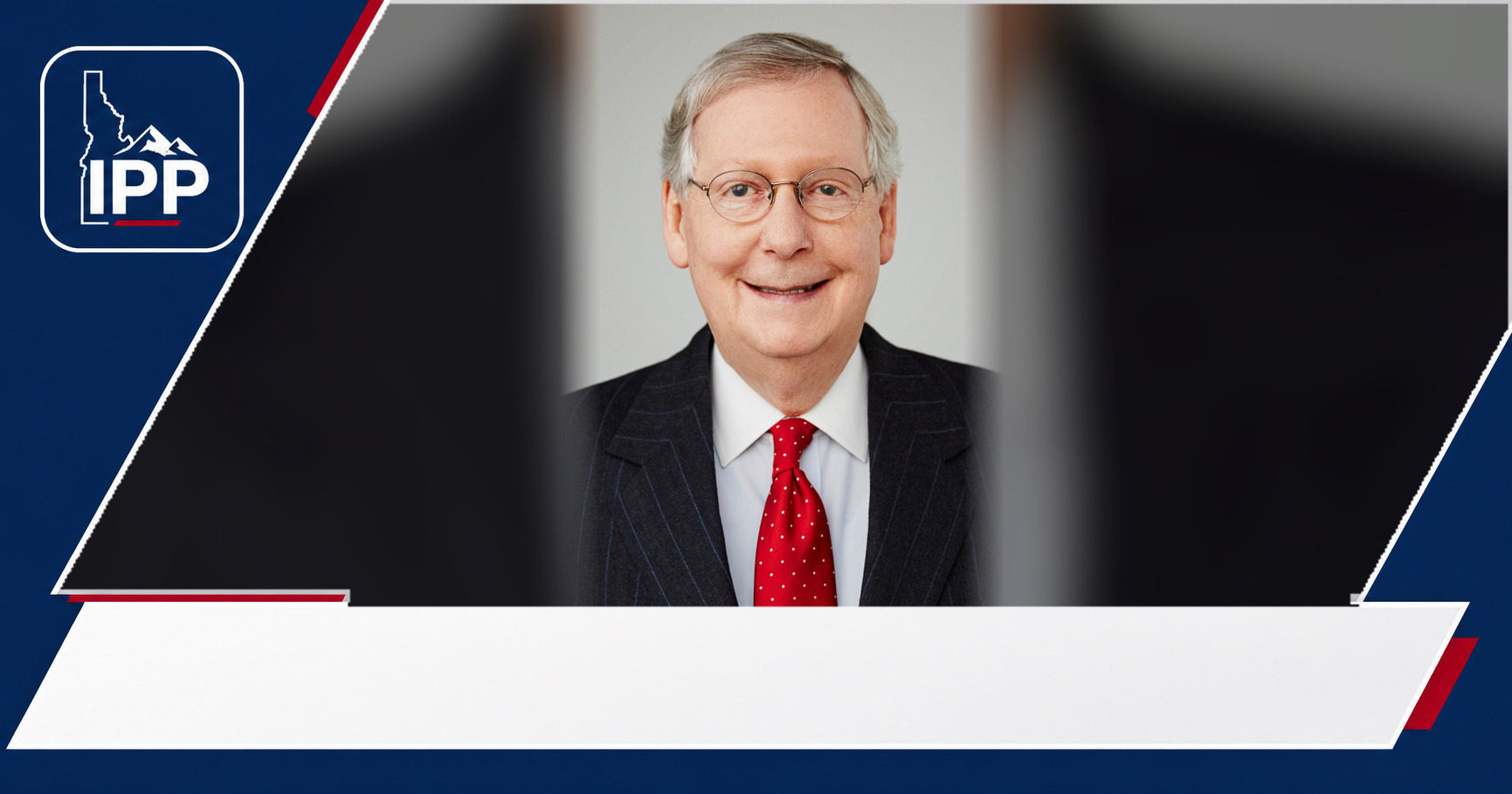
Kentucky changed its Senate vacancy rules, and the timing could shape how fast voters choose a successor. The dispute matters because McConnell’s absence has made an untested state law suddenly relevant.
Mitch McConnell and the Monday deadline for a Kentucky special election are now tied to one blunt question: how would Kentucky replace Mitch McConnell if his Senate seat opened before his term ends? The August 3 date, which falls on Monday, matters because it sits three months before the November 3 election and could affect whether a special election is called quickly.
McConnell, the Kentucky Republican senator, has continued to be absent from Congress after a reported fall at his Washington, D.C., home. His office says he is working remotely, but the vacancy debate has sharpened because Kentucky’s rules for filling a Senate seat changed recently and remain legally untested.
Why August 3 is looming
The date getting attention is August 3. Under Section 152 of Kentucky’s Constitution, a special election is required when there are more than three months between a vacancy and an election. If a vacancy occurs less than three months before an election, the timing can be delayed.

Because the next election is set for November 3, Monday marks the three-month point. That is why some lawyers, consultants and political observers are treating it as a meaningful line in the calendar.
It may not be a clean, automatic cutoff. The uncertainty comes from the collision between an older state constitutional timing rule and a newer state law governing U.S. Senate vacancies. That newer law, known as HB 622, removed the governor’s ability to appoint an interim senator and instead points to a special election.
So the practical question is not just whether Monday is important. It is whether Monday controls the timeline if McConnell’s seat became vacant before the regular election already scheduled for November.
Kentucky changed the vacancy playbook
In many states, governors can appoint a temporary senator when a vacancy opens. Kentucky now takes a different route. Under HB 622, passed by state lawmakers in 2024, the governor may not appoint an interim U.S. senator. A special election is supposed to fill the seat.
That means if McConnell left office before the end of his term, the replacement would come from Kentucky voters through a special election rather than from Democratic Gov. Andy Beshear’s appointment power.
The partisan reason this matters is obvious. Kentucky is strongly Republican in federal races, even though Beshear has twice won the governorship. A gubernatorial appointment could have created a very different political fight. A special election in Kentucky would likely favor Republicans, according to the political assumptions cited by election analysts, especially after Donald Trump carried the state by more than 30 points in 2024.
Forecasters such as the Cook Political Report have rated the regular Senate race as safe for Republicans. Republican Rep. Andy Barr and Democrat Charles Booker are already running for the seat McConnell is expected to leave at the end of his term.
The law is still untested
The hardest part of the Monday debate is that Kentucky’s new Senate vacancy law has not been fully tested in court. That makes sweeping claims risky.
HB 622 requires a special election when a U.S. Senate vacancy occurs, but it does not appear to set one simple date that resolves every timing question. The law also includes notice requirements: the governor must send a proclamation or writ of election to each county sheriff at least 56 days before the election, and sheriffs must give notice at least 49 days before Election Day, according to the bill’s text.
That is why September 8 has also been discussed as a key date. If the election date is November 3, the notice rules create another calendar pressure point beyond Monday.
The U.S. Constitution adds another layer. The 17th Amendment says that when Senate vacancies occur, a state’s executive authority shall issue writs of election to fill them, while allowing state legislatures to decide whether governors can make temporary appointments. Kentucky is one of the states where governors are not allowed to make such an appointment, according to the National Conference of State Legislatures.
Beshear downplayed Democratic hopes
Beshear has publicly addressed the August 3 theory. In an interview with Bloomberg, he said, “There’s an argument out there that that’s a date where I could not later call a special election.”
He also pushed back on the idea that Democrats should view the situation as an obvious opportunity. Beshear noted that Kentucky has not elected a Democratic senator for decades, a reminder that his own statewide success has not translated into Democratic dominance in federal races.
That point matters because much of the online speculation has treated the vacancy rules as a partisan chessboard. A McConnell vacancy would certainly have political consequences, especially in a closely divided Senate. But the most likely electoral terrain in Kentucky would still be difficult for Democrats.
Beshear also criticized some votes McConnell has missed, according to the reported interview, suggesting that not every absence is viewed the same way by Democrats. Still, the broader issue is representation: when a senator is not physically present for weeks, voters and both parties begin asking how long remote work can answer concerns about visibility and accountability.
McConnell’s absence fuels the pressure
McConnell has not announced any plan to resign before his term ends. That is a critical fact. The entire special election scenario depends on a vacancy that has not happened.
Newsweek reported that the 84-year-old senator has not been seen publicly for weeks after suffering a fall at his Washington, D.C., home that left him briefly unconscious. His office says he continues to work remotely with staff, and his team has released photos of him at a hospital.
For his critics, the limited public information has raised transparency concerns. For his allies, the remote-work explanation may be enough unless McConnell or his office says otherwise. The tension is sharper because McConnell is not a backbench figure: he has served Kentucky in the Senate for about 40 years and remains tied to major Republican strategy even as he prepares to retire.
The Senate math also matters. Republicans have a narrow majority, and every vote can shape the path of the party’s agenda. A vacant seat from a reliably Republican state would be politically sensitive even if the eventual winner were expected to be a Republican.
What Monday will not settle
Monday may become a talking point, a legal marker or a missed window, depending on how Kentucky officials and courts interpret the rules. What it will not do by itself is create a vacancy.
The key uncertainties are straightforward:
- Whether McConnell returns to public Senate work or remains absent.
- Whether any vacancy occurs before the end of his term.
- Whether Section 152’s three-month rule applies cleanly to a U.S. Senate vacancy under HB 622.
- Whether a court would be asked to resolve conflicts in Kentucky’s vacancy framework.
- How fast Beshear would be required, or allowed, to call a special election.
That is the real significance of the McConnell Monday deadline: it exposes how much of Kentucky’s replacement process is unsettled. The state has tried to remove appointment politics from Senate vacancies by giving the decision to voters. But when timing, notice rules and an already scheduled election collide, the legal machinery gets messy fast.
For now, McConnell remains in office, Kentucky’s regular Senate race continues, and Monday is best understood as a pressure date rather than a final answer. If a vacancy ever comes, the fight over how Kentucky replaces him may be as consequential as the election itself.











Leave a Reply