
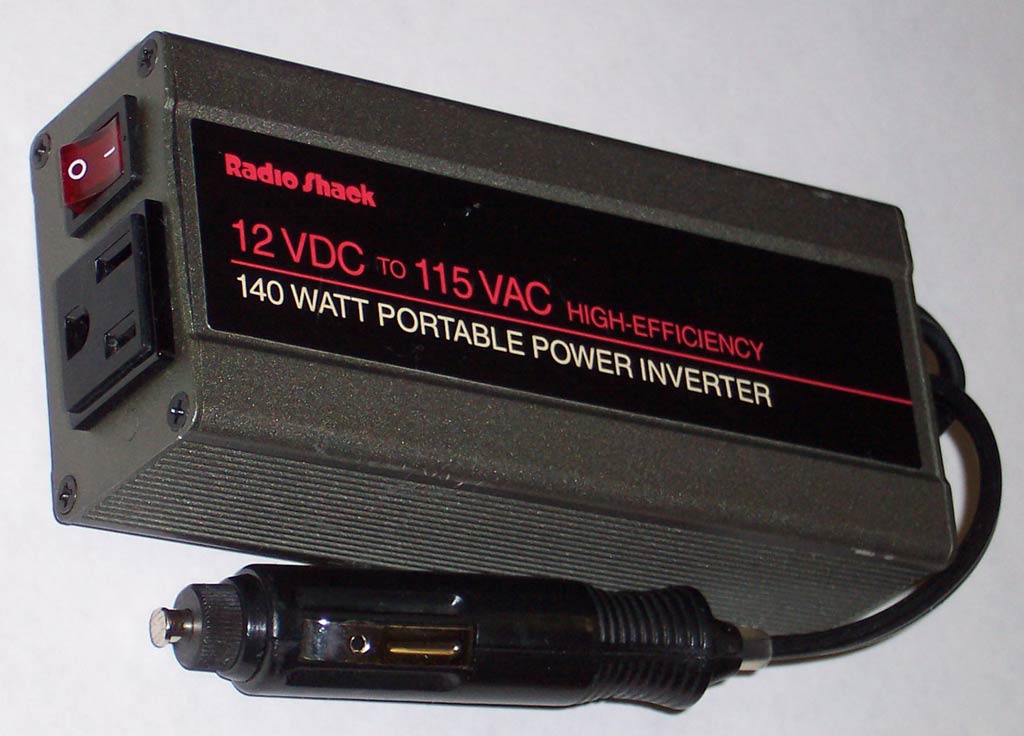
The restrictions reach beyond futuristic robots into power equipment used in renewable energy, data centers and homes. They also add another flashpoint before a planned Trump-Xi meeting in September.
The U.S. Federal Communications Commission, under the Trump administration, said Tuesday that the U.S. is banning imports of new foreign-made humanoid robots and power inverters. The ban targets China, and the new import restrictions also cover quadruped robots, the four-legged machines often marketed as robot dogs.
The FCC frames the move as a national-security step for the United States, warning that advanced robotic devices and energy equipment could create cybersecurity risks and supply-chain vulnerabilities. This article explains the new import restrictions, who is likely to feel them first, and why they land ahead of a planned September Trump-Xi meeting.
A ban beyond robot headlines
The headline technology is humanoid robots: machines built to move through human spaces, perform tasks with arms and sensors, and eventually work in factories, warehouses, labs, hospitals or homes. But the FCC action is broader than a futuristic robotics fight.

According to the Associated Press, the import ban applies to new foreign-made humanoid robots, power inverters and quadruped robots. FCC Chair Brendan Carr said Tuesday the goal is to “secure America’s critical supply chains,” and described the action as applying to “new versions” of such imports.
That wording matters. The restriction appears aimed at blocking future entry of covered equipment rather than recalling devices already in use. Still, the full practical boundaries will matter for companies that buy test robots, integrate foreign-made robot bodies with U.S. software, or use overseas components inside larger systems.
The FCC said advanced robots raise cybersecurity and other national-security concerns. In plain terms, the worry is not only what a robot can physically do. It is also what its sensors, cameras, software updates, connectivity and cloud services could access once deployed inside sensitive environments.
Why inverters are included
Power inverters are less eye-catching than humanoid robots, but they may be the most immediately consequential part of the order. These devices convert direct current electricity into alternating current electricity, a basic function in solar installations, battery systems, data centers and many household appliances.
If a robot ban is about the future of physical AI, an inverter ban is about the reliability of the grid-adjacent hardware already spreading through homes and commercial sites. Inverters sit between energy sources, storage and the equipment that uses power. That makes them a natural focus for officials worried about remote access, disruption or dependence on overseas suppliers.
The AP report said the inverter ban could have sweeping ramifications. That is because the market for energy infrastructure is no longer separate from the market for connected devices. Solar panels, home batteries, backup systems and data center power equipment increasingly rely on software-managed hardware.
For buyers, the near-term impact may not be visible overnight. But manufacturers, installers and large energy users will need to know which products are covered, whether exemptions exist, and how quickly alternative suppliers can fill any gaps.
China is the central target
The FCC move is explicitly China-focused in its policy context, even though the restriction is described as a ban on new foreign-made equipment. China dominates the global humanoid robot market, with an estimated share of roughly 85%, according to the AP.
That market dominance gives the ban economic weight. Omdia, the technology research and advisory group cited by AP, estimated that about 15,000 humanoid robots shipped globally in 2025. Two major Chinese robotics companies, Unitree and AGIBOT, each shipped more than 5,000. U.S. companies including Tesla and Figure AI each shipped a few hundred or fewer.
Those figures explain why a U.S. restriction can be both limited and symbolically large. The American market for humanoids is still young, but Washington is trying to shape it before cheap, scaled foreign-made platforms become standard in U.S. workplaces.
Morningstar analyst Kangyuxiao Li told AP that Chinese manufacturers have been scaling production and reducing costs faster than many overseas competitors. Restricting U.S. access, he said, removes an important future market and shields U.S. developers from some price pressure, though it is unlikely to stop China’s broader robotics development because of its domestic base and other export opportunities.
Beijing calls it protectionism
China’s government pushed back quickly. Foreign Ministry spokesperson Mao Ning said Wednesday in Beijing that Washington was overstretching the concept of national security to suppress Chinese companies, according to AP.
Mao said China would take “all measures necessary” to defend the legitimate rights and interests of Chinese businesses. She also argued that protectionism will not make the United States more competitive and would hurt U.S. companies and consumers.
That is the core divide. U.S. officials are treating connected robotics and power hardware as infrastructure risk. Beijing sees another barrier against Chinese technology firms. Both arguments will resonate with different audiences: security officials worry about hidden access and dependency, while businesses worry about cost, supply and lost collaboration.
The timing adds pressure. The restrictions come before a planned September visit by Chinese leader Xi Jinping to meet President Donald Trump. Samm Sacks, a senior fellow at New America focused on Chinese technology policy, described the situation to AP as a steady drumbeat of possible flashpoints ahead of that summit.
Companies face a collaboration problem
The ban could complicate more than direct imports. Modern robotics development often crosses borders: one company may design chips, another may build the chassis, another may write the operating software, and still another may deploy the system in a factory or warehouse.
Omdia chief analyst Lian Jye Su told AP the bans could potentially interfere with collaborations between U.S. and Chinese technology companies. A prominent example is Nvidia, which in June revealed a humanoid robot reference design using the humanoid chassis of China’s Unitree.
That kind of collaboration is common in emerging hardware markets because developers want to test AI models, sensors and control systems without building every physical platform from scratch. If Chinese robot bodies become harder to import, U.S. firms may need to shift to domestic or allied suppliers, even if those alternatives cost more or ship in smaller volumes.
Unitree is also under heightened scrutiny in Washington. The Pentagon recently included Unitree and several other major Chinese technology companies on a list of firms it says have ties to or aid the Chinese military, a claim Beijing rejects.
The unanswered implementation questions
The big policy direction is clear: Washington is extending national-security restrictions from chips and drones into advanced robots and energy conversion hardware. The unanswered questions are operational.
Companies will be looking for details on enforcement dates, product definitions, component thresholds and whether software updates or modified models count as new versions. A humanoid robot is easier to picture than to define in regulation. A robot torso, a mobile base, a set of arms, a developer kit and a full commercial unit may all raise different questions.
There is also a consumer angle, though it may be indirect at first. If restrictions reduce competition, U.S. businesses could face higher prices for robotics pilots or energy equipment. If they spur domestic production, supporters will argue the short-term cost is worth reducing dependence on Chinese supply chains.
The immediate takeaway is that the U.S. is treating connected machines as strategic infrastructure. Humanoid robots may still feel experimental, but the policy fight around them has already arrived. Power inverters show why: the next technology-security battle is not just about what devices can do, but where they are made, how they connect and who can be trusted to keep them running.








Leave a Reply