
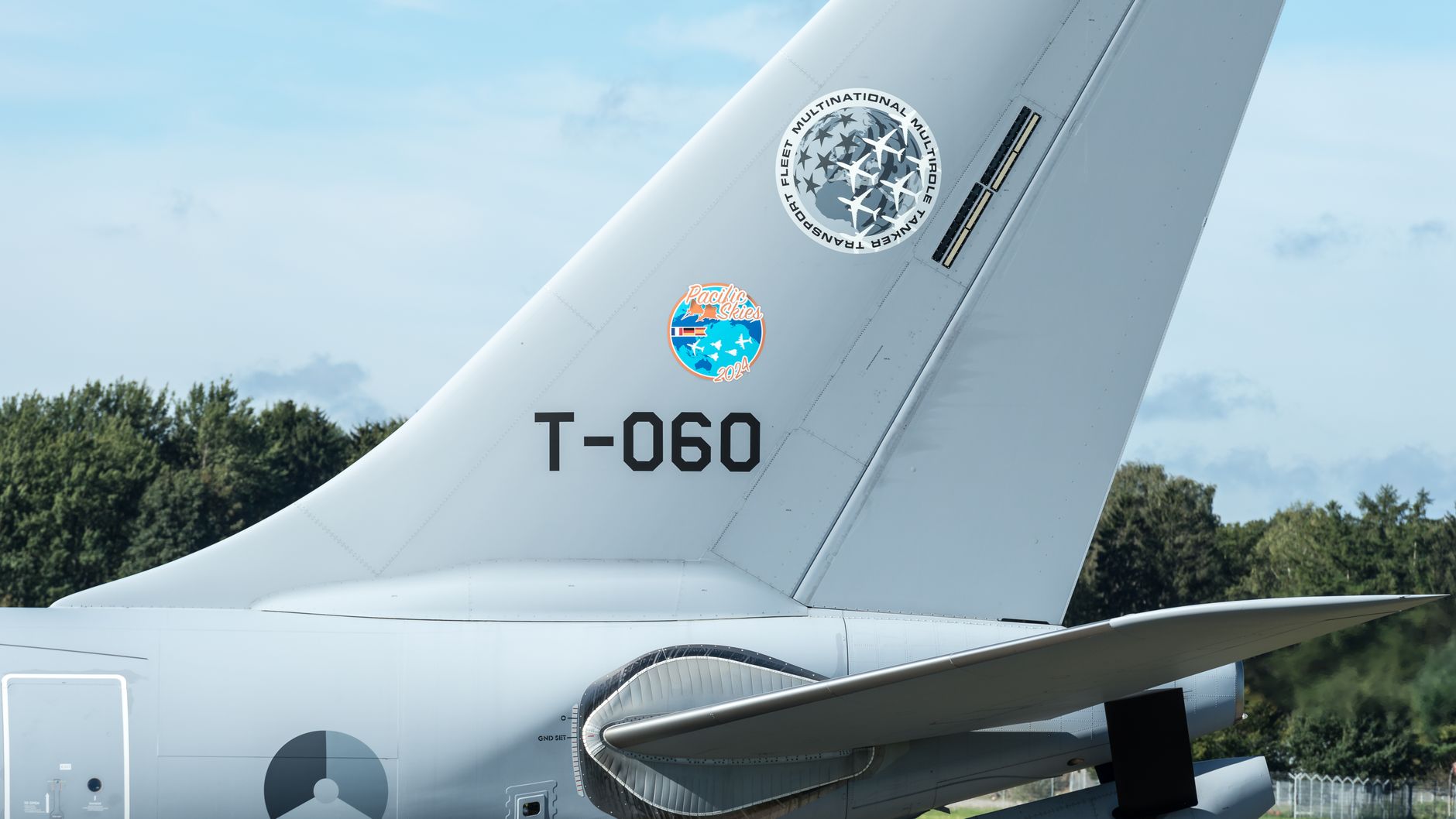
The message is bigger than one weapons system. It points to a widening Western argument that Ukraine cannot win by only absorbing Russian attacks.
Finland is sending a blunt signal about the next phase of the war in Ukraine: Russia should no longer be able to attack from depth while assuming its own military infrastructure remains out of reach.
The Independent reported that Finland says NATO backs Ukraine’s long-range strikes as a way to pressure Vladimir Putin. That phrasing matters. It suggests the debate is shifting from whether Ukraine may defend itself to how far Western-backed pressure on Moscow should go.
Finland sharpens the message
Finland’s position carries weight because it is not a distant observer. The country joined NATO in 2023 after Russia’s full-scale invasion of Ukraine upended Europe’s security assumptions, and it shares a long border with Russia.

When Helsinki talks about deterrence, it is speaking from a place of immediate geography. Its core argument is simple: Ukraine should not be forced to fight with one hand tied while Russia launches missiles, drones and glide bombs from bases and logistics networks beyond the front line.
The reported Finnish message also lands at a sensitive moment for NATO. Allies have spent much of the war trying to balance two goals that often pull in different directions: helping Ukraine survive and avoiding a direct NATO-Russia war.
Backing long-range strikes, even in principle, pushes that balance into sharper view. It does not mean NATO troops are entering the conflict. It does mean some allies increasingly see deeper Ukrainian attacks as part of a legitimate pressure campaign against the Kremlin.
The pressure logic is clear
Russia’s war effort depends on depth. Airfields, ammunition depots, command posts, rail hubs, fuel sites and drone launch areas can sit far from the trenches but still shape the fighting every day.
If those assets are untouchable, Moscow gets a major advantage. It can pound Ukrainian cities and positions while pushing the real machinery of war farther back.
That is why long-range strike capability has become such a strategic flashpoint. For Ukraine, the issue is not only retaliation. It is about disrupting the supply chain that allows Russia to keep firing.
For NATO countries sympathetic to that view, the pressure logic is direct: raise the cost of continuing the war until Putin faces harder military and political choices. The aim is not symbolic damage. It is to make Russia’s campaign more expensive, less predictable and harder to sustain.
NATO backing has limits
The phrase “NATO backs” can sound sweeping, but the practical reality is more complicated. NATO as an alliance does not hand Ukraine a single universal rulebook for every weapon. Restrictions are often set by the individual governments that supply systems, intelligence or training.
That distinction matters. One ally may allow a weapon to be used against certain military targets inside Russia. Another may limit its systems to occupied Ukrainian territory. A third may support the principle of Ukraine’s self-defense while staying cautious about specific strike permissions.
Ukraine’s argument rests on self-defense. Under the United Nations Charter, states have the right to defend themselves when attacked. Kyiv and many of its supporters say that right cannot stop at the border if the attacks are being launched from across it.
Still, NATO governments have worried about escalation since the first days of the invasion. The question has never been only whether Ukraine has a legal right to strike military targets. It has also been whether Russia might use those strikes as a pretext to widen the confrontation.
Moscow watches every word
The Kremlin pays close attention to Western language. Putin has repeatedly tried to frame deeper Western support for Ukraine as evidence that NATO is at war with Russia, even as NATO says it is not a party to the conflict.
That is why statements from Finland and other allies are not just diplomatic noise. They are part of the contest over red lines. Russia sets them loudly. Ukraine and its backers test whether those lines are real, flexible or designed to intimidate.
The past several years have shown that some feared escalation thresholds have moved. Western governments have gradually supplied heavier weapons, air defenses, tanks and long-range systems after earlier hesitation. Each step came with warnings from Moscow. None produced the direct NATO-Russia clash that leaders feared, though the risk has never disappeared.
For Putin, the danger of broader acceptance of Ukrainian long-range strikes is not only battlefield damage. It is the erosion of sanctuary. If Russian bases and logistics nodes are more vulnerable, the war becomes harder to manage from behind the front.
The weapons debate underneath
Long-range strikes are not one thing. They can involve drones, missiles, cruise missiles, ballistic systems, sabotage operations or domestically produced Ukrainian weapons. Each comes with different range, payload, accuracy and political sensitivity.
The most difficult debates have centered on Western-supplied weapons. Systems such as Storm Shadow, SCALP and ATACMS have been discussed throughout the war as Ukraine sought the ability to hit high-value military targets farther from the front. Germany’s Taurus missiles became another symbol of the argument over range and escalation.
Ukraine has also built its own long-range strike capacity, especially through drones. Those attacks can reach oil facilities, air bases and industrial sites connected to Russia’s war machine. Domestically produced systems give Kyiv more freedom, but Western weapons often offer greater precision and military effect.
That is why allied permission matters. If Ukraine is allowed to use advanced Western systems against more categories of Russian military targets, the battlefield equation changes. If those permissions remain narrow, Kyiv must rely more heavily on its own weapons and shorter-range options.
Why this matters now
The war has become a struggle of endurance. Russia has tried to grind down Ukraine with manpower, missiles, drones and attacks on energy infrastructure. Ukraine has tried to survive, adapt and make Russia’s advantages less decisive.
Long-range pressure fits that survival strategy. It can force Russia to move aircraft, spread out ammunition, harden depots and spend more on air defenses far from the front. Even when a strike does not destroy a target, the threat can impose costs.
For European NATO members, the stakes are broader than Ukraine’s map. If Russia can invade, occupy and bombard a neighbor without facing serious consequences at depth, the lesson could echo beyond Ukraine. Finland, the Baltic states and Poland have been especially alert to that risk.
The debate also affects Washington and other capitals weighing how much support is enough. A defensive-only approach may prevent collapse, but it may not force Moscow to reconsider. A strategy that lets Ukraine hit the machinery of invasion seeks a different outcome: not just holding the line, but changing the Kremlin’s calculation.
What remains uncertain
The big unknown is how far NATO allies are prepared to go in practice. Public support for long-range strikes does not automatically mean every weapon restriction disappears. It also does not settle questions about target selection, intelligence sharing or the role of Western personnel in planning.
Another uncertainty is Russia’s response. Moscow may escalate rhetorically, intensify attacks on Ukrainian cities or seek to punish European states through cyber operations, sabotage or political pressure. NATO governments know that risk is real.
But Finland’s reported message reflects a growing view inside Europe: caution has costs too. If fear of escalation gives Russia permanent sanctuary, Putin has little reason to stop.
The takeaway is not that NATO has crossed into direct war. It is that the alliance’s debate is moving. More allies appear willing to say that pressure on Russia must reach beyond the front line if Ukraine is to have a serious chance of forcing a different decision in Moscow.









Leave a Reply