
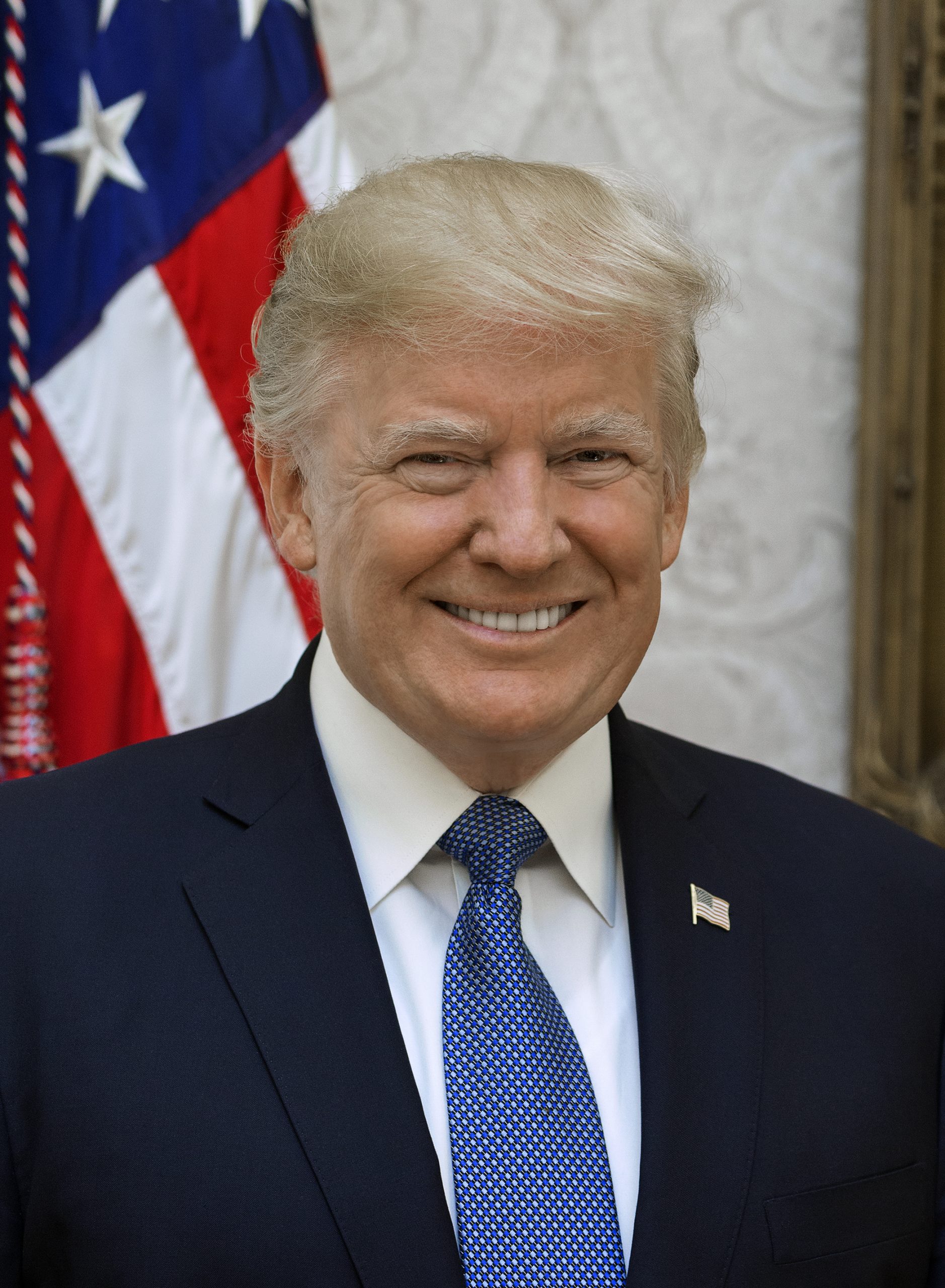
The fight is bigger than a memecoin. It is now about whether crypto gives wealthy buyers a new way to seek access while policy is being written in Washington.
Donald Trump’s crypto ventures have moved from curiosity to political liability, and the latest fight is not really about whether a coin goes up or down.
It is about access, profit and power: who can buy in, who gets close, and whether a president’s private financial interests can be cleanly separated from the government decisions that shape the crypto market.
The allegation is about access
House Financial Services Committee Democrats have turned Trump-linked crypto projects into a formal political target, arguing that they create openings for corruption and foreign influence. Their case centers on the $TRUMP memecoin and World Liberty Financial, a crypto venture tied to Trump’s family.

The committee Democrats’ language is blunt and partisan. They call the memecoin a scam, argue it has no real purpose beyond Trump’s name, and say it functions as a way to monetize proximity to power.
That framing matters because crypto is not just another business line. The industry depends heavily on federal rules, enforcement choices and regulatory definitions. If a president or his family profits from crypto while his administration shapes crypto policy, critics see a conflict that is unusually direct.
None of that, by itself, proves a crime. But in Washington, corruption fights often begin before a courtroom. They begin when private financial upside overlaps with public decision-making.
The memecoin changed the stakes
According to House Financial Services Committee Democrats, Trump launched the $TRUMP memecoin on January 17, three days before his inauguration. They allege the coin quickly helped inflate his net worth by at least $350 million while investors lost more than $2 billion.
Those figures come from Democratic committee materials, not a court finding. Still, the political force of the claim is easy to understand: a sitting president’s brand became a tradable asset at the same moment his administration was preparing to oversee the crypto sector.
The committee Democrats also point to a private dinner for top holders of the memecoin at Trump’s Virginia golf club. They say people spent an estimated $148 million to compete for access to the event and that many of the top wallets appeared connected to foreign exchanges.
That is the part of the story that turns a speculative token into an ethics flashpoint. If major buyers can spend their way into a room with the president, critics argue the coin is no longer merely a risky investment. It becomes a possible access channel.
World Liberty raises broader questions
The second major focus is World Liberty Financial, a decentralized-finance venture associated with Trump’s family. Committee Democrats say the firm raised more than $550 million and that 75% of coin sales revenue flowed to the Trump family.
They also argue that World Liberty’s funding and partnerships raise national security concerns because some money came from overseas. Their materials cite investors and activity tied to places including Hong Kong, the United Arab Emirates and Israel.
One allegation is especially sensitive: Democrats say Abu Dhabi used World Liberty’s stablecoin, USD1, in a $2 billion Binance-related transaction. They cast that as evidence that foreign players may see Trump-linked crypto as a route to political favor.
The committee also highlights crypto entrepreneur Justin Sun, saying he invested tens of millions of dollars in World Liberty and later increased his stake. Democrats note that the Securities and Exchange Commission had been pursuing a fraud case involving Sun and his companies, and they argue the timing raises quid-pro-quo concerns. That is an allegation from political opponents, and the available brief does not establish a legal finding of wrongdoing.
Reuters added pressure
The scrutiny is not coming only from Democrats. Reuters published an investigation examining how much money the Trumps made from four main crypto projects and how investors fared.
The significance of that reporting is not just the numbers. It is the premise: Trump’s crypto activity is large enough, complicated enough and politically relevant enough that one of the world’s major news organizations tried to parse profits, losses and exposure across multiple ventures.
Crypto projects can be hard for ordinary voters to evaluate. Wallets, token allocations, offshore exchanges, stablecoins and insider timing are technical details. That complexity can make conflicts harder to see in real time.
For Trump’s critics, that opacity is part of the problem. They argue the structure of crypto allows money to move quickly, sometimes anonymously or through foreign platforms, while creating financial benefits that may not look like traditional donations or lobbying.
The policy fight is the prize
This controversy is landing while Congress debates major crypto legislation, including bills known as the CLARITY Act and the GENIUS Act. Committee Democrats have urged lawmakers to vote no, arguing the measures would give Trump-linked crypto ventures more room to operate.
They are also pushing the Stop TRUMP in Crypto Act of 2025, a proposal aimed at preventing presidents and senior officials from profiting from certain crypto assets. The name makes the political target obvious.
Supporters of crypto regulation generally argue that the industry needs clear rules so legitimate companies can operate in the United States without guessing what regulators will do next. That is a real policy debate, and it is bigger than Trump.
But Trump’s personal stake changes the optics. If laws are passed that benefit stablecoins, memecoins or decentralized finance, critics will ask whether the president’s family businesses were among the beneficiaries. That question can follow every vote, agency action and enforcement decision.
What is still unclear
The strongest version of the criticism is political and ethical: Trump-linked crypto projects may let buyers convert money into influence, or at least the appearance of influence, while the administration shapes the rules.
The weaker point, at least from the information available here, is proof of an illegal exchange. Corruption in the criminal sense usually requires more than bad optics. It often requires evidence of intent, official action and a specific benefit traded for that action.
There is also the issue of source. House Financial Services Committee Democrats are credible government actors, but they are also Trump’s political opponents. Their claims deserve attention, attribution and scrutiny, not automatic acceptance as settled fact.
At the same time, the absence of a court finding does not make the ethics issue disappear. Voters do not need a criminal conviction to decide that a president’s private moneymaking creates unacceptable conflicts.
The red card may stick
The reason this story has traction is that it connects three things voters already understand: wealthy insiders, special access and rules written in Washington.
Crypto adds a new layer because the assets can be volatile, opaque and global. A memecoin tied to a president’s name can rise on attention alone. A stablecoin tied to a family-linked venture can become part of major transactions. Buyers may be investors, fans, speculators or people hoping to be noticed.
That mix is why Trump’s crypto business has become more than a side story. It is now a test of whether existing ethics rules are built for a world where political branding, digital assets and presidential power can merge almost overnight.
The clean takeaway is simple: the crypto fight is no longer just about regulation. It is about whether Americans believe the presidency is being used to govern a market, or to profit from one.






Leave a Reply