
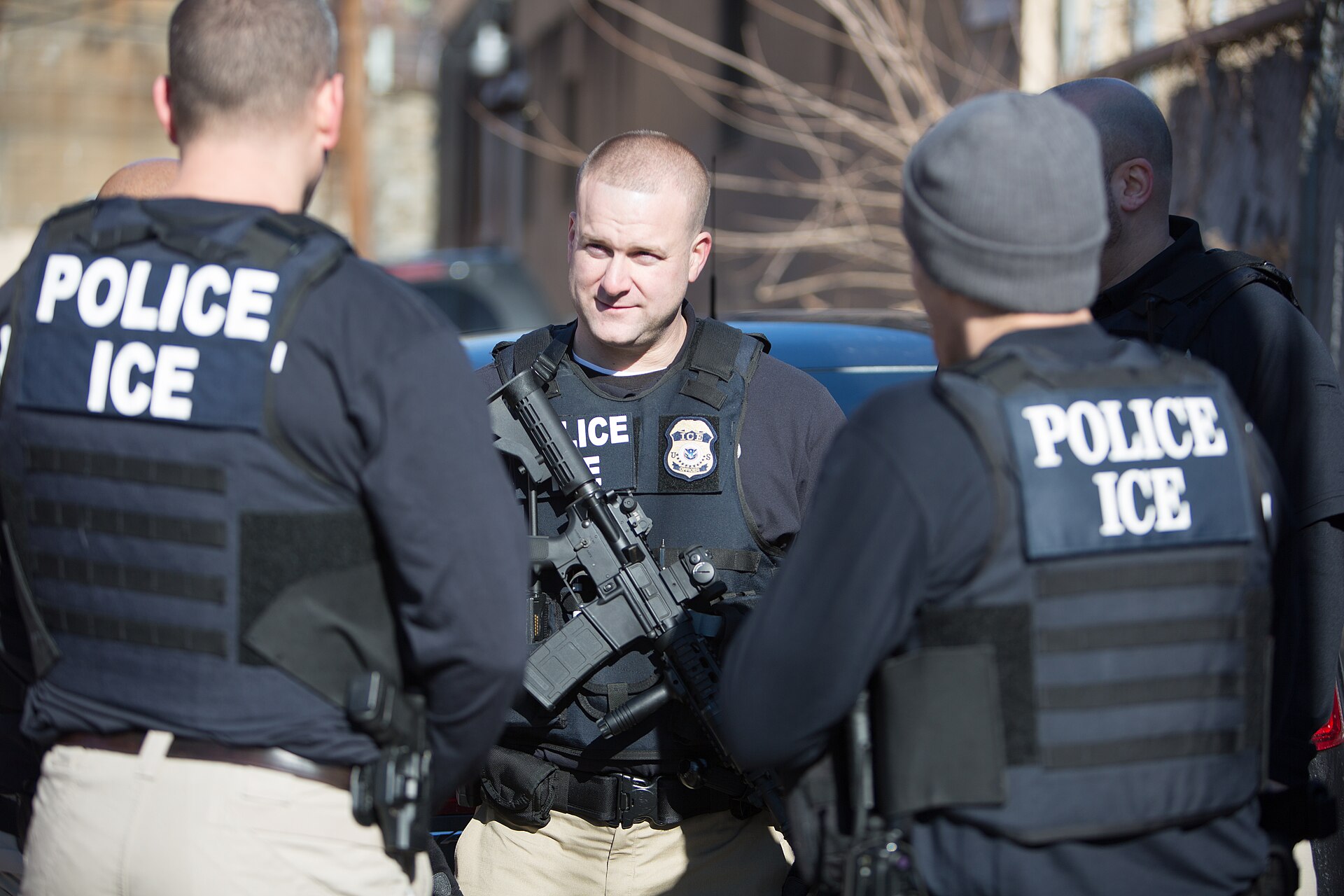
The reported July 17 roadside encounter is still under investigation, but it raises a larger public-safety question: how can drivers tell real federal authority from a dangerous fake?
Men posing as ICE agents in Oregon reportedly stopped a driver and assaulted them on July 17 along Highway 211 near Woodburn in Clackamas County, according to authorities. Oregon State Police publicly described the report on July 24, and said law enforcement is investigating; the FBI is also among the agencies tied to the inquiry into the alleged impersonation of federal immigration agents.
The key point now: authorities are investigating the report, not announcing a solved case. In a tense climate around immigration enforcement, even an unconfirmed roadside encounter involving fake federal authority can spread fear quickly and raise practical questions about how drivers can verify who is stopping them.
Roadside report near Woodburn
The reported incident centers on a traffic-style stop, not an immigration case confirmed by ICE. The driver said men who presented themselves as immigration enforcement stopped the vehicle and then assaulted the driver, according to the report being investigated by Oregon law enforcement.
The location matters because roadside encounters give drivers little time to assess risk. Highway 211 near the Woodburn area is not a controlled office setting where credentials can be checked slowly. If someone claims federal authority at the side of a road, the person being stopped has to make fast decisions under pressure.
Oregon State Police have not publicly resolved the case in the available information. That leaves the most important facts still unsettled: who the men were, what they showed or said to claim ICE authority, whether they used a vehicle designed to look official, and whether the driver was targeted or randomly stopped.
Why the ICE claim matters
ICE, formally U.S. Immigration and Customs Enforcement, carries federal law-enforcement authority. That is why a false claim of being an ICE agent can be more than a costume or a bluff. It can change how a driver reacts, whether they comply, and how much danger they may believe they face if they resist.
The Oregon report also lands in a moment when immigration enforcement is politically charged and highly visible. For immigrant communities, workers, and families with mixed immigration status, the possibility of fake agents can create fear beyond the person directly involved. A single allegation can make routine travel feel risky.
There is another side to the caution: federal agents can operate in ways that do not always look like a local police traffic stop. Some official operations may involve plainclothes officers, unmarked vehicles, or coordination among agencies. That reality is exactly why verification matters and why investigators need to establish what happened before the public fills in the blanks.
False authority is a federal concern
The Justice Department’s Criminal Resource Manual explains that 18 U.S.C. § 912 covers false personation of a federal officer or employee. It describes two broad forms of the offense: impersonating and acting as such, and impersonating while demanding or obtaining something of value in that pretended role.
The manual also notes that impersonation can be carried out through verbal claims, a counterfeit badge, a false certificate of authority, or conduct that makes someone appear to be acting as a federal official. In other words, the law is not limited to someone wearing a perfect replica uniform.
That context does not decide the Oregon case. It explains why allegations involving fake ICE agents are treated seriously. The alleged harm is not only the reported assault on the driver; it is also the misuse of federal authority to gain compliance or control.
ICE’s own public information directs people to report crimes to its tip line at (866) DHS-2-ICE. In an immediate roadside emergency, however, the practical first step is usually local emergency dispatch, because dispatchers can check active stops and send local officers if a driver is in danger.
How drivers can reduce risk
No checklist can remove the danger from a suspicious stop, and people should not escalate a roadside encounter if doing so would put them at greater risk. Still, there are basic ways to seek verification when someone claiming law-enforcement authority tries to stop a vehicle.
- Call 911 if it is safe to do so. Give the dispatcher your location, direction of travel, vehicle description, and the description of the people trying to stop you.
- Ask whether a stop is legitimate. A dispatcher may be able to confirm whether a real agency has initiated a stop or send marked officers to the scene.
- Move to a safer public location if instructed or if necessary. A well-lit area with people nearby can reduce isolation, though drivers should avoid sudden moves that could be misread.
- Request identification calmly. Real officers should be able to identify their agency, show credentials, and explain the reason for the stop, though procedures vary by agency and situation.
- Record details if safe. License plates, clothing, badge numbers, vehicle markings, and exact words used can help investigators later.
These steps are not a substitute for legal advice, and they do not guarantee safety. They are meant to slow down a situation where someone may be using fear and confusion as tools.
What investigators still need
The Oregon investigation has to answer several basic questions before the public can know whether this was an isolated attack, an attempted robbery or intimidation using ICE’s name, or something else. The reported assault makes the case urgent, but the available public record is still thin.
Authorities will likely look for surveillance video, dash-camera footage, phone records, vehicle descriptions, and any prior reports of similar stops in the area. If the men used badges, vests, lights, or official-sounding language, those details could matter for both state assault allegations and any possible federal impersonation review.
The FBI’s involvement or connection to the inquiry is notable because impersonating federal officers can cross from a local assault report into a federal public-integrity concern. Oregon State Police remain central because the alleged stop happened on an Oregon roadway and was reported as a local incident.
For now, the careful reading is also the most useful one: a driver reported being stopped and assaulted by men posing as ICE agents near Highway 211, and authorities are investigating. The warning for the public is real even while the final facts are still being gathered. Claims of federal authority should be taken seriously, but they can also be checked.









Leave a Reply