
FIFA says outside investment could fund global soccer development. Critics say the proposal risks putting the World Cup’s commercial engine too close to private capital.
FIFA is proposing to sell stakes in the World Cup’s commercial rights, and the plan has sparked backlash from critics who say soccer’s biggest tournament should not be turned into an investment asset. FIFA said Tuesday it plans to create a $20 billion subsidiary to run World Cup-related commercial and event operations, offering outside investors minority stakes of up to 20% and potentially raising $4.2 billion.
The backlash explains why FIFA draws fury now: the proposal could reshape how World Cup money is raised, shared and governed. FIFA says it would keep control. Critics see a private-capital doorway into the sport’s most powerful commercial machine.
A rights machine meets private capital
The proposed subsidiary, called FIFA Forward Enterprise, would bring together major parts of FIFA’s commercial business, including broadcast rights, sponsorship, ticketing and licensing, along with the operational delivery of FIFA tournaments.
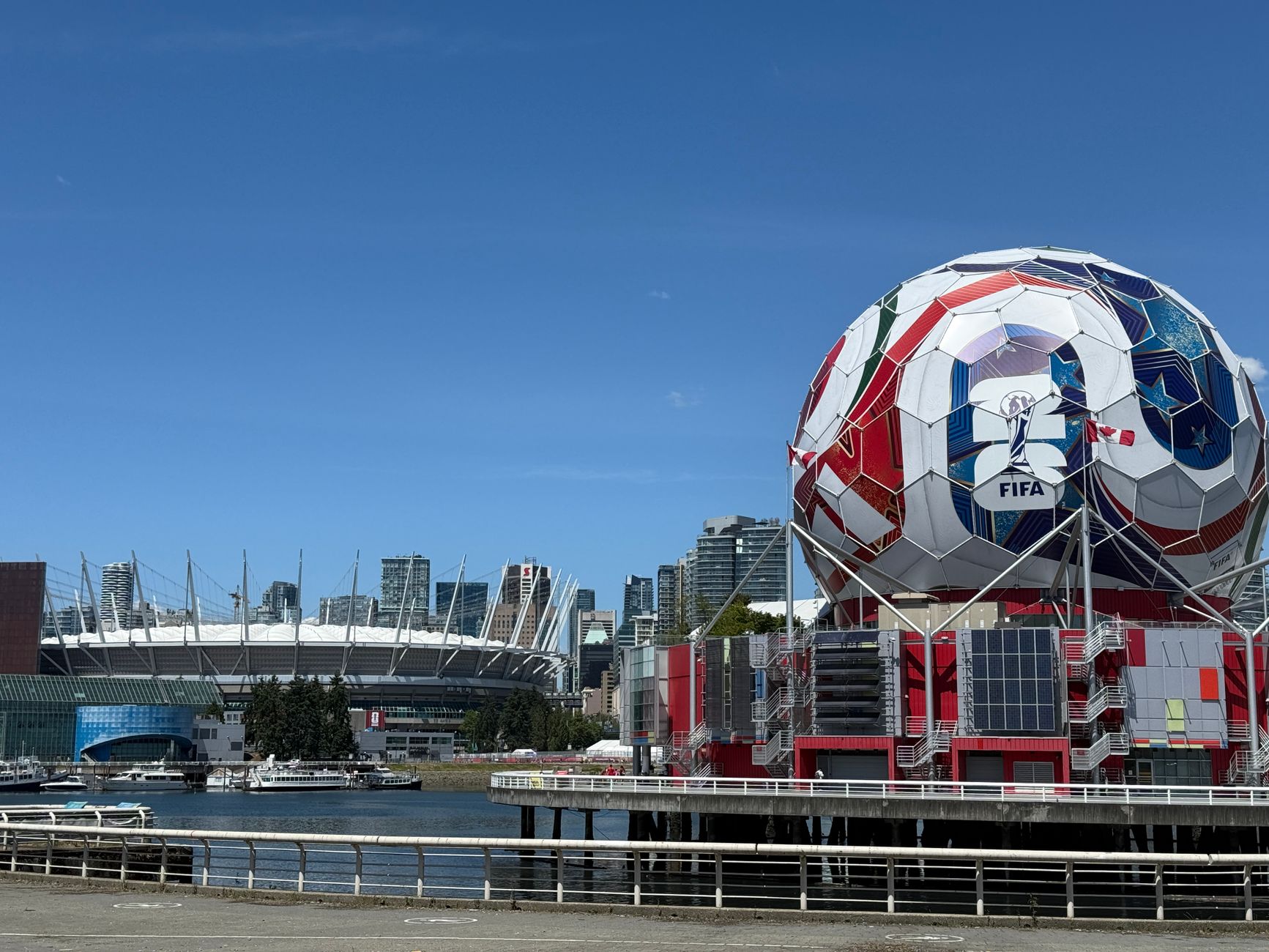
That matters because the World Cup is not just a tournament. It is the central revenue engine of global soccer, financing development payments to national associations and giving FIFA enormous leverage over the sport’s calendar, sponsors and political relationships.
Under the plan described by FIFA and reported by Reuters, outside investors would be allowed to buy minority stakes of up to 20% in the new entity. FIFA has said investors would not have an operational role and would be buying into a FIFA subsidiary, not FIFA itself.
That distinction is now at the center of the dispute. To FIFA, the structure preserves control while unlocking capital. To opponents, moving commercial rights into a high-value investment vehicle changes the incentives around the World Cup, even if FIFA keeps formal authority.
FIFA says funding would rise
FIFA’s strongest argument is that the deal could move more money into the game. The organization says raising as much as $4.2 billion would help expand development programs for its 211 member associations.
FIFA President Gianni Infantino framed the sport’s popularity as a force that can be converted into broader benefit. In FIFA’s view, soccer’s commercial value already exists; the proposal is a way to use that value to fund infrastructure, coaching, national teams, competitions, grassroots programs and the women’s game.
The proposal includes a new FIFA Fast Forward Program, which FIFA says would increase payments to member associations. The existing FIFA Forward program is budgeted to provide $8 million to each member association in the 2027-30 World Cup cycle.
- FIFA says the new program would raise that to $20 million per association in the upcoming cycle.
- Future four-year cycles would increase to $22 million and then $24 million per association through 2038.
- Associations could also access an optional one-off $20 million for immediate projects.
For smaller federations, those numbers are not abstract. Development grants can determine whether a country upgrades training facilities, supports women’s competitions or funds youth programs. That is why FIFA is likely to pitch the proposal not as a sale of influence, but as a way to accelerate investment across the sport.
Why the backlash is sharp
The criticism has been unusually forceful because the World Cup is widely seen as a public sporting institution, not merely a commercial property. UEFA said in a statement that “the soul and governance of football are not assets to trade,” while criticizing what it described as a lack of transparency over who would benefit financially.
Other soccer bodies have raised process concerns. CONCACAF said it was deeply concerned by what it called a lack of due process, including the announcement of plans before discussions with relevant governance bodies and stakeholders. England’s Football Association also expressed concern about governance and principles involved in the proposal.
The Asian Football Confederation has also said it was not consulted, according to Time’s reporting. That matters because FIFA’s legitimacy depends on member associations and confederations believing that major commercial decisions are made through clear internal channels.
There is also a practical fear beneath the rhetoric. Even a minority investor can influence expectations. Once commercial rights sit inside a vehicle valued at $20 billion, pressure can grow for higher margins, bigger sponsorship packages, more inventory and decisions that prioritize predictable returns over sporting balance.
The Trump-linked investor question
Part of the political heat around the proposal comes from scrutiny of potential investors. Time reported that attention has focused on Thrive Eternal, a company launched by Joshua Kushner, the brother of Jared Kushner, who is President Donald Trump’s son-in-law.
Thrive Eternal is described as a permanent capital investment firm created to hold minority stakes in sports teams and other iconic brands. FIFA has said outside investors would hold only a minority stake and would have no operational role. Thrive Capital, founded by Joshua Kushner, told Time it had no comment at the time of publication.
The concern is not only whether any one investor joins the deal. It is whether FIFA can separate the World Cup’s commercial future from politics, personal relationships and the perception of privileged access.
Infantino’s relationship with Trump has already been a subject of public attention around major soccer events involving the United States. Critics argue that adding investor ties near the World Cup’s commercial rights would intensify questions FIFA has long struggled to answer: who gets access, who benefits and how decisions are checked.
Control is the central dispute
FIFA’s defense rests on a clear claim: nothing changes in sporting control. The organization says it would retain “exclusive authority” over competitions, governance, regulatory decisions and sporting matters.
That statement is important, but it does not end the debate. Control is not only about who writes the rules. It is also about incentives, board structures, information rights, contractual obligations and the pressure investors can exert when a commercial entity is built to grow in value.
Sports have increasingly attracted private equity and sovereign wealth money, from club ownership to leagues, media rights and tournament ventures. Supporters say that capital can professionalize operations and bring long-term investment. Opponents say it can turn fans, competitions and traditions into financial products.
The World Cup sits at the most sensitive end of that spectrum. It belongs to FIFA legally and commercially, but emotionally it belongs to national teams, players and fans. That gap between ownership and public meaning is where the fury is coming from.
What remains unresolved
The immediate question is whether FIFA can move the proposal through its governance process without deeper resistance from confederations and national associations. UEFA is reportedly considering an emergency meeting to discuss opposition, including possible boycott options, though any such step would carry enormous sporting and political consequences.
Several details remain unclear: which investors would participate, what rights they would receive, how the $20 billion valuation was reached, what approval is required, and what safeguards would prevent commercial pressure from influencing tournament decisions.
FIFA may ultimately argue that critics are rejecting money that could benefit the global game. Opponents will argue that development funding should not require putting a price tag on the World Cup’s commercial future for outside investors.
The clean takeaway is that this is not just a financing plan. It is a test of how far FIFA can commercialize the World Cup while still persuading the sport that its biggest event is being governed for soccer first, not for shareholders.







Leave a Reply