
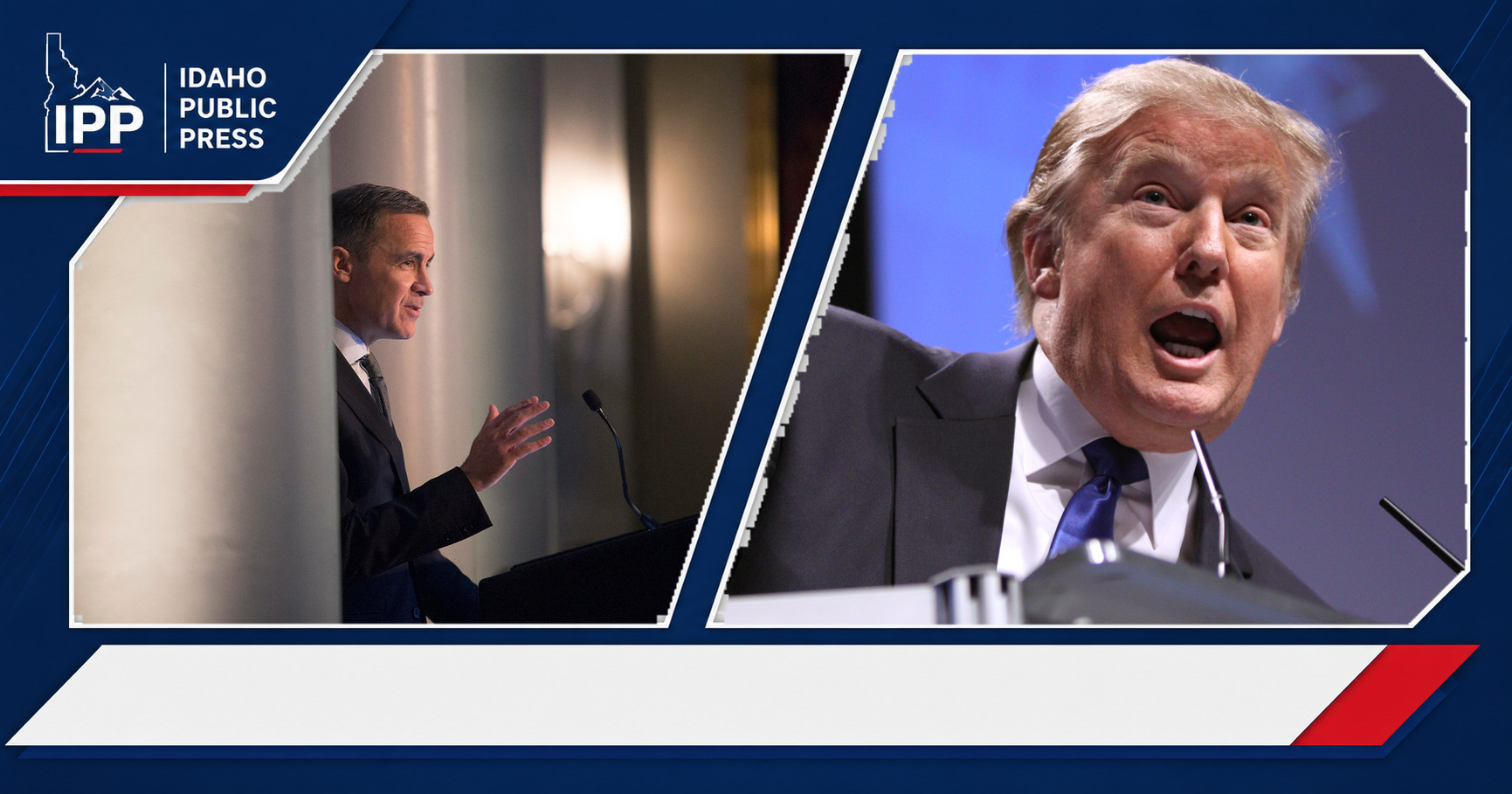
The dispute is no longer just about tariffs on goods. Carney is framing food control as part of Canada’s leverage as Trump presses a harder line on trade.
Mark Carney warns Canadians to take control of their food system after Donald Trump says America does not need anything from Canada. The message lands as U.S.-Canada trade tensions are escalating, with tariff threats pushing Canada’s economic dependence on America back into the political spotlight.
Carney’s point is bigger than groceries. He is trying to turn a defensive trade fight into a national resilience argument: if Canada wants leverage with the United States, Canadians may need to rethink what they buy, where supply chains run and how much control the country has over essential goods.
Food becomes a trade front
The phrase “take control of their food system” is a sharp one because food is not an abstract export category. It is what people see every week in stores, restaurants and household budgets.

Carney’s warning, first surfaced in a Moneywise item distributed through MSN, comes shortly after Trump’s claim that America does not need anything from Canada. That kind of statement cuts directly against Ottawa’s core argument in the current dispute: that trade with Canada is valuable to both countries, not a favor granted by Washington.
Food also gives Carney a more immediate way to talk about sovereignty. Tariffs can sound technical. Produce aisles, liquor shelves and farmers’ markets do not.
The political calculation is clear. If Canadians believe the trade fight threatens daily essentials, they may be more willing to support policies and consumer habits that reduce reliance on the U.S. market.
Trump’s pressure raises stakes
The broader backdrop is a widening trade confrontation. According to a Toronto Star report, Carney told reporters after meeting provincial and territorial premiers that Canada has “a full range of things” it can do in response to new tariff threats.
He also cautioned against moving too early. “We don’t need to respond in advance. In fact, I think it would be counterproductive at this stage,” Carney said, according to the Star. His message was not that Canada lacks options, but that timing matters.
The Star reported that new tariffs are slated to take effect Aug. 19, with Canadian officials and premiers backing an urgent push for negotiations around CUSMA in hopes of limiting or averting the impact.
That timeline helps explain why Carney’s food-system warning is landing now. It is a domestic signal as much as a cross-border one: Canada wants to show it is not entering talks empty-handed.
Canada’s argument to Washington
Carney’s central pitch is that any deal must recognize the value Canada brings to Americans as well as Canadians. As quoted by the Toronto Star, he said he and the premiers “have to be convinced that an agreement is worth the paper it is printed on.”
That line reveals a trust problem. Carney is not only negotiating over tariff levels. He is questioning whether any new arrangement with the Trump administration would be durable enough to justify concessions.
He also framed the choice facing Washington in blunt terms. Canada, he suggested, can be a strong partner to the United States, or the U.S. can try to go it alone. In that framing, Trump’s “America doesn’t need anything from Canada” posture is not just rhetoric; it is a test of whether the two economies are still being treated as deeply linked.
Canada’s leverage is not imaginary. The country supplies goods, energy, food products, lumber, minerals and manufacturing inputs that matter to U.S. consumers and companies. The political question is how aggressively Ottawa should use that leverage.
Premiers are not fully aligned
Carney is also managing pressure at home. The Toronto Star reported that Ontario Premier Doug Ford has pushed for “dollar-for-dollar” retaliation, arguing that Ontario has a lot to lose and that Canada needs to be more forceful.
British Columbia Premier David Eby has also signaled willingness to back stronger measures, pointing to resources such as lumber and minerals that could matter in talks with Washington.
Alberta Premier Danielle Smith sounded more cautious, according to the Star, saying the prime minister was wise to take the negotiating stages as they come. She rejected the idea of starting talks by threatening to “punch somebody in the nose.”
That split matters. A Canadian response that touches food, energy, liquor, lumber or other politically sensitive sectors requires provincial cooperation. Carney may be praising unity, but the details of retaliation are where unity gets tested.
Boycotts are part of the pressure
Carney’s food-system message also connects to consumer behavior already visible in the dispute. The Star noted Canadians who have stopped visiting the United States and are boycotting American products, including booze and fresh produce.
Those choices are not formal trade policy, but they can shape the political climate. A household that avoids American tomatoes or California wine is participating in a small version of the sovereignty argument Carney is making nationally.
Provincial alcohol bans have already become one of the flashpoints. The Star reported that U.S. booze bans remain in place in every province except Alberta and Saskatchewan, while some premiers have resisted restocking American beer, wine and spirits unless it is part of a mutually agreeable trade deal.
The risk is that symbolic measures can be satisfying without solving the bigger problem. Boycotts can send a message, but rebuilding food supply chains, processing capacity and domestic procurement takes investment, time and coordination.
The hard part comes next
Carney is trying to hold two ideas together: Canada should not panic, but it should prepare. That is why his language around food control is politically useful. It gives Canadians a practical frame for an otherwise sprawling trade dispute.
Still, much remains unclear. Carney has not publicly laid out every tool Canada may use if the tariff threat proceeds. He has said options are on the table, but he has also warned that responding prematurely could weaken Canada’s position.
The biggest unanswered question is whether Trump’s pressure is a negotiating tactic, a long-term trade doctrine or both. Carney has suggested it may be both, according to the Toronto Star. That ambiguity makes it harder for Canada to decide how much to compromise and how much to confront.
The clean takeaway is that Carney’s food-system warning is not just about agriculture. It is about leverage. If Trump insists America does not need anything from Canada, Carney is answering by telling Canadians to prove Canada can rely more on itself — and by warning Washington that partnership still has value.





Leave a Reply