
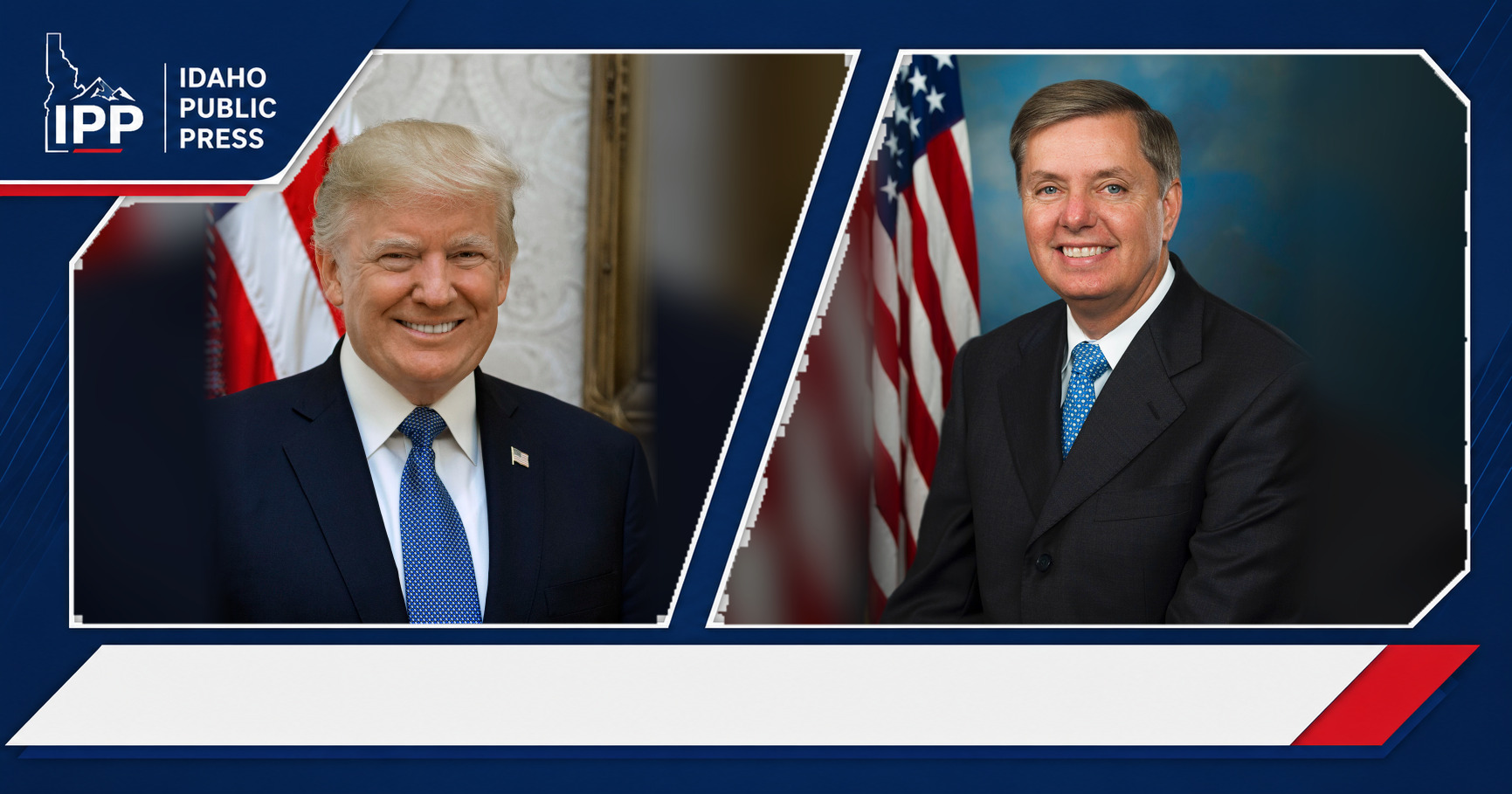
The memorial placed Graham’s long Senate career, hawkish politics and unusual bond with Trump at the center of a Washington farewell. A private burial in Pickens, South Carolina, is set for Wednesday.
Donald Trump eulogized Lindsey Graham on Tuesday at Washington National Cathedral, describing the late South Carolina senator as a “constant fixture of American politics” during a memorial service attended by lawmakers, world leaders and other mourners. Graham, who will be buried Wednesday in Pickens, South Carolina, was remembered not just as a Republican senator, but as a Washington operator whose friendships, fights and foreign-policy instincts made him impossible to ignore.
The tribute matters now because Graham’s memorial became a snapshot of modern Republican politics: personal loyalty, old Senate relationships and the Trump era sharing the same cathedral aisle.
A funeral with political weight
The Associated Press reported that Trump eulogized Graham and used the phrase “constant fixture of American politics,” a fitting description for a senator whose visibility often exceeded his formal leadership title.
CBS News, in live coverage of the funeral, described the service as drawing lawmakers and world leaders to pay respects. The service lasted a little over two hours, according to the outlet, before Graham’s casket was carried out of the cathedral.
Washington National Cathedral has often served as a stage for public mourning at the intersection of faith, statecraft and national memory. Graham’s service carried that same tone, but with a distinctly contemporary cast: Trump, Vice President JD Vance, Cabinet members and prominent conservative media figures were among those noted in attendance or referenced during the service.
That mix reflected Graham’s career. He was a senator from South Carolina, but also a near-constant presence in national debates over war, judges, presidential politics and the future of the Republican Party.
Trump’s complicated Graham friendship
Trump’s eulogy leaned into one of the defining oddities of Graham’s later political life: a rivalry that became an alliance.
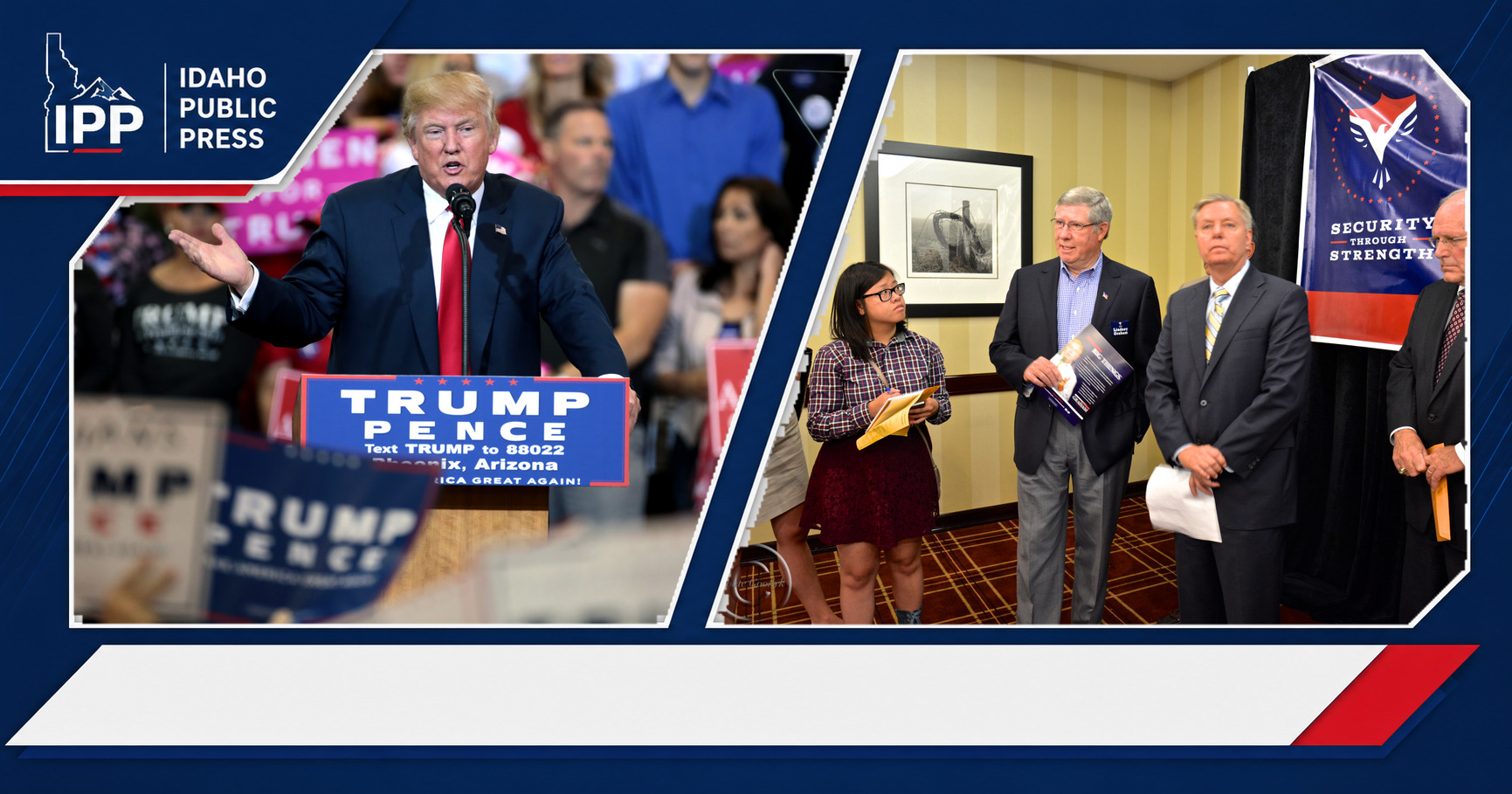
The two competed in the 2016 Republican presidential primary and, by Trump’s own telling at the service, “did not exactly get off to the best of starts.” CBS News reported that Trump recalled the moment he publicly shared Graham’s personal cellphone number during that campaign, joking that Graham’s phone “exploded.”
Trump framed the episode as the beginning of a friendship in an unlikely way. He said Graham “had the last laugh” because, after the phone-number stunt, Graham kept calling him for the next decade.
That story captured the contradiction many in Washington associated with Graham: he could be cutting, theatrical and combative, yet also unusually skilled at maintaining relationships with people who had once been adversaries.
The hawk in the Senate
Graham’s foreign-policy views were also central to the remembrance. Trump said Graham believed in “a strong America” and had “unwavering faith in the righteousness of American power,” according to CBS News.
Trump also used a line that sounded both affectionate and pointed: Graham “never saw a war that he didn’t like.” The remark underscored one of the biggest tensions in Graham’s public image.
To admirers, Graham was a national-security hawk who saw American power as a tool to confront enemies and protect allies. Sean Hannity, who also eulogized Graham, highlighted his foreign-policy work and advocacy for Israel, saying Graham dreamed of peace, CBS News reported.
To critics, Graham’s hawkishness represented an older interventionist strain of Republican politics that often clashed with the party’s newer skepticism of overseas commitments. Trump’s own tribute acknowledged that tension while still casting Graham’s views as rooted in patriotism.
Family stories softened the room
The service was not only about geopolitics and partisan combat. Graham’s niece, Emillie Boggs Roberts, described him as “without a doubt, a family man,” according to CBS News.
She told mourners that the outpouring of love had been “deeply healing” and said Graham’s world revolved around his mother, family, friends, staff, colleagues and the people of South Carolina.
Trump also reached for personal details. He said Graham carried his father’s putter and his mother’s ring, and that both were at his bedside the night he died, CBS News reported.
Those details mattered because Graham’s public persona could be loud and unsentimental. The family remembrances gave the service a different center: the man from Pickens County whose political life took him to the Senate floor, cable television green rooms, confirmation battles and presidential golf outings.
A career built on visibility
Graham’s influence was never just about seniority. It came from his willingness to be everywhere: hearings, Sunday shows, foreign-policy debates, Supreme Court fights and presidential campaigns.
Hannity pointed to Graham’s role during Brett Kavanaugh’s 2018 Supreme Court confirmation hearings, calling that period Graham at his “absolute best,” according to CBS News. Kavanaugh and his wife, Ashley, were reported to be in attendance at the funeral.
That episode became one of Graham’s most replayed political moments. Supporters saw a forceful defense of due process and a conservative nominee. Opponents saw a flashpoint in the hardening of judicial politics.
Either way, it helped explain why Graham’s memorial drew attention beyond South Carolina. He was not a quiet backbencher. He turned Senate procedure, foreign policy and partisan grievance into public drama, often with himself at the center.
What the farewell revealed
Graham’s funeral also highlighted the way personal relationships still shape Washington, even in an era defined by ideological sorting and media combat.
Trump praised Graham as “unwavering” in his principles but willing to listen, according to CBS News. He said Graham “never quit” and described his path from a pool hall where his parents raised him to the halls of the U.S. Senate.
That arc was central to the day’s messaging. Graham was remembered as a son of South Carolina who became, in Trump’s words, “one of the most important men in the most important country on earth.”
There is room for more than one reading of that legacy. Graham’s allies saw loyalty, energy and a belief in American strength. His detractors often saw opportunism, hawkishness and a political style that thrived on conflict. The service did not resolve that debate; it showed why the debate followed him to the end.
South Carolina gets the final farewell
After the Washington service, Graham’s burial is scheduled for Wednesday in his home county of Pickens, South Carolina, at Mount Zion Cemetery. CBS News reported that the burial will be private and limited to family.
That final stop brings the public arc back to the place that shaped Graham’s identity. For all his national visibility, he repeatedly tied his story to South Carolina, its voters and the family history that mourners invoked at the cathedral.
Some details surrounding Graham’s death were not included in the extracted reports available for this article, including a stated cause of death. What is clear from the memorial coverage is that his passing drew a large political farewell and a rare moment when Washington paused to assess a figure who spent decades refusing to fade into the background.
Trump’s phrase — a “constant fixture of American politics” — may be the simplest summary. Graham was a senator, an ally, a rival, a hawk, a showman and, for many in the room, a friend. The arguments over what he meant will continue. The memorial showed why they started in the first place.








Leave a Reply