
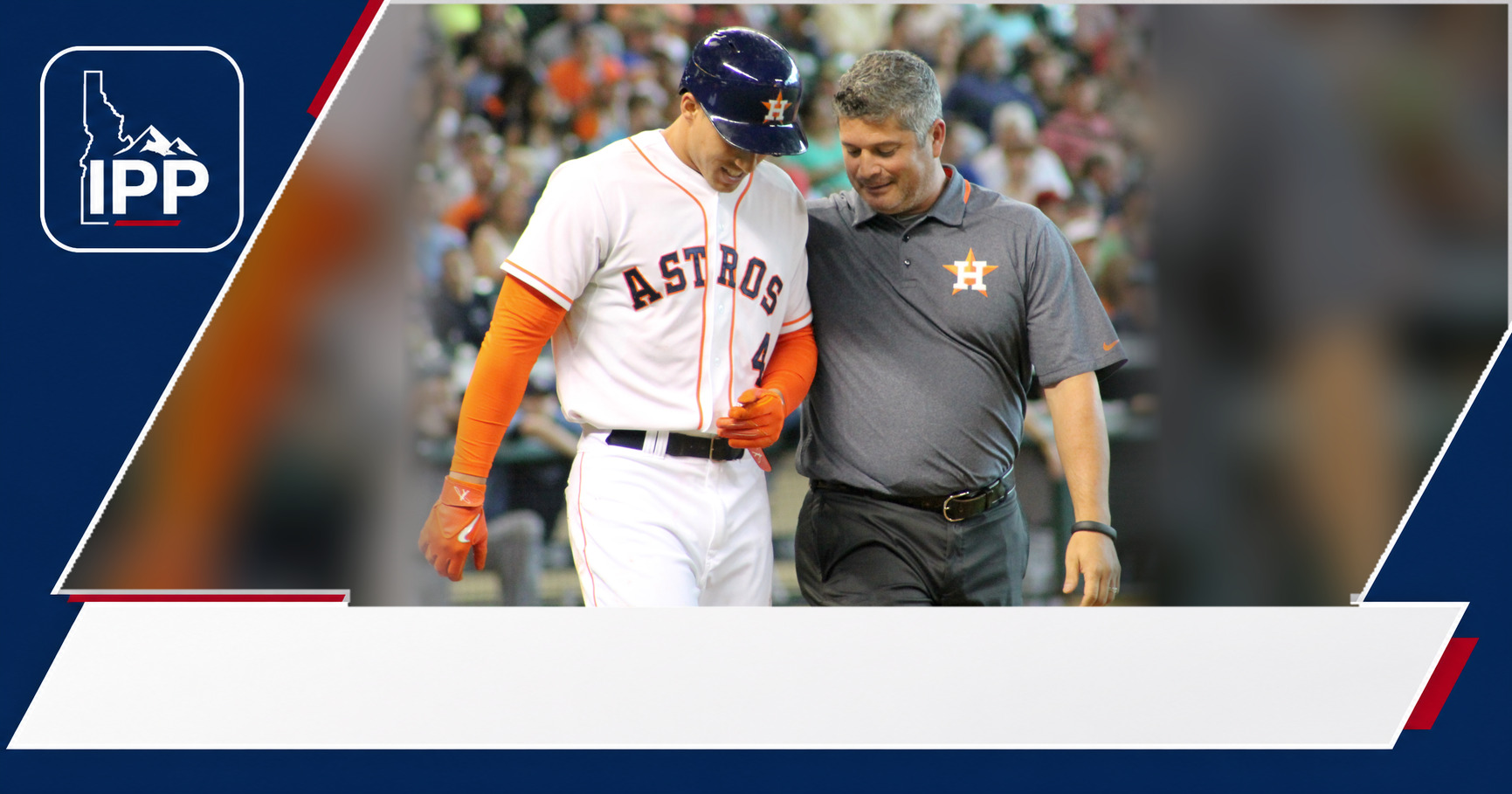
Seattle needs right-handed thump, Toronto may have to decide whether to sell, and Springer carries both October credibility and plenty of baggage for Mariners fans.
George Springer could be traded between the Seattle Mariners and Toronto Blue Jays only if Toronto decides to sell before MLB’s Aug. 3 trade deadline, but the idea is already the kind of bold, controversial move that would jolt Mariners fans. Springer joining Seattle would mean asking a fan base to cheer a player many still associate with Houston’s sign-stealing era and last year’s ALCS heartbreak.
The baseball case is less emotional: Seattle needs a right-handed bat, and Springer, even in a down year, still fits several deadline boxes. That tension is what makes the hypothetical worth taking seriously.
A rental with real baggage
The key word is hypothetical. There is no announced trade, and the Blue Jays have not publicly declared Springer available. This is deadline logic, not a transaction alert.
Seattle Sports recently argued that the Mariners should consider Springer if Toronto pivots toward selling. SoDo Mojo framed a Mariners-Blue Jays Springer deal as the kind of wild move that could light up the internet. Both ideas point to the same uncomfortable question for Seattle: how much should history matter if a player helps solve a present roster problem?
Springer is 36 and on an expiring contract, according to Seattle Sports. That matters because a rental bat usually costs less than a controllable star, especially if the selling club is motivated and the acquiring club is trying to avoid emptying the farm system.
It also matters because this would not be a long-term identity shift. It would be a short-term bet that October experience and right-handed production can outweigh age, decline risk and fan resistance.
Seattle’s lineup problem is obvious
The Mariners’ need is not hard to spot. Seattle has leaned left-handed, has lacked consistent slugging, and, per Seattle Sports, has been the worst offense in baseball against left-handed pitching this season.
The Rob Refsnyder signing was supposed to help. Instead, Seattle Sports noted that Refsnyder has struggled to a .133 batting average with three extra-base hits in 49 games and landed on the injured list with knee issues.
That creates a very specific shopping list: a right-handed hitter who can handle designated hitter work, lengthen the lineup, get on base and punish mistakes. Springer is not the perfect version of that player in 2026, but he is a recognizable version of it.
The Mariners do not need a headline for its own sake. They need a bat that changes how opposing managers attack the middle and lower parts of their order. If the market is thin, a flawed Springer can become more interesting than a cleaner but less impactful option.
The numbers cut both ways
This is where the debate gets real. Springer’s season line, as cited by Seattle Sports, is not star-level: .221/.309/.375 with a .684 OPS through 62 games, along with minus-0.1 bWAR. He also missed time in April with a fractured toe.
Those numbers should make any front office cautious. Age-related decline is rarely linear, and a rental hitter who is not slugging enough can become a sunk deadline cost quickly.
Still, the split data is more encouraging for Seattle’s specific need. Seattle Sports reported that Springer has hit .250/.364/.453 with an .817 OPS against left-handed pitching this season, compared with .210/.287/.347 and a .634 OPS against right-handers.
There has also been recent life in the bat. During one seven-game stretch cited by Seattle Sports, Springer hit .393 with a 1.080 OPS, two home runs, a double, three stolen bases and more walks than many slumping veterans manage in a month. A front office looking for signs of rebound would not ignore that.
October is the sales pitch
The strongest argument for Springer is not July. It is October.
Springer has played in 83 postseason games, reached the World Series three times, won a World Series MVP award and is tied for third all-time with 23 playoff home runs, according to Seattle Sports. That is not decorative résumé padding for a franchise chasing its first World Series appearance. It is the exact kind of experience teams convince themselves they cannot manufacture.
Mariners fans do not need to be reminded why that hurts. Seattle Sports pointed to Springer’s go-ahead home run for Toronto in Game 7 of last year’s American League Championship Series, a swing that helped end Seattle’s World Series hopes and sent the Blue Jays to their first World Series since 1993.
That same postseason record is also why the idea is tempting. Springer reportedly posted a 1.053 OPS in that ALCS against Seattle, then hit .381/.409/.429 in five World Series games against the Dodgers. If the Mariners believe they are close, adding the player who helped eliminate them is painful logic, but logic all the same.
Why the reaction would be fierce
Springer’s history with Mariners fans did not begin in Toronto. It began in Houston.
He was part of the Astros’ 2017 championship team later tainted by the sign-stealing scandal. For many fans around baseball, and especially in American League West cities, that stain has never fully faded. Seattle Sports noted that Springer expressed remorse in a 2020 NPR interview, but remorse does not erase rivalry memory.
That is why this would not feel like a routine rental. It would be a fan-base stress test. Some Mariners fans would see a useful veteran bat with playoff credibility. Others would see a former Astros star and recent Blue Jays tormentor wearing the wrong uniform.
Both reactions are rational in their own lanes. Fans are allowed to care about the emotional ledger. Front offices are paid to care about win probability. Deadline deals get messy when those values collide.
Toronto controls the first domino
The Blue Jays’ position is the unresolved piece. Seattle Sports described Toronto as five games under .500 while still hanging around the AL Wild Card picture. That is exactly the kind of gray zone that can freeze a market until the final days.
If the Blue Jays keep believing they can climb back, Springer probably stays. If injuries and standings pressure push them toward selling, an expiring veteran with playoff value becomes a natural trade chip.
There is also recent transactional familiarity between the front offices. Seattle and Toronto made multiple deadline deals in 2024, including moves involving Justin Turner and Yimi García, and the Mariners acquired Teoscar Hernández from the Blue Jays before the 2023 season in a deal involving Erik Swanson and Adam Macko.
Past deals do not guarantee future ones. They do suggest the clubs know how to talk, value players and finish paperwork. At the deadline, that familiarity can matter when minutes get tight.
The clean takeaway for Seattle
A Springer trade would not be universally popular, and it should not be treated as a magic fix. His age, current production and injury interruption are real concerns. The Mariners would have to price the deal as a rental gamble, not as a nostalgia-free star acquisition.
But the fit is not absurd. Seattle needs right-handed impact. Springer still hits lefties better than righties. He has a postseason track record few available bats can match. Toronto may eventually face pressure to convert an expiring veteran into future value.
The bigger question is whether the Mariners are willing to make the kind of move that feels uncomfortable before it looks useful. Deadline winners often do not get there by pleasing everyone in the moment.
If Springer ever did land in Seattle, the first reaction might be noise. The only reaction that would matter by October is whether he lengthened a lineup built to finally push past the franchise’s old ceiling.










Leave a Reply