
The death of a younger ally has turned a familiar Washington partnership into a more personal reckoning. Trump’s response matters because it blends public mourning, private reflection and the politics of legacy.
Donald Trump is reflecting on his own mortality after Lindsey Graham’s sudden death, with the president’s public comments and reported private remarks turning toward aging, fate and the surprise of outliving a younger friend. Trump delivered a eulogy for Graham on Tuesday, a moment that made the political loss personal as well as ceremonial.
Graham, 71, was nearly a decade younger than Trump and had remained an active presence in Washington until his death this month. The Washington Post reported that Trump’s remarks about aging and fate have intensified since losing a close friend and ally.
A sudden loss inside Trump’s circle
Graham’s death landed differently from a routine Washington passing because of the personal and political overlap. He was not just another Republican senator in Trump’s orbit. He was a longtime South Carolina power broker, a national security hawk and, over time, one of Trump’s most visible defenders and advisers.
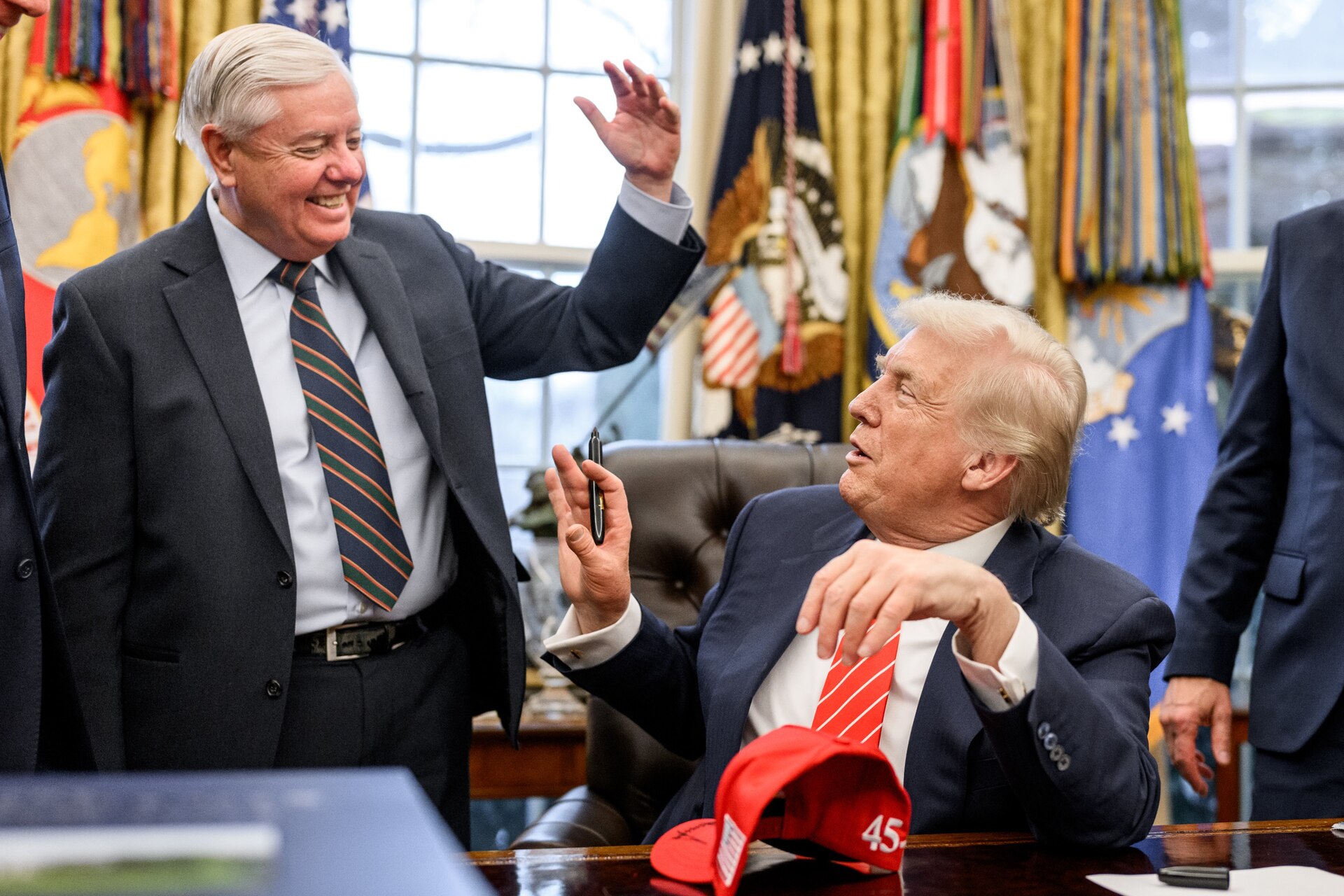
The Post reported that Trump did not expect Graham to die first. That detail matters because it cuts through the ceremonial language that usually follows the death of a senior official. Graham was younger, energetic and still active in public life, which made the timing feel abrupt to those around the president.
The available reporting says Graham’s sudden death rattled Trump, based on public remarks and two people familiar with his private comments. That is careful wording: it does not mean every private exchange is known, but it does point to a president processing the loss in more existential terms than usual.
The eulogy made it public
Trump’s eulogy for Graham on Tuesday turned a private reckoning into a public moment. Eulogies by presidents are always political theater to some degree, but they also force a speaker to put a relationship into final form: what the person meant, what history should remember and what remains unfinished.
In Graham’s case, the task was especially layered. He and Trump were not always aligned, and their relationship had gone through sharp changes over the years. Yet by the time of Graham’s death, he was widely understood as one of Trump’s closest Senate allies.
The significance of Tuesday’s eulogy lies less in any single phrase than in the setting. A president honoring a close political friend while also reportedly musing about his own age creates a rare split-screen: the rituals of state on one side, the private math of mortality on the other.
Aging, fate and presidential power
The Post described Trump as publicly and privately musing about aging and fate after Graham’s death. That language is notable because Trump has often built his political image around stamina, dominance and defiance, not vulnerability.
Presidents do not age privately. Their gait, schedule, voice, memory, energy and medical updates become public material, often filtered through partisan judgment. Trump’s reflections therefore carry a personal meaning and a political one at the same time.
Supporters may see the reaction as evidence of loyalty and humanity: a president grieving someone who mattered to him. Critics may view any discussion of mortality through the lens of fitness for office, succession, judgment and the strain of governing at an advanced age.
Both readings can coexist. A person can be grieving sincerely while the public also weighs what that grief reveals about leadership, aging and the pressures surrounding the presidency.
Graham’s place in Trump’s politics
Graham’s political identity was never simple. He was a Republican institutionalist with deep ties to the Senate, a strong voice on defense and foreign policy, and a figure who at various points criticized, courted and defended Trump.
That evolution made him a useful and sometimes controversial ally. To Trump’s coalition, Graham could function as a bridge to the Senate and to more traditional Republican foreign policy circles. To Trump’s opponents, Graham often represented the party’s broader accommodation of Trump’s power.
His death removes a familiar interpreter from Trump’s political world. Graham understood Senate procedure, television politics and the emotional language Trump uses with allies. Losing that kind of figure can matter even when the machinery of government keeps moving.
The White House’s formal response underscored Graham’s status. In a July 13 proclamation, Trump ordered U.S. flags flown at half-staff at the White House, public buildings, military posts, naval vessels and U.S. facilities abroad until 6 p.m. on July 18, citing Graham’s memory and longstanding service.
What the official record shows
The official record supports the public side of the mourning. The White House proclamation is a primary source showing that Trump marked Graham’s death with a formal act of respect. It also shows the federal scale of the tribute, extending beyond Washington to military and diplomatic facilities.
A Congressional Record reference also points to the White House statement reflecting on Graham’s life and legacy. That matters because, in Washington, grief becomes part of the institutional archive: proclamations, floor remarks, memorial services and eulogies all help define how a public figure is remembered.
What is less clear from the available material is the full content of Trump’s private reflections. The Post cites people familiar with his comments, but the excerpts available do not provide a full transcript of those conversations. That leaves room for caution in describing tone, frequency or exact wording.
The cause and full circumstances of Graham’s death are also not detailed in the research excerpts provided here. The confirmed thread is narrower: Graham died suddenly this month, Trump responded publicly, delivered a eulogy Tuesday and has reportedly been thinking aloud about aging and fate.
The larger takeaway now
For readers, the point is not simply that Trump mourned Graham. Presidents mourn public figures often. The more revealing development is that this loss appears to have prompted a sitting president to confront the uncomfortable reality that political power does not suspend age, chance or grief.
That tension is why the story resonates beyond the guest list at a memorial service. Graham’s death touches the Trump presidency at a human point, while also raising political questions about legacy, continuity and how leaders handle personal shocks under public scrutiny.
There is no need to overstate it. A eulogy does not become a policy shift, and private reflections do not automatically signal a change in governing style. But moments like this can expose what official statements usually smooth over: even the most combative political figures are forced, eventually, to measure time.
Graham’s sudden death has left Trump honoring a friend, marking a loss in the official record and, according to reporting, thinking more openly about mortality. In a presidency built around projection of strength, that is a striking turn toward the one subject no office can outrun.










Leave a Reply